
Roofing Capabilities · Garden Grove, CA
Commercial Roof Due-Diligence Surveys in Garden Grove, CA
Commercial Roof Due-Diligence Surveys
Review a Garden Grove commercial roof before acquisition with survey scope, dated observations, access limits, repair history, and follow-up questions.
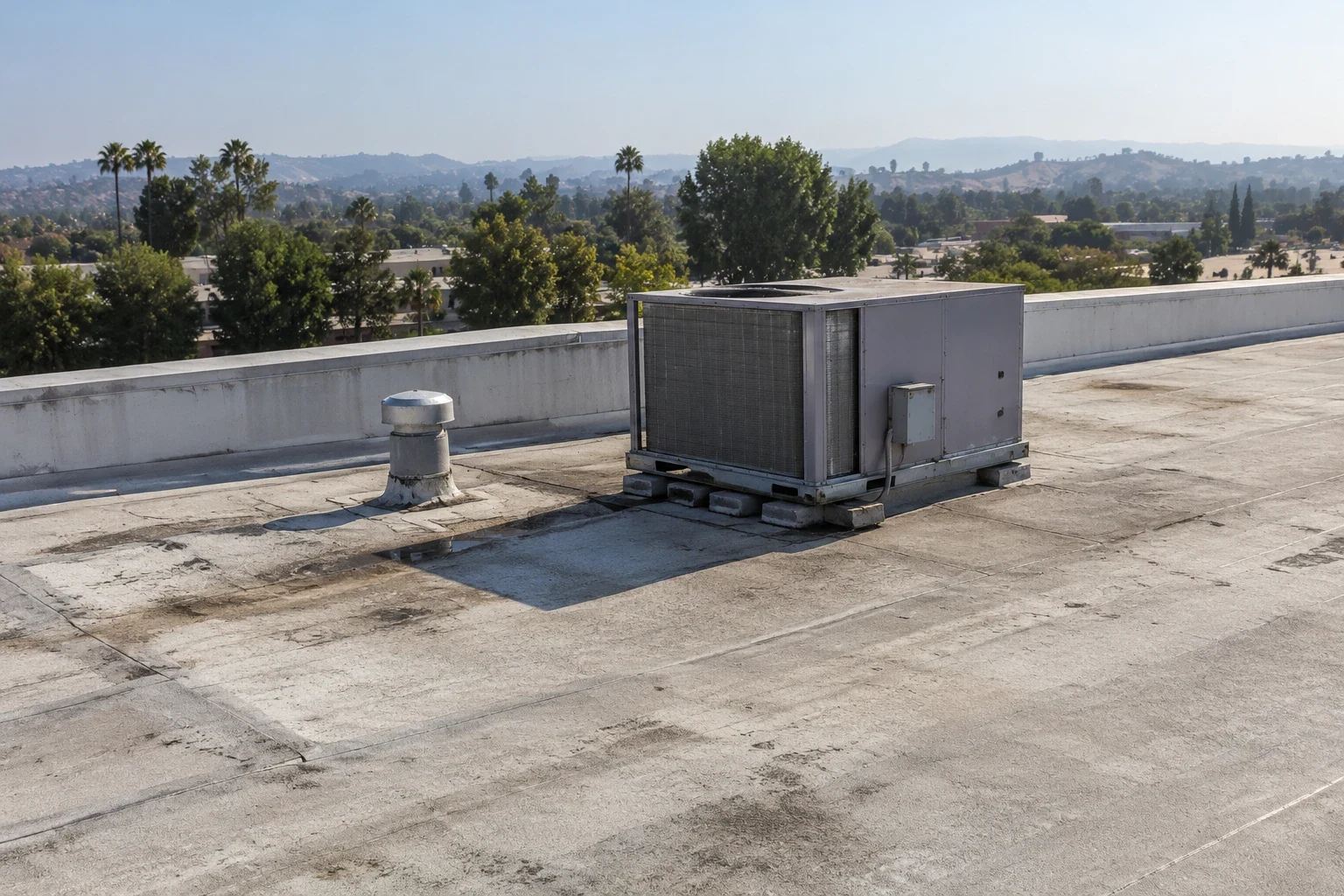
A roof survey before an acquisition begins with what the transaction needs to know and what access is available. The buyer may need a condition review, a budget-level repair scope, or a closer look at a reported leak. Those are different assignments. We agree on the buildings and roof sections to inspect, review the records provided, and state which concealed conditions cannot be confirmed during a visual survey.
A useful report distinguishes the visible roof condition from a remaining-life estimate or cost assumption. It identifies active concerns, prior patches, access restrictions, equipment interfaces, and information that should be requested from the seller or building manager. If a recommendation depends on moisture testing, a test cut, structural review, or warranty issuer input, list that follow-up rather than implying the inspection already resolved it. This helps a buyer direct the next review before relying on a number.
Commercial and mixed-use properties appear throughout Garden Grove. Near the Garden Grove Industrial District or Harbor Boulevard Corridor, the survey still evaluates one asset at a time, with its own plans, roof zones, and condition history.
Set the Survey Boundary Before the Site Visit
Request roof plans, repair and maintenance records, prior leak reports, warranties, installation information, equipment changes, and seller-provided inspection reports. Confirm whether all buildings and sections can be reached, whether escorts are needed, and whether the inspection permits photographs. Identify the buyer’s decision date and the intended level of cost detail so the field scope matches the transaction window.
On the roof, record the system, section, drainage, perimeter, seams, penetrations, visible prior repairs, rooftop equipment, and areas not accessed. Link photos to a roof plan or another clear reference. Interior leak reports may guide the walk, but a stain alone does not establish the entry point. Describe what was visible and label suspected conditions as such. If the surface is concealed by equipment, coating, stored materials, or unsafe access, record the restriction and its effect on confidence.
A commercial roof inspection can document a targeted concern. The roof condition report format can preserve location-specific observations and open questions for the buyer’s review.
Distinguish Immediate Repairs From Transaction Follow-Up
Identify active water entry, exposed openings, loose edge details, recurring repairs, and conditions that could affect near-term occupancy. A survey can recommend temporary protection or a defined repair, but the buyer and seller decide who authorizes that work before closing. Keep immediate water control separate from future capital projects. If the roof needs a test opening to check hidden insulation or attachment, state the purpose, access requirement, and decision that depends on the result.
Where a repair is priced, identify the roof zone, materials, preparation, tie-in, protection, access assumptions, and what is excluded. If the estimate depends on unknown deck or insulation conditions, show how that may alter quantity or cost. A survey should not imply that every defect is visible or that a budget estimate equals a contractor’s final proposal. If another trade or warranty issuer needs to review a detail, name that follow-up and keep it outside the confirmed condition list.
For capital planning after the transaction, a roof capital plan can organize later work. An active leak may require a separate commercial roof repair scope before the longer review is complete.
Compare Alternatives Only After the Assembly Is Understood
Repair, coating, recover, and replacement have different assumptions. A localized repair can address a discrete failure if the surrounding surface accepts a durable tie-in. A coating depends on a compatible and prepared surface; it does not correct trapped moisture. A recover adds material and height, which can affect drains and metal transitions. Replacement allows concealed layers to be examined but requires removal, temporary protection, and a construction sequence.
During due diligence, the report can identify which alternative merits a contractor proposal without deciding the transaction’s budget for the buyer. State whether pricing is preliminary, whether test cuts are included, what permits or design input remain, and what timeline depends on access or occupancy. If the seller’s repair history conflicts with the visible roof, list the records and field observations separately, then identify what additional information could resolve the difference. Do not use an assumed installation date as a substitute for examining current conditions.
Garden Grove’s general land-use framework includes industrial, commercial, and office areas, but the roof assembly remains the basis for material selection. Confirm the membrane type before selecting a system-specific scope.
Coordinate Seller Access and Technical Follow-Up
Before the survey, identify who grants entry, who can escort the inspector, which roof hatches or ladders are available, and whether active tenants affect the route. Confirm restrictions for lifts, photographs, mechanical rooms, or testing. If a test cut is recommended, obtain separate authorization and plan how the opening will be protected and restored. The survey should say whether the buyer, seller, property manager, or contractor must arrange each next step.
When several specialists are involved, coordinate a sequence that avoids duplicating access or closing a roof detail before another reviewer has inspected it. Mechanical vendors may need to review equipment curbs; engineers may need to review deck concerns; a warranty issuer may have its own process. A dated action list makes the dependencies visible and keeps an unresolved question from being read as a completed finding.
For ownership teams, the real-estate investor workflow can connect survey findings to asset review. A roof asset record can retain the survey date, limitations, and follow-up after closing.
Deliver a Report That Supports the Next Decision
The final survey should identify the properties and roof sections included, inspection date, methods, access limitations, visible conditions, photos, recommendation, cost basis, and unresolved items. Attach the records that support each observation or identify what information was supplied by the seller. Keep the distinction clear between an observed defect, an assumption, and an item needing testing. State whether the scope included only a visual survey or any additional testing authorized for the transaction.
After acquisition, place the survey with roof plans, warranties, maintenance tickets, and vendor history. Update the file when a repair is authorized or another inspection resolves an open item. If the building’s use changes or a new leak appears, schedule a current review rather than treating a transaction report as a permanent roof condition. The original survey remains valuable as a dated baseline, even when new findings change the recommendation.
The roof warranty record can be reviewed alongside the survey when applicable. Keep the final building-level information with the property team responsible for future maintenance.
Commercial Roofing Questions
What does a commercial roof due-diligence survey cover?
The assignment can cover roof sections, visual condition, access limits, records reviewed, photos, repair needs, cost assumptions, and follow-up testing. Confirm the scope before the site visit.
Can a visual survey confirm hidden roof moisture?
Not by itself. If concealed moisture could change the decision, identify an authorized test or other qualified review and state that the condition remains unconfirmed until then.
Will the report provide a final repair price?
A survey may include budget-level costs tied to stated assumptions. A contractor should prepare a final proposal after the work boundary, access, material, and concealed conditions are resolved.
Can the buyer rely on the seller’s roof records?
Compare those records with the field condition and keep each record’s origin and date clear. If the records conflict with visible findings, request clarification or additional inspection before relying on the information.
What happens when the survey recommends a test opening?
The buyer or seller must authorize access and testing. The scope should state the location, reason, protection method, restoration responsibility, and decision that depends on the result.
Schedule a roof due-diligence survey
Share the property list, transaction timeline, roof plans, maintenance records, access rules, and intended survey scope. We can document visible conditions, limitations, and follow-up questions by roof zone.
Or call 555-555-5555 · [email protected]