Property Types We Roof · Garden Grove, CA
Commercial Manufacturing Plant Roofing in Garden Grove, CA
Commercial Manufacturing Plant Roofing
Manufacturing plant roofing in Garden Grove, CA coordinates process equipment, roof penetrations, shutdown windows, repairs, and closeout records.
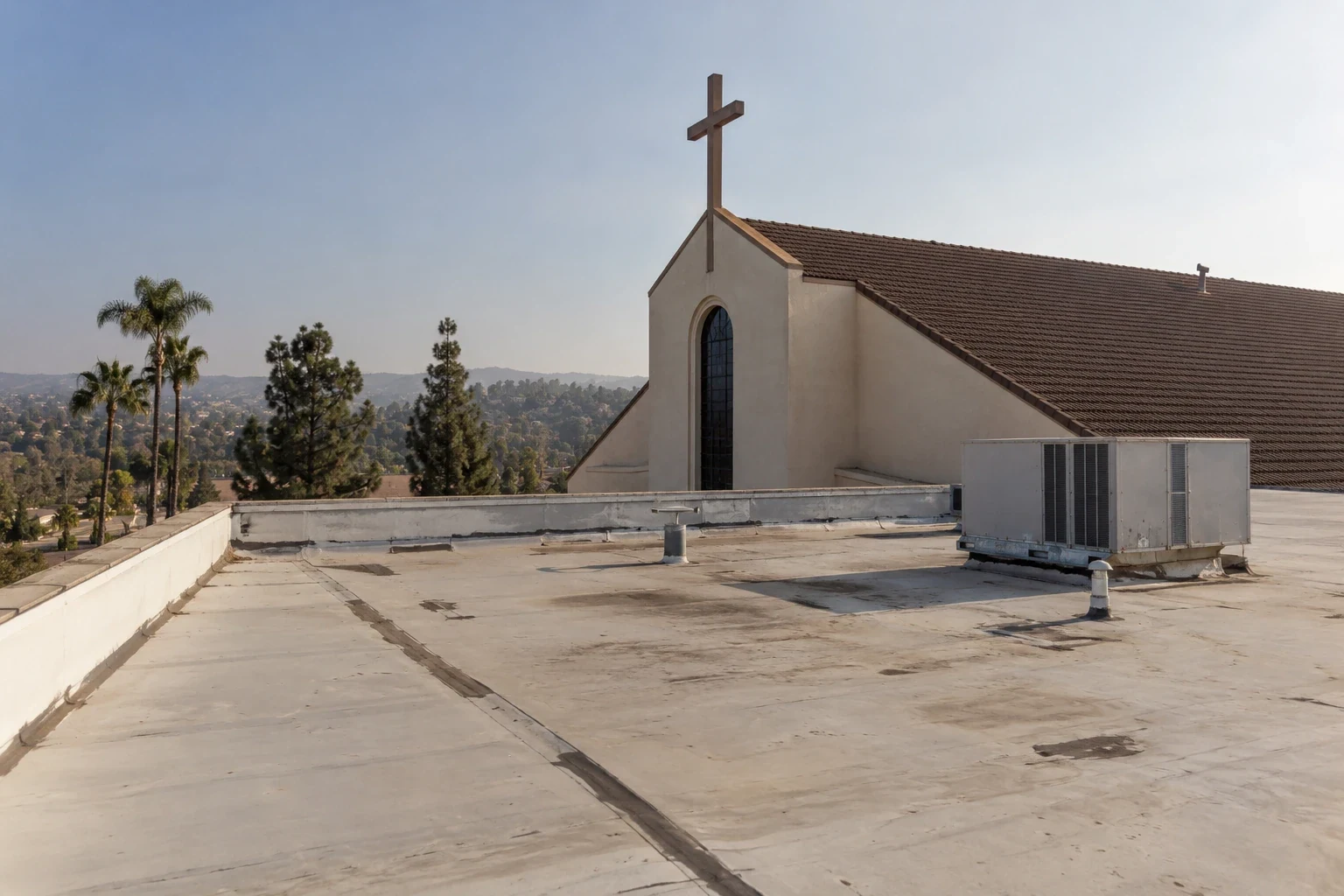
Manufacturing roofs carry more than weather exposure. Exhaust fans, process lines, utility supports, vibration, and shift schedules can make a small flashing failure disruptive. For plants near Cypress Business Park and Garden Grove, we inspect the membrane, penetrations, drains, and equipment supports before defining the work. The proposal identifies which systems remain active, what access the roofing crew needs, and whether a qualified process or mechanical trade must isolate equipment before a detail is changed.
Each plant has its own roof zones and operating constraints. We review available drawings, leak logs, shutdown windows, and prior repairs, then record visible conditions. A repair scope may be limited to one curb or seam; a replacement scope must coordinate roof openings with production requirements and safe interior conditions. We state what the roofing work includes, what belongs to another contractor, and which concealed areas need owner approval before the boundary expands.
Inspect Process Penetrations and Equipment Bases
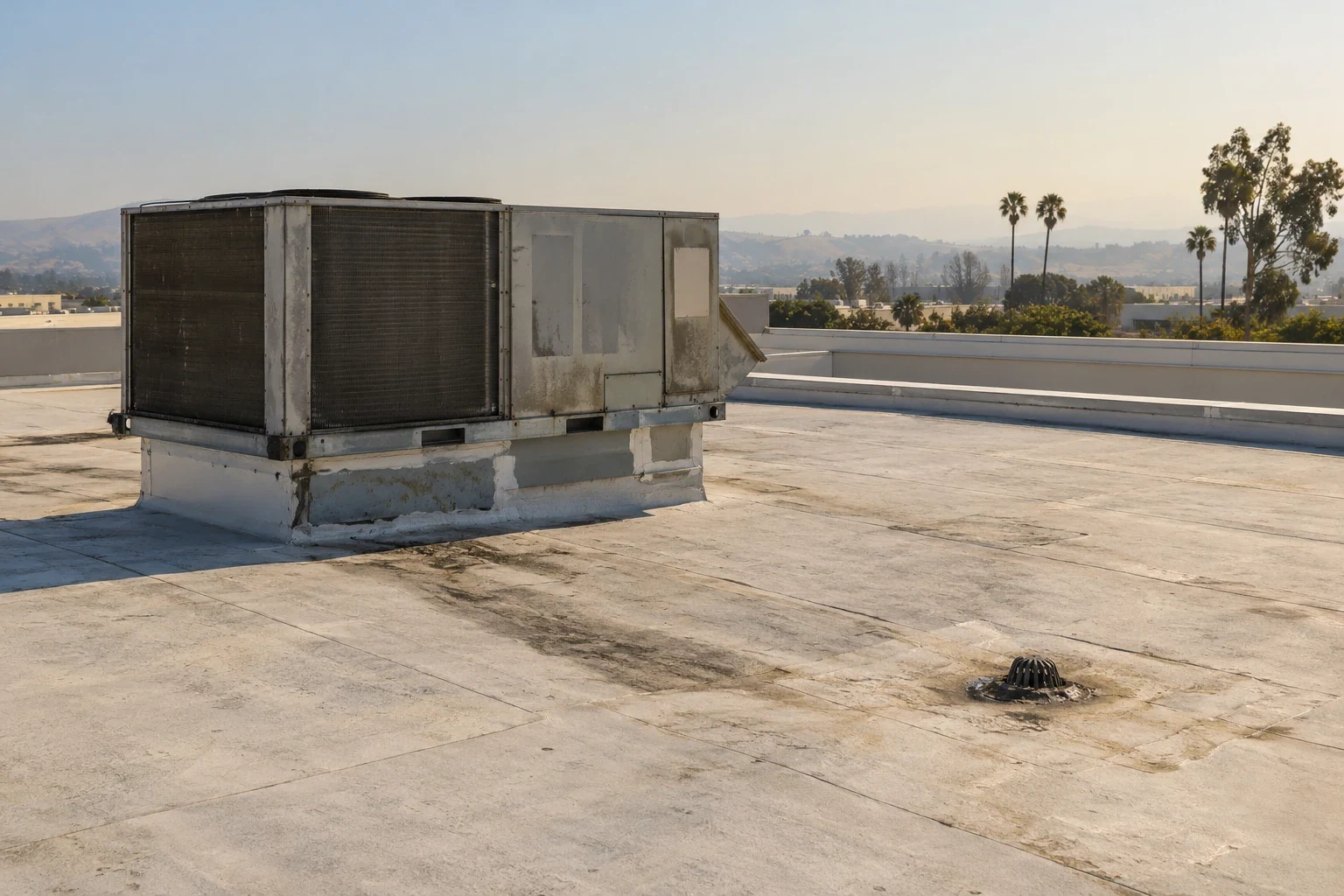
We trace water at exhaust curbs, pipe boots, conduit supports, skylights, expansion joints, and perimeter transitions. A vibration from equipment may loosen nearby flashing, while a cleaning or process residue can affect membrane adhesion. We note those observations without assuming the equipment caused a leak. Around drains, we check the membrane connection, outlet, and nearby slope. If insulation or deck condition changes the repair, a controlled opening can identify the layers and show where work must stop.
Cypress Business Park covers 587 acres organized through six specific plans, while Garden Grove’s industrial and manufacturing district runs along Knott Street and Western Avenue. In either setting, the facility contact determines which units are operating and when roof access is permitted. A curb-support review documents the roofing interface without substituting for mechanical or structural inspection.
When a report comes in, we compare its timing with production cycles, washdown, maintenance, and weather. Condensation from a process or ventilation system can resemble roof entry indoors, so the site team should identify recent equipment changes and interior conditions. We do not label the cause until the roof details and the reported water path have been examined. Before a test cut, we verify the location with operations and make sure the area can be safely isolated below. This sequence gives the plant a clearer basis for deciding whether roofing, mechanical service, or both need to respond.
Set Limits Around Production and Utility Systems
Before removing membrane, we confirm whether a process line, intake, exhaust, or roof-mounted utility must be shut down or protected. The plant assigns an authorized contact for isolation and restart; roofing crews do not operate process controls. We open only the approved repair area, remove material to a stable tie-in, and protect exposed insulation or deck. If the opening reveals a wider wet area or damaged support, we photograph it and request approval before extending the work.
A localized repair may restore a curb, seam, or puncture when adjacent material is sound. Where failures recur or the substrate cannot support a patch, a replacement scope can provide access to the deck and transitions. We document each condition by roof zone so production staff can tell what is resolved, what remains open, and which area needs another trade before the roof can be closed.
For a planned shutdown, the work order should identify who authorizes equipment isolation, who confirms the system can restart, and who accepts the repaired roof interface. We coordinate the roofing portion around those controls and keep the temporary weather cover available until the permanent detail is inspected. A delay in the equipment trade can move the closure date, so the exposed area and protection responsibilities are stated before work begins.
Detail the Roof Assembly for Process Conditions
The project documents identify the membrane, insulation, cover board, attachment, flashing, edge securement, and compatible products around process exhaust or chemical-service areas. We verify the materials at existing repairs before selecting a patch. If an unknown residue, cleaning agent, or process discharge may affect adhesion, the owner identifies the substance and the product supplier's compatibility guidance is checked before installation. The scope also states where a support or line needs a separate saddle or structural correction.
A warehouse roof plan focuses on storage and handling routes; a flex-industrial scope may combine office, shop, and production areas. For low-slope plants, the selected system can be PVC roofing or another assembly if the design and exposures support it. Product names alone do not establish chemical compatibility. We record the specified material and keep approved substitutions with the closeout record.
Where a process line passes through the roof, the detail record should show the support, boot or curb, adjacent membrane, and party responsible for future changes. That reduces uncertainty when maintenance replaces a line or adds a connection.
Coordinate Work With Shifts and Shutdown Windows
We map crew entry, lift placement, material staging, and interior barriers with plant operations. A roof opening above production may need a shutdown window or protected work zone. We confirm how alarms, intakes, exhaust, and water-sensitive processes are handled with the facility's safety lead. The daily plan sets a secure stopping point and identifies who receives notice if weather, a hidden condition, or another contractor shifts the sequence.
An occupied-site sequence can coordinate roof work with active rooms and shift changes. Before lifting near a process unit, the site contact confirms its service status and clearance requirements. We keep access to emergency equipment and roof drains available, and avoid covering control labels or service points. A crew briefing records the specific roof zone and any restricted approach, then the foreman updates the facility if the boundary moves.
Keep Equipment and Roof Records Together
At handoff, we inspect seams, flashing, supports, drains, and transitions at each completed zone. The closeout includes photos, materials installed, approved concealed repairs, and items requiring the equipment contractor or design team. We mark where the roofing scope stops around each unit so later service does not mistake a retained detail for new work. The owner should receive a roof-zone map and the product information included in the project documents.
After process equipment changes, staff should check whether a new line or support has crossed the roof surface or altered an existing curb. A maintenance program can track those changes alongside drain and flashing checks. If a leak returns, compare the report with the installation record before applying a different patch material. Consistent roof-zone labels help facility and roofing teams share observations without confusing equipment service with roof repair.
For warranty-sensitive roofs, the owner should provide available manufacturer documents before material is removed. We record any required inspection or approval point and retain that evidence with the repair photos. The facility can then keep service history, equipment changes, and roof work in one file.
Commercial Roofing Questions
Can roof work take place while manufacturing continues?
Sometimes. The plant and roofing team need to define safe zones, equipment status, access, noise, and any required shutdown before opening the roof. The schedule depends on the process below and the repair location.
Who shuts down rooftop process equipment?
The plant assigns the qualified equipment or process contractor. Roofing crews coordinate access and waterproofing but do not operate process controls or restart equipment.
Can a roof membrane resist manufacturing chemicals?
Compatibility depends on the specific substance, concentration, exposure, and product system. The facility should identify known residues or cleaning agents so the designer and product supplier can confirm an appropriate detail.
What belongs in a manufacturing roof closeout?
Include zone photographs, installed materials, seam and flashing checks, approved concealed repairs, and the interface boundaries assigned to other trades. Note restricted areas and any follow-up inspection needed after equipment work.
Plan roof work around plant operations
Share roof drawings, equipment constraints, and approved shutdown windows. We can document the roofing interface and coordinate work zones with your facility contact.
Or call 555-555-5555 · [email protected]