
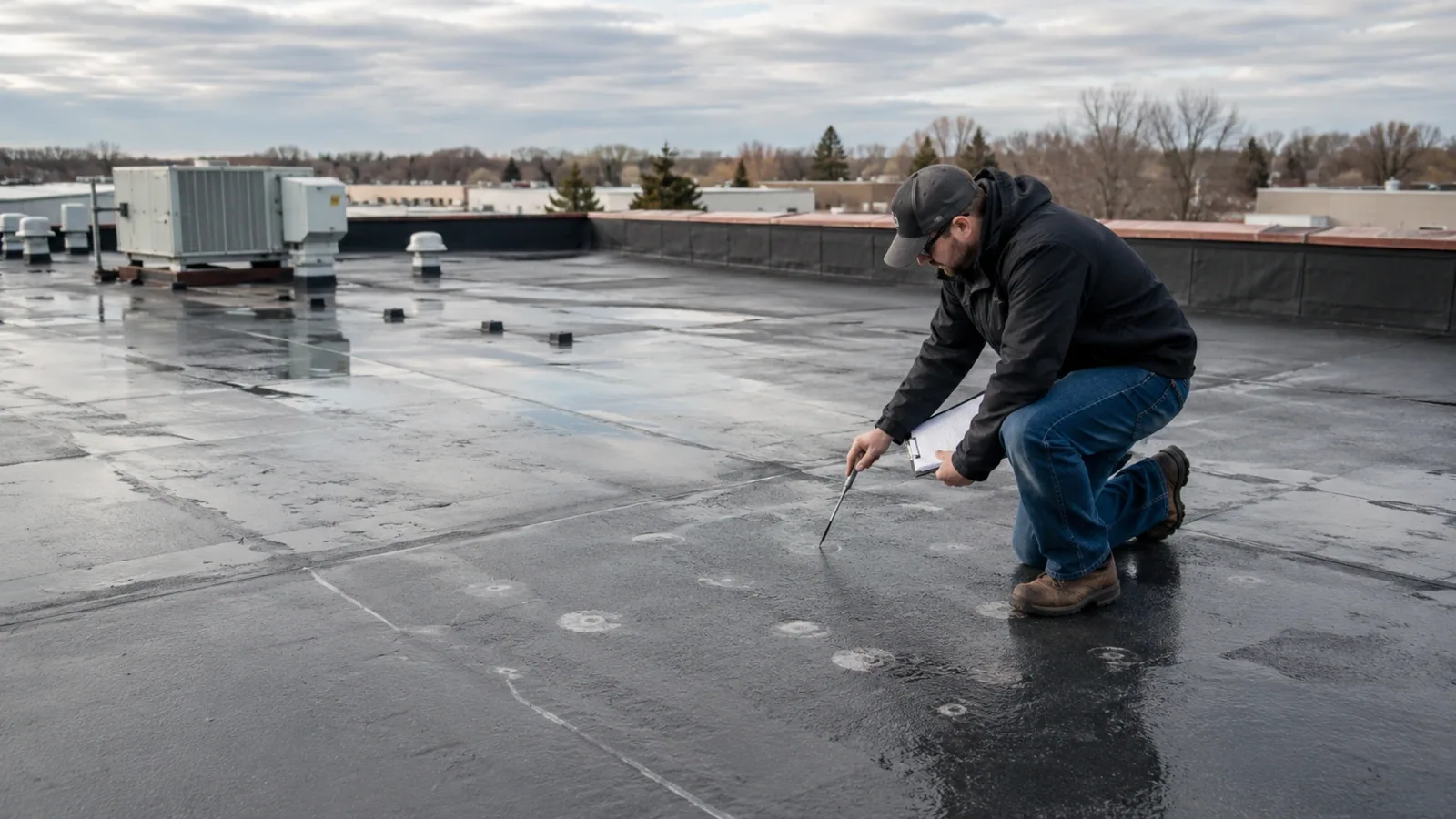
Commercial Roofing Services · Garden Grove, CA
Emergency Commercial Roof Repair in Garden Grove, CA
Emergency Commercial Roof Repair
Emergency commercial roof repair in Garden Grove, CA secures active leaks, protects occupied space, and documents the permanent repair needed next.
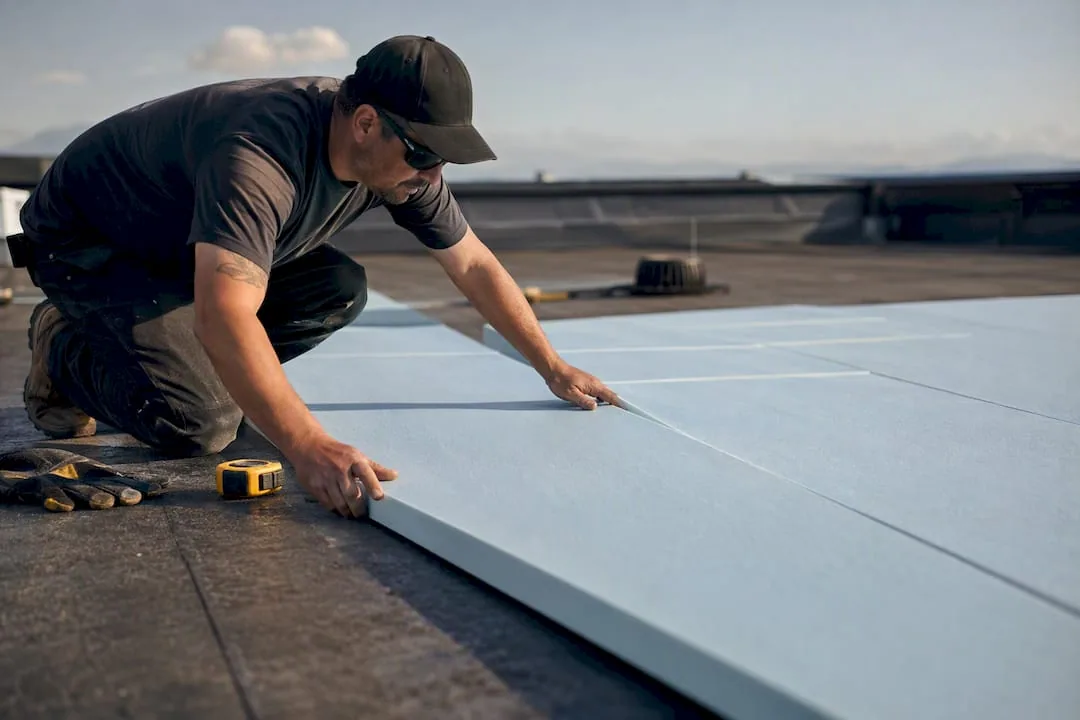
A roof opening above an active building needs a safe stop before the next repair decision. Our emergency response in Garden Grove, CA starts with the water path, the space below it, and the weather exposure at the time of the call. We identify whether water is still entering, protect vulnerable rooms or equipment, and determine what can be stabilized without hiding the failed detail. The immediate work controls exposure; a permanent repair follows after the roof and substrate can be inspected. The owner receives a clear account of what was secured, what remains open, and which conditions need a follow-up decision.
Secure the Interior Before Opening the Roof
Water near lights, controls, stored goods, or occupied work areas changes the order of response. We ask the site contact to identify affected rooms and critical equipment while the crew locates roof access and the likely entry point. Interior protection can include moving contents, containing active drips, or limiting access to a wet area. On the roof, a temporary cover or seal is useful only if it can be fastened safely and sheds water away from another vulnerable transition. We document what the emergency measure does and where it stops; temporary protection does not certify the assembly beneath it.
Garden Grove includes retail, office, industrial, civic, and mixed-use settings. A leak above a Garden Grove Boulevard storefront may affect customers and stock, while a condition near the Knott Street and Western Avenue industrial district may be close to equipment or production materials. We confirm the use below the roof with the property contact instead of assuming a location's business needs. When a test opening is needed, our inspection work can identify the next repair boundary after active exposure is controlled.
Find the Failure That Needs Immediate Control
We check the likely entry point, surrounding laps, edge details, drains, and penetrations for a condition that can be stabilized safely. A torn membrane may need temporary cover; a loose termination can allow wind-driven water behind a wall; a blocked drain can keep water against a seam. The visible symptom does not prove which component failed, so we compare the roof observation with interior timing and any leak history available. Photos show the surface before and after temporary work. If the crew cannot reach the suspected entry point safely, the report identifies that limit and the next access step.
For a large affected area or several roof zones, an infrared moisture survey may help determine where to make test cuts after the immediate hazard is addressed. Survey patterns guide investigation; they do not replace opening the roof where the assembly's condition must be confirmed. The industrial district along Knott Street and Western Avenue includes manufacturing uses, so roof access may need coordination around equipment and operating schedules. We document the condition that can be seen without turning a temporary response into a claim about uninspected areas.
We distinguish an active opening from a wet area that has stopped receiving water but still needs to dry. That difference affects whether the crew can complete a permanent seam or must return after conditions allow the repair materials to bond.
Separate Temporary Protection From Permanent Work
A temporary measure should have a defined perimeter, attachment method, and removal or follow-up plan. We record whether it covers a seam, curb, penetration, or open section and state what may loosen or change with weather. Permanent work begins after the material below is dry enough to receive a repair and the failed detail is visible. If a cover must remain in place until then, the owner should know how to monitor the interior and when to contact us if water moves beyond the protected zone. That clarity helps the building team manage the interval between stabilization and correction.
The follow-up scope may call for a leak repair, a broader membrane correction, or a replacement boundary if concealed damage is extensive. We identify the roof system, remove unsound material to a stable edge, and select a compatible repair. If rain interrupts permanent installation, the crew stops at a secure dry-in line. A wind-damage assessment can include edge metal and membrane attachment when those are implicated, but unrelated areas are not included without observed evidence.
Coordinate the Response With Site Operations
Emergency work still needs a practical route for ladders, lifts, materials, and debris. We confirm a contact with authority to authorize roof access, isolate alarms if required, and identify restricted rooms. When the building remains open, the work zone is separated from entrances, delivery routes, and tenant space. A simple update cadence tells the owner when the crew arrives, when the temporary control is in place, and what will be needed for permanent work. The sequence also names a weather check and a protected end point if conditions make a full repair unsafe.
Trask Avenue's planned auto-sales and repair cluster makes vehicle circulation a relevant site-planning issue for some buildings; the city framework also names Harbor Boulevard and Beach Boulevard as commercial corridors. The property team confirms actual access constraints at its building. For a repair that must happen while operations continue, an occupied-building plan can assign roof zones and temporary protection. The sequence makes clear when occupants or equipment need to move and what area stays unavailable while the roof is open.
Leave the Building With a Clear Next Step
At the end of an emergency visit, we record the immediate condition, materials used for stabilization, and the areas that still need inspection. Photos show where a cover or temporary seal begins and ends. The owner receives the next action, such as a permanent patch, a test opening, or review of a larger roof section. If water entered an electrical or sensitive area, the building's own safety procedures govern re-entry and equipment checks. A closeout note avoids treating an emergency control as a final repair or implying that unseen roof areas were cleared.
Once the roof is dry and safe to access, we can check adjacent seams, drains, and penetrations for related damage. A permanent repair ties into sound material; a maintenance visit can later record the condition of drains, flashings, and equipment changes. Keep the response photos with the building's leak records so a later inspection can compare the same roof zone. For a new opening or changed water path, contact us with the date, affected room, and any temporary measures still in place.
Commercial Roofing Questions
What information helps when I call about active roof water?
Tell us where water is entering, when it began, what room or equipment is affected, whether the roof is safely accessible, and who can meet the crew. Photos from inside can help locate the area, but they do not identify the roof failure. We will confirm access and immediate protection needs before planning the permanent work.
Does an emergency visit include the permanent repair?
It may, if the roof is accessible, the failed detail is clear, conditions allow the work, and the necessary material is available. Some calls require temporary stabilization first, followed by a dry inspection or test opening. We state which work is complete and what remains so the owner can authorize the next scope.
Can a temporary roof cover stay in place?
A temporary cover can be useful for a defined interval when it is attached securely and directs water away from the opening. It still needs monitoring and a planned follow-up. We document its limits and return path; the permanent repair requires a dry, stable substrate and compatible materials.
How do you protect people and operations during the response?
We coordinate roof access, interior protection, and the area below the work with the site contact. The plan can isolate a room, redirect a delivery path, or schedule noisy activity in a lower-impact window. If safe access or weather protection is not possible, we explain the constraint and identify the next workable step.
Measure the roof before choosing the repair path
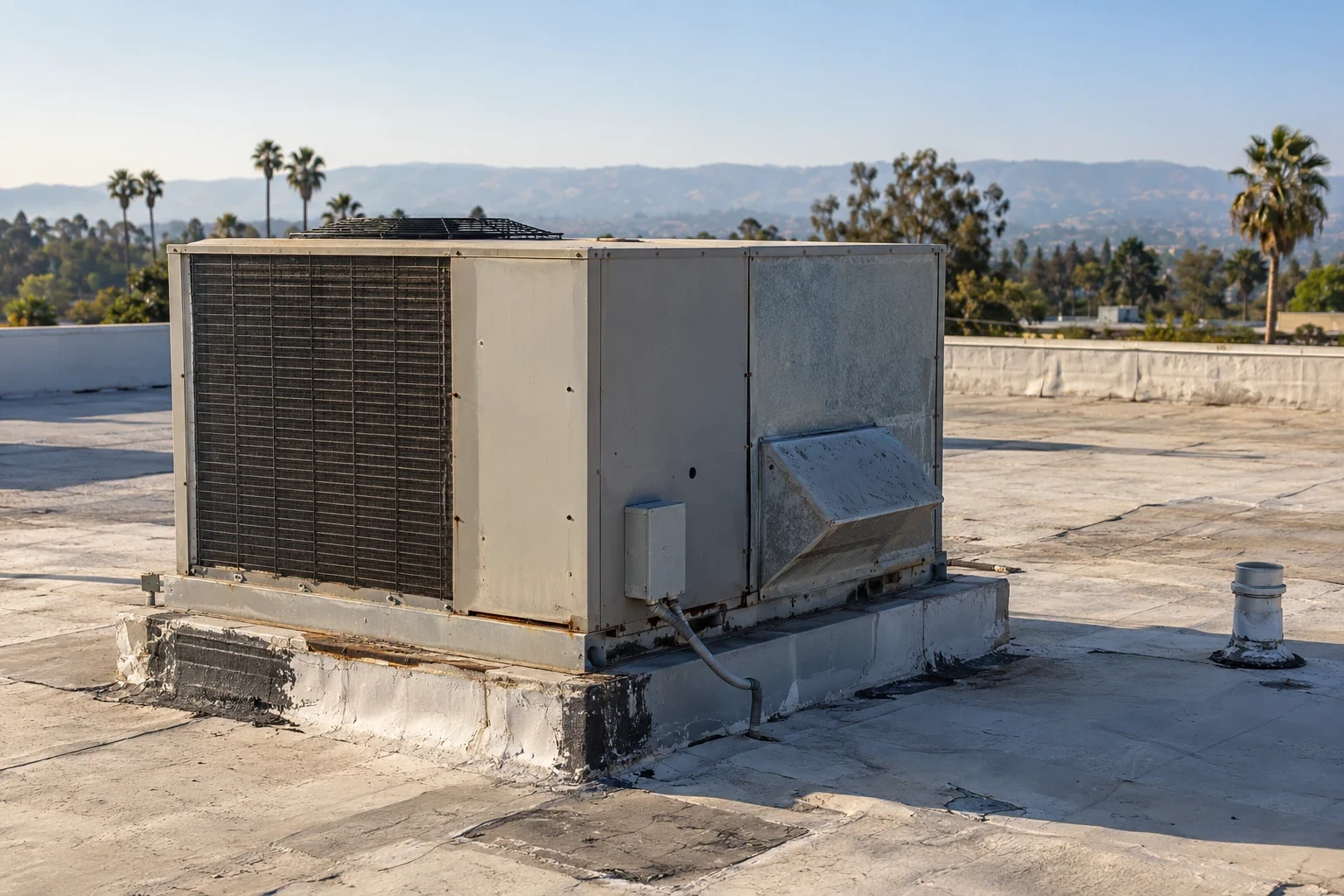
Arrange a roof walk with available plans, leak records, and access constraints. We will trace the assembly, mark the work boundary, and prepare a scope for your Garden Grove building.
Or call 555-555-5555 · [email protected]