Roof Systems · Garden Grove, CA
Commercial PVC Roofing in Garden Grove, CA
Commercial PVC Roofing
Commercial PVC roofing in Garden Grove, CA covers welded seams, compatible flashing, attachment, drainage, and maintenance requirements.
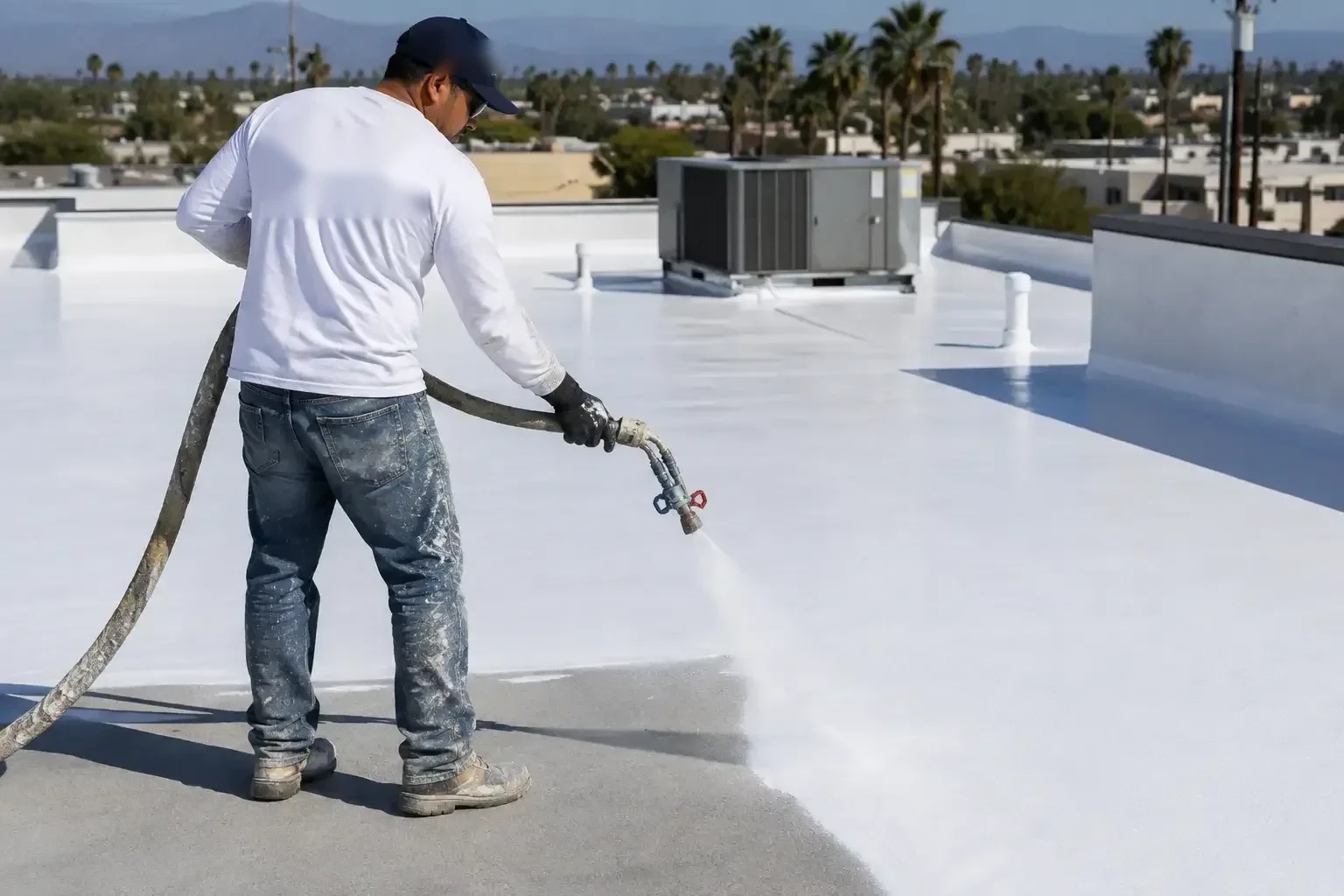
A PVC membrane roof is joined at its seams with hot-air welding, but the details around drains, curbs, edges, and other materials decide how the system closes. At a commercial building in Garden Grove Boulevard corridor, we identify the existing roof and inspect the substrate before specifying PVC installation or repair. The scope sets membrane, attachment, insulation, flashing, and any separation layer required by the project. The owner can compare that assembly with alternatives using the same drainage and access conditions rather than selecting a product name in isolation.
Identify the PVC and Its Nearby Transitions
We check welds, sheet edges, patches, flashings, and penetrations for separation or wear. A probe can locate a weak seam, while a test cut may be needed if water has reached the insulation. The report records coating or contamination that could affect adhesion and identifies areas where another material meets the PVC. Certain chemicals or residues can be incompatible with a membrane, so we ask about rooftop maintenance and equipment service. A repair plan includes the surface preparation and compatible flashing needed at each transition. A PVC membrane should be examined for prior repairs and any surface residue from rooftop operations. We identify whether a suspected soft spot is membrane damage, an old patch, or a substrate concern by checking the adjoining field and records. If a test opening changes the understanding of the layers, we document the sample location and repair it with a compatible detail.
Garden Grove has commercial, office, industrial, and mixed-use areas. Garden Grove Boulevard's commercial and office context can mean tenant access beneath the roof; the Knott Street and Western Avenue district includes manufacturing activity where equipment work may add traffic. We confirm the facility's specific operating constraints with its manager. A roof inspection maps seams and penetrations before a replacement or repair plan is finalized.
Weld Patches Beyond the Damaged Area
For a local repair, we remove damaged PVC to clean, stable material and prepare the patch edges for a welded connection. The patch needs enough overlap to fuse without crossing a wrinkle, curb corner, or unsupported seam. We test the completed weld and correct any weak points while the area is accessible. Where the board is wet or crushed, a patch over the surface will not address the substrate. We extend the opening to sound material, photograph concealed conditions, and request approval if the repair limit changes.
At a curb or drain, field membrane connects to a separate flashing detail that must remain watertight when the roof moves. A penetration flashing repair can address a boot or curb while preserving the surrounding PVC. drain correction addresses bowl and membrane connection. If several sections have open welds or widespread moisture, we compare a repair program with replacement after test results are available.
Detail the PVC Assembly at Each Roof Condition
Specify membrane thickness, attachment, insulation, cover board, seam layout, flashing, edge metal, and drain details together. A separation layer may be needed when the existing surface or substrate is not compatible with the PVC system. Fastener placement must align with the approved assembly, and roof height changes must be addressed at curbs and outlets. The specification should state how the crew prepares, welds, probes, and records seams, plus what conditions require owner approval before installation continues.
Before PVC work begins, the specification should identify the membrane thickness, attachment, insulation, flashing accessories, edge details, and approved repair process. The design team confirms permitting and submittal requirements for the specific project. A TPO membrane shares heat-welded seams but differs in material formulation and product limitations. EPDM relies on a different seam approach and compatible accessories. We match the selection to the roof design and service conditions and do not assume a generic flashing detail is interchangeable.
Protect the PVC Surface During Installation
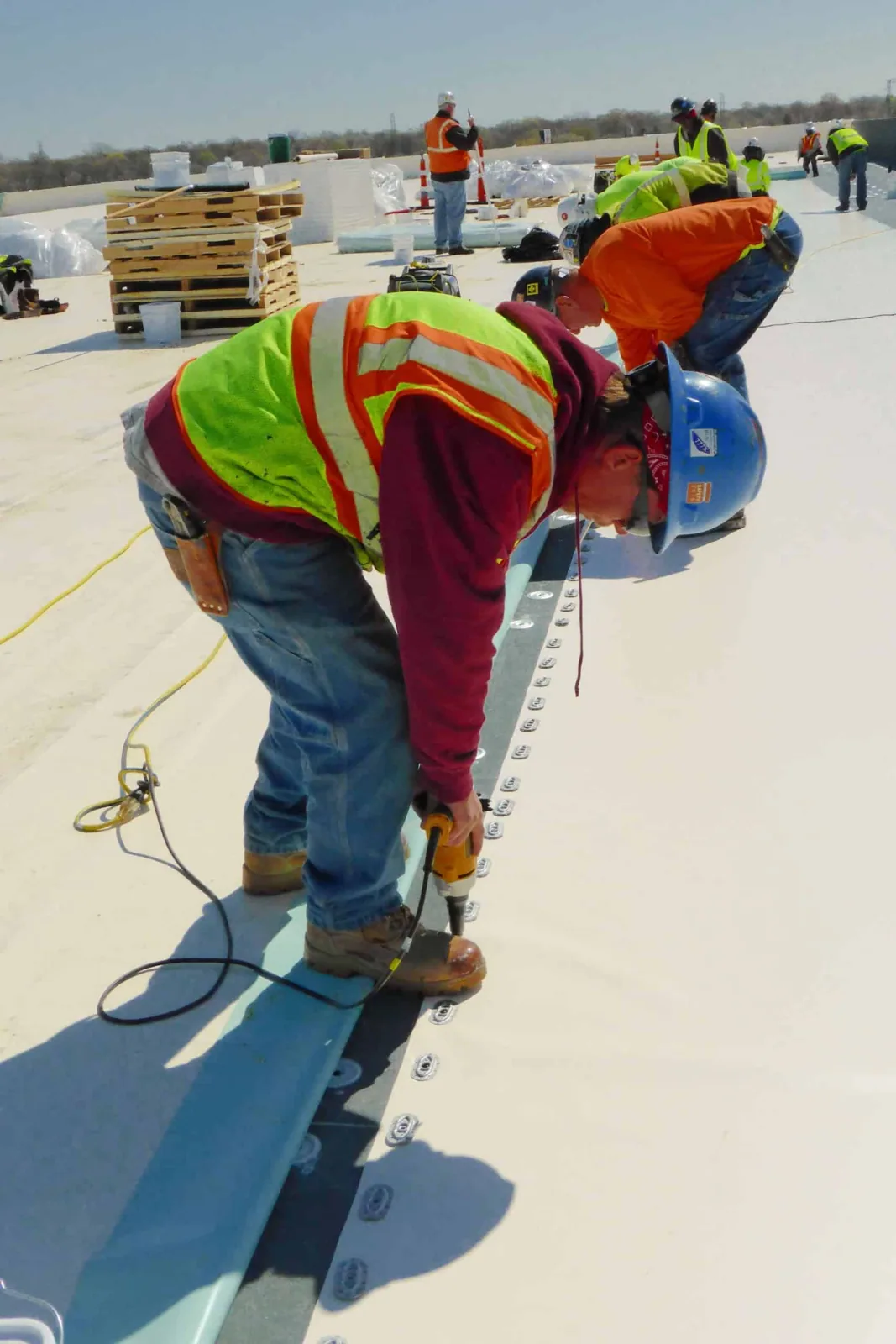
Membrane rolls and tools must be staged without dragging across completed areas or puncturing the sheet. We plan the lift route, set a covered storage area, and keep debris clear of seams and drains. During installation, sheets advance to a secure stop at the end of the work period. If another trade needs roof access, its path and protection are coordinated before the crew finishes. The owner should know which sections can accept foot traffic and which remain under installation or cure restrictions. If work includes tie-ins to an older membrane, the scope shows where the two assemblies meet and what separation or transition component is specified. We keep the tie-in accessible until testing is complete, then photograph the finished edge. This is especially useful where separate roof areas were installed in different phases and the material changes at a parapet or expansion joint.
Trask Avenue's planned auto-sales and repair focus can make vehicle circulation a site-planning question; actual delivery and lift access comes from the property team. In the industrial district, roof equipment and service windows can drive the sequence. A phased access plan helps keep operations separated from active roof work. For a compatible recover, an overlay review should check existing layers and attachment before the new PVC is installed.
Preserve the Weld and Transition Record
We check seam welds, corners, perimeter securement, penetrations, drains, and transitions to other roof areas. The closeout includes seam-test records, photographs, product details, and any concealed repairs approved during installation. We mark where new PVC meets retained material and list areas that were not included. This helps later service teams choose compatible repair materials and avoid confusing an old patch with new work. We also give the owner a roof-zone map that labels product transitions and repaired sections. If kitchen exhaust, process equipment, or another trade has placed a residue on the PVC, the facility team should identify the substance before cleaning or repair. The material supplier instructions determine the approved cleanup and repair products. This prevents a maintenance response from adding a second incompatible material to the affected area.
After installation, maintenance should keep drains clear and avoid uncontrolled tool or equipment traffic over the membrane. A maintenance schedule can track seams and flashing changes. If a weld separates, seam evaluation checks the surrounding sheet and substrate before repair. The owner should retain the installation record with roof plans so a future project can locate the same detail.
Commercial Roofing Questions
How is PVC membrane joined at a seam?
PVC sheets are joined using hot-air welding under the system's specified conditions. The crew prepares the surface, adjusts settings to field conditions, tests the weld, and reworks areas that do not hold. Corners, curbs, and edge transitions require their own flashing and securement details.
Can PVC be installed over another roof system?
A recover may be possible only when the existing assembly is stable, sufficiently dry, attached, and compatible with the approved new system. We check layer count, drainage, roof height, and separation requirements first. Wet or unsound material must be removed where it cannot support the new membrane.
What should we look for in a PVC proposal?
Review the complete assembly and seam plan, insulation and cover board, attachment method, material separation, edge and drain details, test procedures, and concealed-repair approvals. Also confirm staging, foot-traffic rules, and closeout documents. The specified product and its installation requirements should be clear.
How do rooftop chemicals affect a PVC roof?
Some substances or residues can be incompatible with roofing membranes. We ask what is used or discharged at the roof, inspect the affected surface, and compare it with the product requirements. The scope should identify any protective walkway, equipment curb, or transition needed to separate the membrane from incompatible material.
Measure the roof before choosing the repair path
Arrange a roof walk with available plans, leak records, and access constraints. We will trace the assembly, mark the work boundary, and prepare a scope for your Garden Grove building.
Or call 555-555-5555 · [email protected]