
Commercial Roofing Services · Garden Grove, CA
Commercial Skylight and Roof Penetration Flashing in Garden Grove, CA
Commercial Skylight and Roof Penetration Flashing
Commercial skylight and roof penetration flashing in Garden Grove, CA secures curbs, boots, and membrane transitions around rooftop openings.
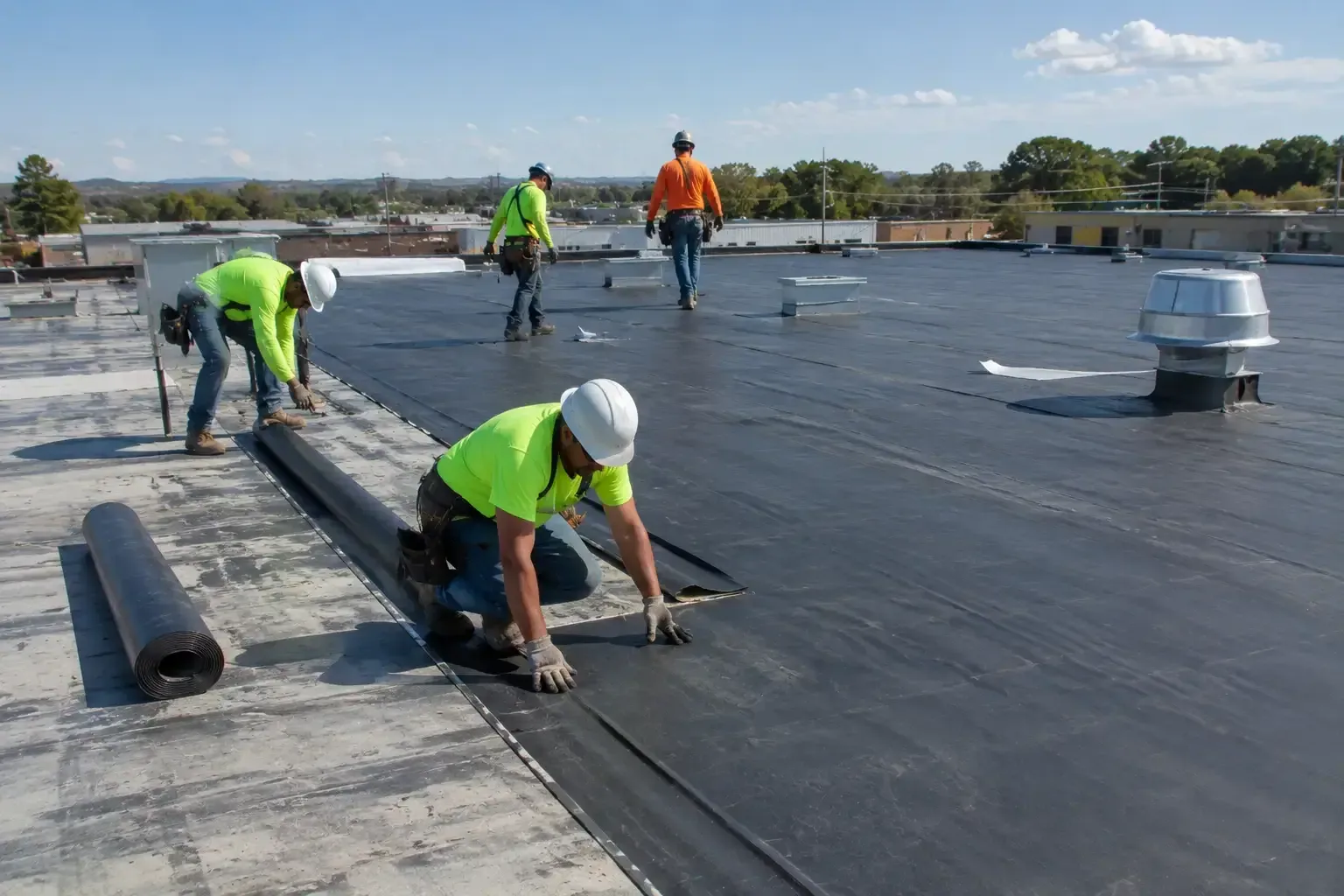
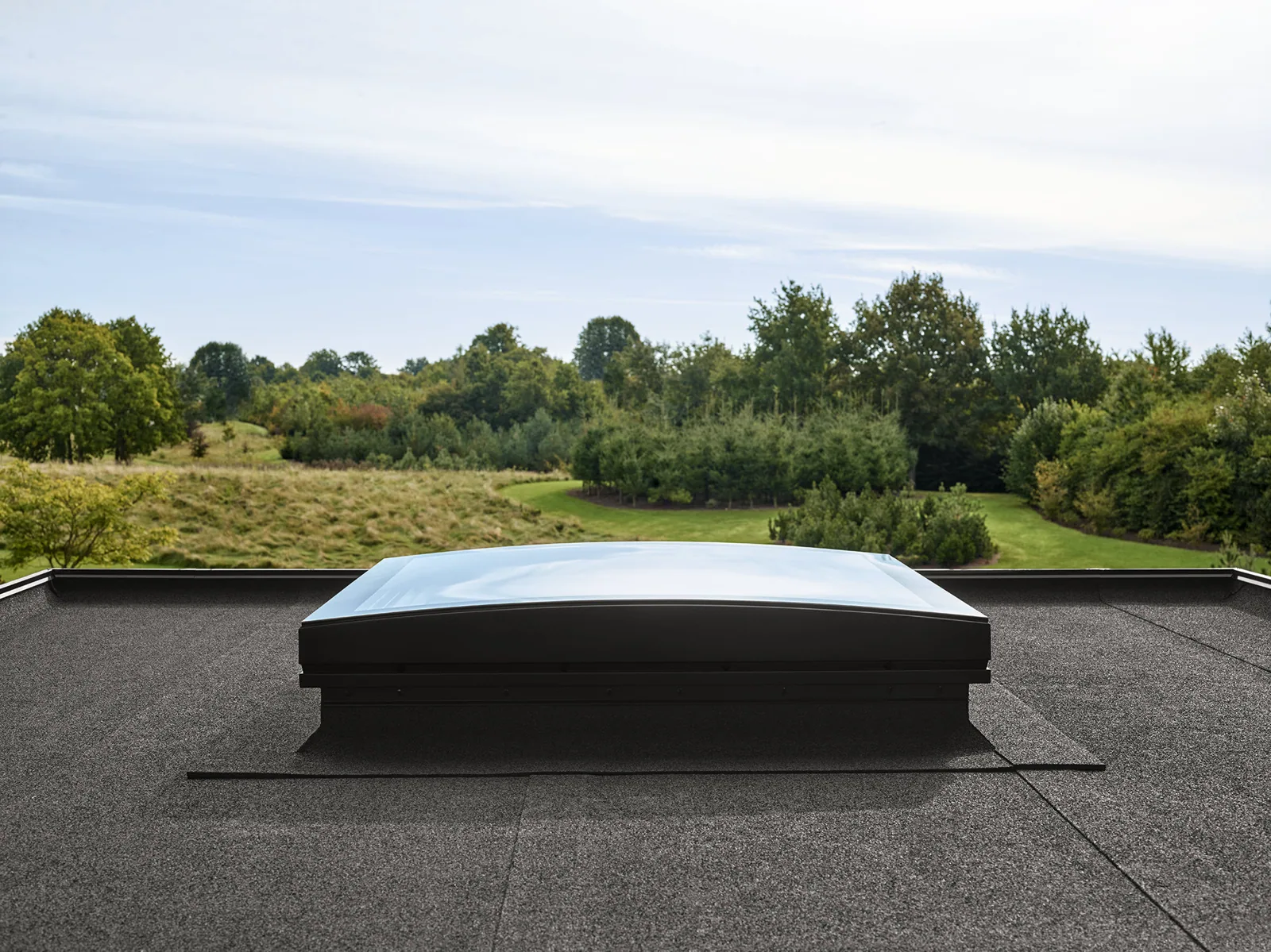
A skylight curb or pipe penetration cuts through the roof field and interrupts the membrane's path to the drain. At a commercial building in Garden Grove, CA, we inspect how the flashing rises, turns, and terminates at each side of the opening. A loose corner, cracked sealant, or unsupported curb can admit water even if the field sheet remains intact. We identify the penetration type and roof system, check nearby seams, and set the repair boundary where new material can bond securely. The scope explains how the opening will be protected while the flashing is rebuilt. A clean tie-in also protects the opening during the next roof service visit.
Check the Curb and the Membrane Tie-In
We look at curb height, corner construction, counterflashing, fasteners, sealant, and the membrane connection around the entire perimeter. On a pipe or conduit, the boot must fit the object and remain compatible with the roof material. A cut boot, open clamp, or movement at the support can become a water path. We also check whether several lines share a support or cross a drainage route, since runoff and service traffic can stress the detail. Photos cover every side and the adjacent field so repairs can be compared after closeout.
Garden Grove has commercial and office uses along Garden Grove Boulevard and industrial activity in the Knott Street and Western Avenue district. Rooftop equipment and tenant operations may affect access to penetrations, but a district fact does not establish the condition of one curb. We ask the site contact about recent HVAC, sign, solar, or electrical work and compare it with roof records. If water entry is active, a leak investigation follows the path from the interior report to the opening.
Remove Failed Flashing to a Stable Edge
We remove loose boot material, cracked flashing, or incompatible sealant until the retained membrane and curb can support a new tie-in. The scope states whether the curb itself needs repair, whether fasteners can be reused, and how the opening stays weather-protected. At corners, a prefabricated boot or reinforced field detail may fit the system; where movement is expected, the new flashing needs room to accommodate it. A patch over dirt, coating, or a loose lap can separate again. We prepare the surface as specified and document any wet board uncovered during removal. Each repair detail also states whether the curb is square and firmly attached, since movement at the frame can reopen a new membrane connection. We document the base of each curb before it is covered.
When several penetrations show repeated failure, the repair may need an organized zone rather than individual sealant touch-ups. A flashing correction identifies the failed transition and the perimeter to be rebuilt. For a new mechanical unit, a curb support scope coordinates the structural support with the roof penetration. We keep the roofing detail clear about who is responsible for disconnecting equipment and restoring it after the membrane work is complete.
Use a Boot and Flashing Compatible With the Roof
Penetration materials have to match the membrane, pipe size, temperature, and movement expected at the opening. A welded TPO or PVC boot differs from an EPDM boot or metal counterflashing. We identify the existing assembly and select a product intended for that system, then describe primer, adhesive, fastener, clamp, and sealant requirements. A generic tube sealant is not a durable substitute for a designed membrane transition. For a skylight, we also check the frame, curb condition, glazing edge, and existing counterflashing before deciding whether the roof flashing alone can be replaced.
Garden Grove follows the 2025 California Building Code with local changes in Title 18; project-specific permit questions should be confirmed with the building official. A TPO penetration boot requires a different weld and surface preparation than an EPDM flashing detail. We name the selected material and connection in the scope so a future equipment service does not introduce an incompatible repair. If a curb has shifted or the frame is damaged, roof membrane work alone may not correct the opening.
Coordinate Rooftop Trades Before the Flashing Opens
A penetration repair may require HVAC shutdown, electrical isolation, or a lift to reach the unit. We confirm which trade controls equipment, where the crew can stage tools, and how the opening will be protected if work cannot finish in one shift. No equipment should be moved or disconnected without the responsible trade's authorization. We set a clear start and stop point around each curb and keep temporary protection secured while the detail is open. The owner receives notice if the work uncovers a different curb or deck condition.
Trask Avenue's planned auto-sales and repair cluster can make rooftop service access and vehicle movement relevant at nearby properties. The property team confirms the actual work route. For an occupied building, an access plan keeps tenants, technicians, and roof crews clear of the active opening. A broad rooftop image may help map equipment placement, while the curb still needs direct hands-on review before flashing is selected.
Photograph Each Side of the Finished Opening
Closeout checks the boot fit, clamp, membrane weld or bond, curb corners, counterflashing, and sealant where the system specifies it. We photograph all sides and identify the material used. If equipment was lifted or disconnected by another trade, the roof record notes when roofing work ended and who restored the unit. Any concealed condition that remains unverified is listed separately. These details help the next service technician avoid cutting a new path through the repair. The maintenance file should list the opening by roof zone, curb or pipe type, and material used. A technician working on the unit can then see where the new flashing sits before placing tools or supports nearby.
After an HVAC or sign visit, a maintenance inspection can check disturbed flashing and new penetrations. If water appears inside, compare the date and location with equipment work and the closeout images. A broader roof inspection can look for related openings and verify the drainage route. The repair file should be updated after future work so each curb or pipe has a traceable history.
Commercial Roofing Questions
Why does a penetration leak when the surrounding roof is dry?
Water can enter through a split boot, open clamp, failed curb corner, or loose counterflashing while the field membrane remains intact. We inspect each side of the opening and follow nearby seams. The repair targets the failed transition and extends to a surface that can accept compatible flashing.
Can you flash around equipment that must remain in place?
Often, if the curb and opening are accessible and the roofing detail can be rebuilt without moving the equipment. We coordinate with the trade responsible for the unit and identify any clearance limits. If the equipment blocks a secure tie-in, the owner receives the required access step before work proceeds.
Should we replace an old skylight when repairing the flashing?
Not automatically. We check the frame, curb, glazing edge, and roof connection separately. If the unit itself is damaged or cannot accept a reliable transition, the scope should identify replacement as a separate decision. A sound skylight may only need its roof flashing corrected.
How can later HVAC work avoid damaging the repair?
Give the servicing trade the roof-zone location, photos, and material detail from closeout. They should use an approved path and coordinate any new support or penetration before cutting the membrane. A follow-up inspection can check the flashing after equipment work and add the change to the roof record.

Measure the roof before choosing the repair path
Arrange a roof walk with available plans, leak records, and access constraints. We will trace the assembly, mark the work boundary, and prepare a scope for your Garden Grove building.
Or call 555-555-5555 · [email protected]