
Roof Damage Repair · Garden Grove, CA
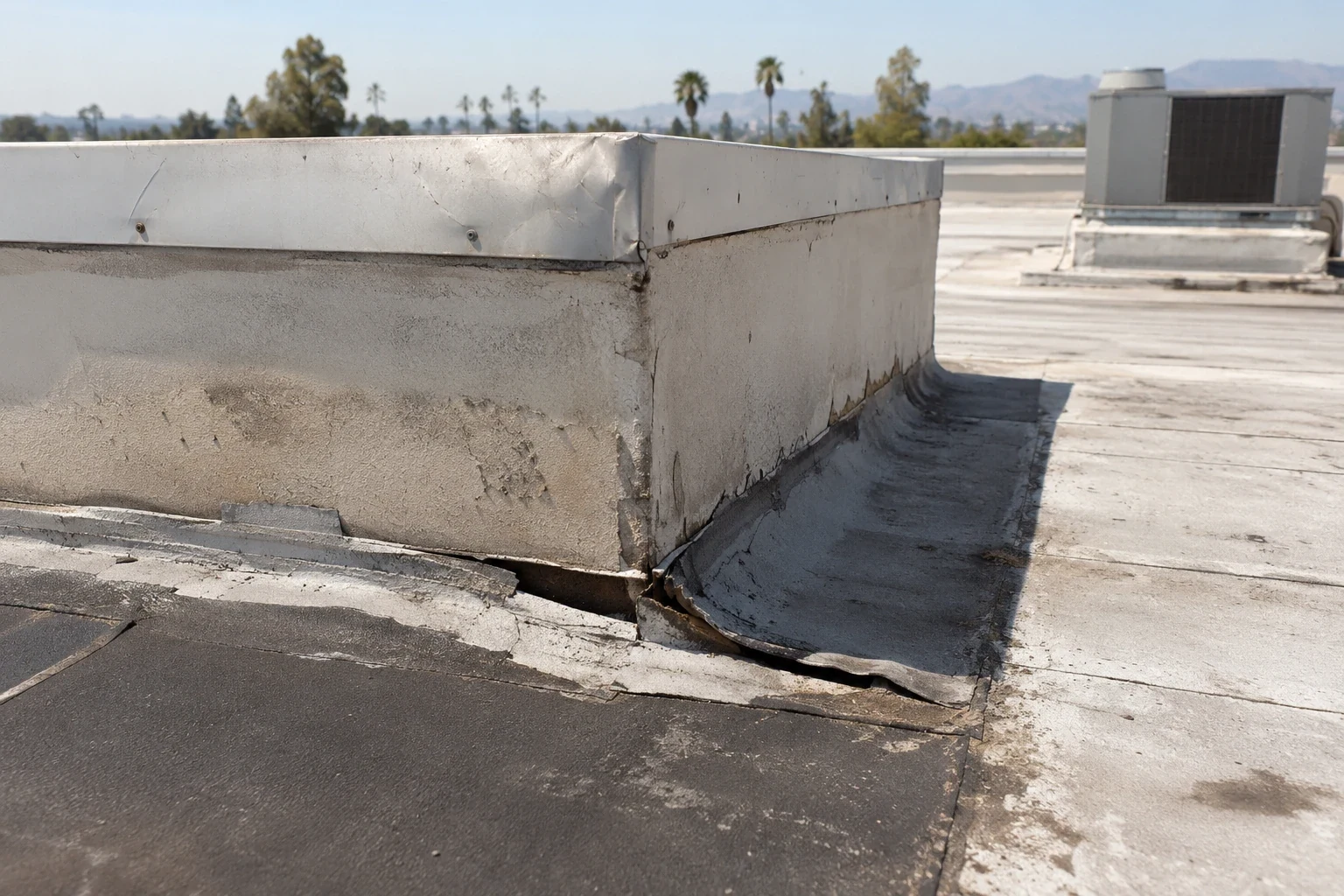
Commercial Roof Flashing Failure Repair in Garden Grove, CA
Commercial Roof Flashing Failure Repair
Repair commercial roof flashing failures in Garden Grove by tracing the transition, documenting adjacent materials, and setting a secure repair boundary.

A flashing failure usually starts where the roof has to meet something that moves, turns, or interrupts the membrane. A parapet, curb, skylight, pipe, wall, or drain creates a transition, and the repair depends on the material and attachment at that exact detail. We inspect the termination, follow the likely path into the adjacent roof area, and identify where the new work can tie into material that is still sound.
A ceiling mark near a wall or unit does not prove the flashing above it has failed. Water can travel inside the assembly, and an old repair may conceal a separate issue. The roof report should say what is open, loose, split, corroded, or concealed, and distinguish that observation from a suspected path. If the wall surface, deck, or insulation cannot be checked without opening the assembly, note the test or trade review needed before setting the permanent boundary.
Garden Grove has commercial corridors and industrial areas with varied building forms. The Harbor Boulevard Corridor is a broad service area; the roof transition at the individual property controls the repair detail.
Follow the Termination to Its First Sound Tie-In
Record the affected interior area, date, recent weather, and any equipment work near the report. On the roof, inspect the flashing height and condition, counterflashing, fasteners, sealant, membrane laps, corners, and adjoining wall or curb. Check whether the termination is mechanically secured and whether water can enter behind an open edge. Photograph the detail from close range and from a wider position that locates it within the roof plan.
At a parapet, inspect the cap, wall face, membrane turn-up, and corner transitions together; a repair to one surface may not close the full path. Around a rooftop unit, confirm whether the curb has shifted and whether the system vendor needs to disconnect or inspect equipment. At a skylight or pipe, check the boot, flange, lap, and material compatibility. Note areas blocked by stored material or inaccessible without an escort, and do not describe them as inspected.
A commercial roof inspection can trace adjacent roof details. If the defect follows a lifted field lap, seam failure repair may be part of a separate scope.
Remove Failed Material Without Hiding the Cause
Before opening the assembly, confirm the owner’s access and protection requirements, interior conditions below the work, and whether another reviewer needs to see concealed layers. Remove only enough material to expose the failed connection and reach a reliable tie-in. If the wall substrate is damaged, the curb is unstable, or wet insulation extends past the visible break, pause and document the added condition before changing the scope.
A proper detail follows the roof system’s installation requirements and the approved project design. Replace loose or corroded components where needed, prepare the receiving surface, and secure the flashing so water sheds across the transition rather than behind it. Sealant may be part of a specific detail, but it cannot substitute for required attachment or compatible membrane. The work description should identify the materials, terminations, corners, and adjacent surfaces included.
When a flashing opening is actively admitting water, emergency roof repair may provide temporary protection before the permanent detail is completed. A wider wind-related condition can be documented with wind damage repair after the edge and adjacent assembly are checked.
Select Materials That Match the Roof and Wall
Metal counterflashing, membrane flashing, curb wraps, pipe boots, and liquid-applied details are not interchangeable. Choose the repair method after confirming the existing roof system, wall or curb material, movement, exposure, and condition of the substrate. A new membrane patch should bond to a compatible, dry surface. Metal replacement should address attachment and laps. Any coating or liquid flashing depends on preparation and a detail that is suitable for the assembly.
If a wall joint moves, determine whether the flashing detail allows that movement or whether the connection is failing because it has been restrained. If roof material has pulled away from a curb, confirm the curb’s condition before rebuilding the membrane termination. Where deterioration continues behind a facade or parapet cap, the owner may need a separate wall or sheet-metal trade. Explain what the roofing proposal includes and what requires that additional scope.
A curb and support inspection can help coordinate unit interfaces. For a drainage transition, compare the ponding-water repair scope only when standing water is also confirmed.
Coordinate the Detail With Adjacent Trades
Roof-wall work can intersect masonry, siding, windows, mechanical equipment, signs, and electrical conduits. Before demolition, assign each component to the contractor who controls it and confirm who will remove or reset counterflashing, caps, or equipment. Protect adjacent finishes and keep the work area clear so the detail can be inspected before it is covered. If the building remains occupied, coordinate interior protection and access with the property contact.
For a multi-day repair, set the daily opening limit and make sure each exposed termination is secured or temporarily protected before the crew leaves. Record the stage that is complete, the stage awaiting another trade, and the contact who can release the next step. Photos before and after installation can show how the old termination was removed and where the replacement connects. If field dimensions differ from the plan, route the change for approval rather than forcing the detail into a mismatched opening.
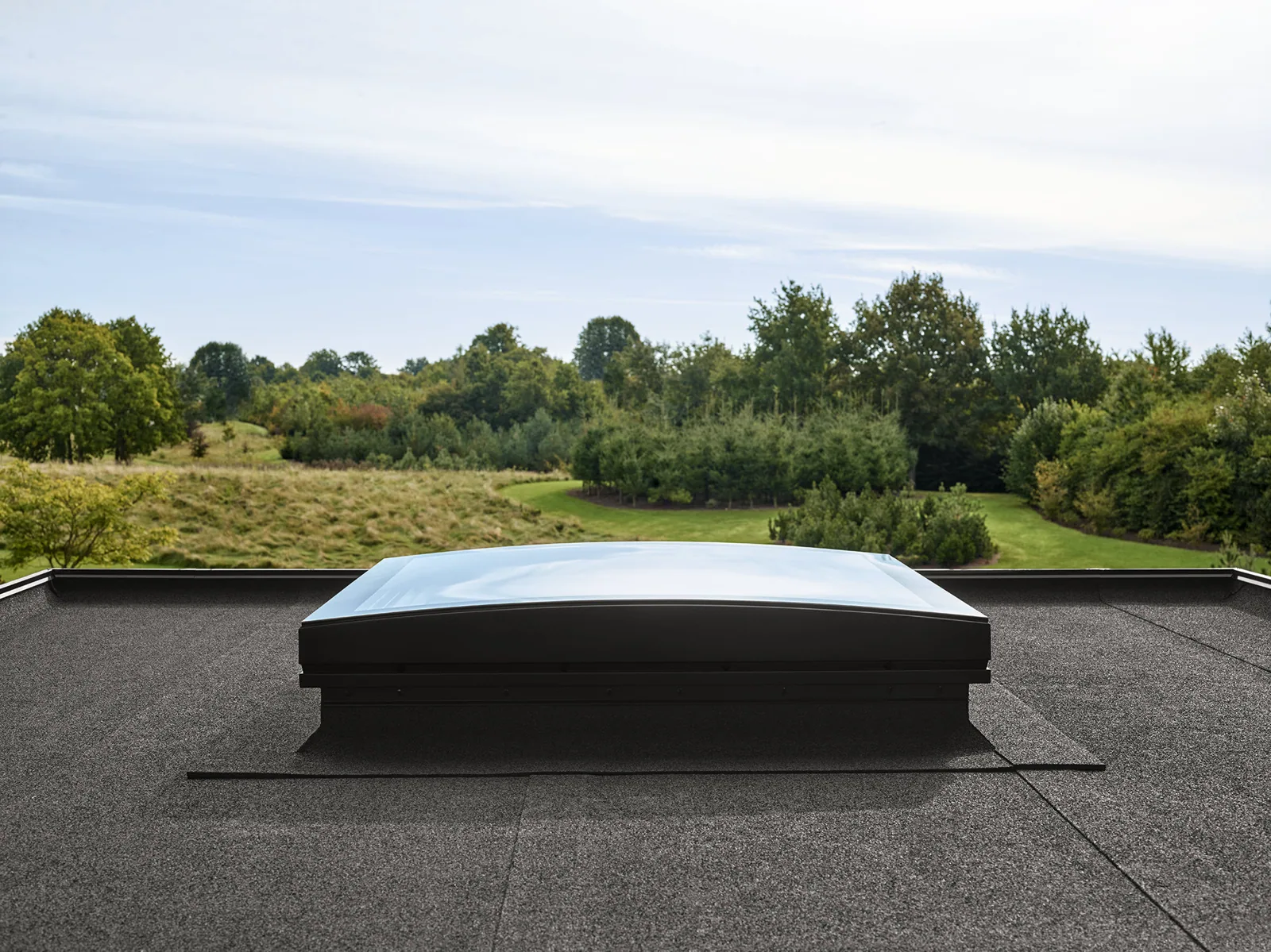
A skylight and penetration flashing scope may address related interfaces. For broader roof-edge work, coordinate with edge metal and coping only where the inspected condition extends there.
Record the Finished Transition and Its Limits
Closeout should show the building, roof zone, transition type, materials, attachment, lap and termination details, photographs, approved changes, and anything not included. Note any adjacent facade, curb, or equipment condition that remains for another contractor. Keep the record with the roof plan and maintenance file so a later report can be compared with the repaired detail rather than assuming that a nearby interior stain has the same cause.
During later roof reviews, check flashing corners, sealant conditions where specified, fasteners, cap laps, curb movement, and new equipment work. Report changes made by other trades before water appears inside. Maintenance does not replace inspection of an active leak, and a completed flashing repair does not establish the condition of the entire roof system.
Garden Grove has offices, retail, industrial, and mixed-use properties with different parapets and rooftop equipment. Use the property’s roof record to track the details that were repaired.
Commercial Roofing Questions
How do you confirm roof flashing is the leak entry point?
Inspect the transition, adjacent membrane, wall or curb, and nearby roof details, then compare them with interior reports. Water can travel before it appears inside, so the inspection should distinguish observation from suspected path.
Can sealant fix loose roof flashing?
Only when sealant is part of a suitable, prepared detail. It does not replace required mechanical attachment, compatible flashing, or repair of a damaged substrate.
Do rooftop units need to be shut down for flashing repairs?
The qualified equipment vendor or facility representative decides whether a shutdown is required. Coordinate that decision before moving a curb, unit, line, or support.
What if the wall behind the flashing is damaged?
Document the exposed condition and protect the opening. The owner may need a wall or sheet-metal trade before the roofing detail can be completed.
What should be shown in flashing-repair closeout photos?
Include the transition before work, exposed substrate if opened, completed attachment and laps, adjacent roof context, and any area left beyond the approved work limits.
Inspect a roof transition
Share the affected room, roof plan, access rules, recent equipment work, and any earlier repair records. We can inspect the flashing detail and define a repair boundary tied to the existing system.
Or call 555-555-5555 · [email protected]