Service Areas · Garden Grove, CA
Industrial Roofing in Garden Grove, CA
Garden Grove Industrial District
Commercial roofing for Garden Grove industrial properties. Inspect equipment curbs, drainage, and membrane details before planning a repair or replacement.
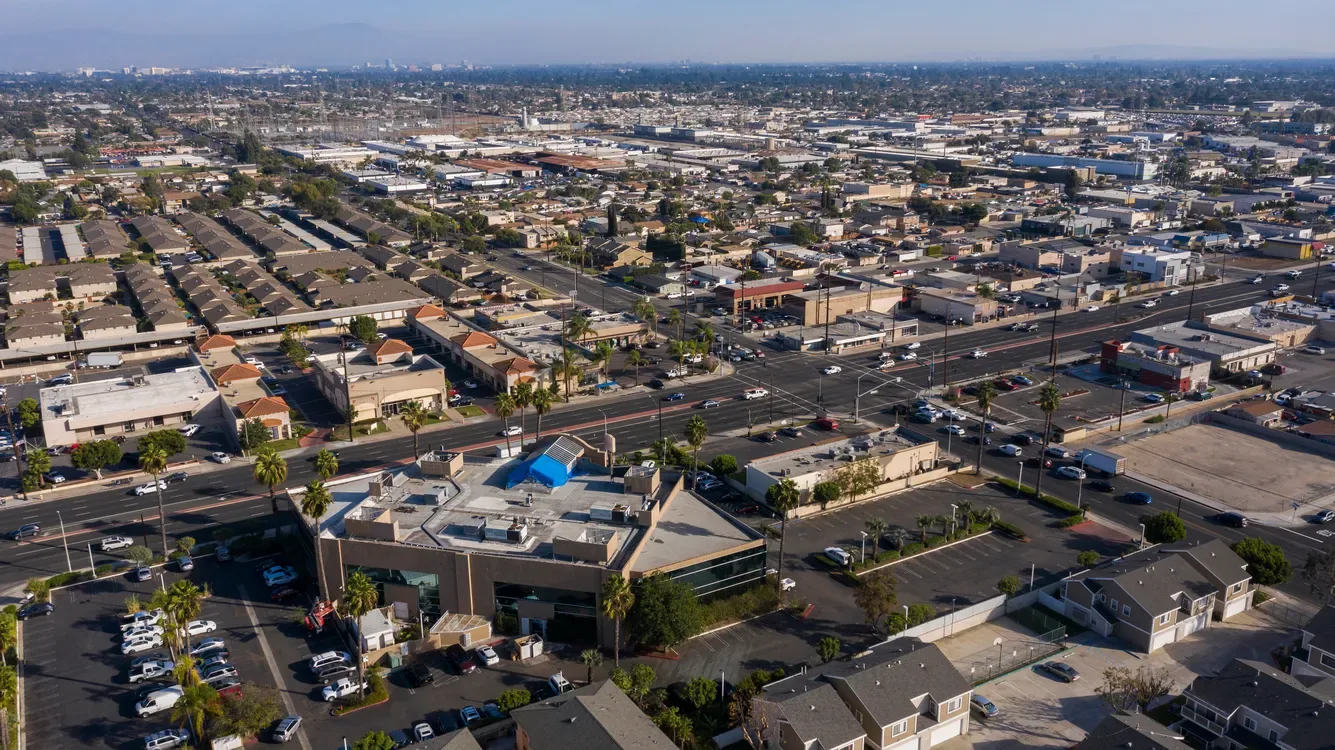
A curb flashing below an exhaust fan can take repeated service traffic, and a loose corner may send water toward an interior process area. In Garden Grove’s industrial district, we inspect the penetration, surrounding membrane, and roof route used by maintenance staff before defining a repair. Knott Street and Western Avenue form a hub for major industrial and manufacturing activity, including businesses such as Air Industries, Southland Industries, and Saint-Gobain Performance Plastics. The district serves varied operations, so each roof needs its own assembly review.
We ask about active equipment, loading schedules, interior protection, and safety access, then mark the findings by roof zone. A written scope should identify the failed detail, the material receiving the repair, and any trade coordination needed to close the roof securely.
Map Equipment and Service Routes
Start at the roof access point and trace the routes that mechanics use to reach fans, vents, pipes, supports, and electrical runs. A service path can abrade a membrane or leave repeated fasteners at the same curb. Photograph the equipment base, flashing height, nearby seams, drain path, and any cuts or patches from earlier work. If the roof has multiple elevations or additions, label those separately so one section’s attachment or membrane does not become an assumption for the entire building.
Industrial and commercial properties line parts of Knott Street and Western Avenue. For a building in this district, confirm deliveries, process schedules, and equipment shutdowns with the site contact before staging work. Record any restricted roof areas so the inspection notes clearly show what was accessible. A drone roof inspection can help document visible conditions where safe access is limited, while hands-on inspection remains necessary for details that need testing or contact.
Trace Water Around Curbs and Penetrations
Industrial roof leaks often involve more than a membrane puncture. Water can pass at a curb corner, an unsealed fastener, a cracked boot, a seam, or the edge of an abandoned support. Compare the interior report with roof elevations and nearby details, then inspect the receiving surface around the likely path. If a pipe or unit must be moved, coordinate that work with its service vendor; the roofing crew should not assume responsibility for equipment that remains connected or energized.
Set the repair limit only after checking the material beyond the obvious opening. A local patch works when the membrane and substrate around it are sound. If water has reached insulation or a deck, the repair may need to include removal and replacement of those components. Commercial roof leak repair should state what was confirmed, what remains concealed, and how additional work will be approved if the opening reveals a wider problem. That decision point keeps the owner in control of cost and makes the closeout easier to verify.
Choose the Repair Method for the Installed System
Identify whether the building has EPDM, TPO, PVC, modified bitumen, built-up roofing, metal, or a coating before ordering materials. A welded thermoplastic lap, taped EPDM seam, asphaltic flashing, and standing-seam panel do not share one repair procedure. Check the substrate and attachment where records or a test opening allow, then match primer, accessory, and flashing method to the installed system. A coating cannot stabilize a loose assembly or solve moisture trapped beneath the surface.
At properties with changing equipment or process exhaust, review chemical exposure and service access as part of material selection. The industrial district includes manufacturing businesses such as Air Industries, Southland Industries, and Saint-Gobain Performance Plastics. Operations differ by building, so we ask site staff about discharge points and maintenance activity, then evaluate visible staining, corrosion, and material compatibility. The owner can compare EPDM assemblies or TPO systems when replacement is being considered. For scheduled upkeep, preventive roof maintenance can address drains, seam checks, and exposed transitions before water reaches the building.
Protect Production and Interior Assets
Before mobilization, identify who approves roof entry, where vehicles or lifts may stage, which processes cannot be interrupted, and what interior area needs protection. Agree on a secure stop for each shift and keep temporary dry-in supplies available before removal. A weather change or an unexpected deck condition can shorten the work window, so open sections should never depend on a single best-case schedule. The crew should confirm drains remain open and that tools or scrap do not obstruct runoff.
For a multi-building industrial owner, separate production, storage, office, and mechanical roof zones in the work plan. If a crane pick or equipment move is needed, sequence it with the equipment vendor and confirm who restores flashing after the move. A broader Garden Grove roof assessment and the Western Avenue industrial area can inform nearby service planning, but each site receives its own access notes, condition map, and repair boundaries. This makes the handoff clear for operations staff who may not be present during every shift.
Document the Detail for the Next Service Call
Closeout records should name the roof system, repair zone, preparation, materials, and limit of work. Photograph the finished curb or seam close up and include a wider image that shows its location. Record any equipment that could not be shut down or any adjacent area that remained inaccessible. If the facility changes the service route later, update the map and inspect the membrane where carts, ladders, or technicians cross the surface.
Santa Ana weather normals provide nearby context: the region’s normal precipitation is concentrated in winter rather than August. For industrial roofs, check drains, scuppers, and overflow routes before the wetter months and after debris-producing work. A roof condition report can preserve the photo index and open maintenance items. When repairs affect a warranty or existing product system, retain the applicable submittals with the service history. The next inspection can then compare current findings with the actual work completed, rather than relying on a description of where a crew may have patched.
Schedule a follow-up after equipment service if a new penetration or support was installed. The roof team can verify that the curb tie-in, fasteners, and drainage around the base remain sound. This last check is useful when another trade works after the main reroof crew leaves, because small additions can change the water path without affecting the rest of the field membrane.
Commercial Roofing Questions
Can a roof inspection be coordinated with industrial operations?
Yes. We agree on access, escorts, equipment restrictions, production hours, and staging with the facility contact before the visit. If a zone cannot be reached, the report names that limit and identifies another way to assess it when possible.
Does the industrial setting tell you which roof system is installed?
No. Nearby activity does not identify a building’s roof assembly. We verify the membrane, attachment, substrate, penetrations, and drainage at the property before recommending a compatible repair.
Who handles rooftop equipment during a repair?
We coordinate the flashing and roof tie-in. A mechanical or electrical vendor handles disconnection, movement, or service of its equipment unless the project scope specifically assigns those tasks elsewhere.
When should a repair scope expand beyond a curb?
If inspection or an approved opening finds wet insulation, damaged deck, or membrane failure beyond the curb, we document the evidence and review the revised boundary with ownership before proceeding.
What details are included in an industrial roof closeout?
The record identifies the roof zone, material, preparation, repair limit, photographs, and any unresolved access or equipment issue. Keeping it with the facility roof plan helps maintenance staff locate the completed work.
Arrange an industrial roof inspection
Provide the roof plan, equipment list, operating limits, and leak history. We will map the relevant zones and prepare a repair or maintenance scope that accounts for access and production needs.
Or call 555-555-5555 · [email protected]