Garden Grove, CA · Commercial Roofing
Roofing Capabilities
Roofing Capabilities in Garden Grove
A useful roof record links a photograph to a place on the assembly and a decision that someone can act on. We inspect the visible system, map findings by roof zone, and distinguish a repair from a condition that needs testing. Garden Grove includes commercial, office, industrial, civic, and mixed-use areas; the condition report should reflect the building under review, not just its category.
All Roofing Capabilities
Commercial Roof Asset Management
Manage Garden Grove commercial roofs with consistent asset records, inspection history, repair priorities, open decisions, and capital planning.
Commercial Roof Capital Planning
Plan Garden Grove commercial roof spending with current condition evidence, repair alternatives, approval timing, open assumptions, and phased project scopes.
Commercial Roof Condition Reports
Get a Garden Grove commercial roof condition report with dated observations, roof-zone photos, scope limits, open questions, and recommended next steps.
Commercial Roof Warranty Management
Manage Garden Grove roof warranty records with installation files, inspection dates, repair approvals, vendor history, and property-specific follow-up.
Commercial Roof Due-Diligence Surveys
Review a Garden Grove commercial roof before acquisition with survey scope, dated observations, access limits, repair history, and follow-up questions.
Multi-Site Commercial Roof Programs
Coordinate Garden Grove roof work across properties with shared records, site-specific scopes, repair priorities, approvals, and scheduled follow-up.
Build a Field Record
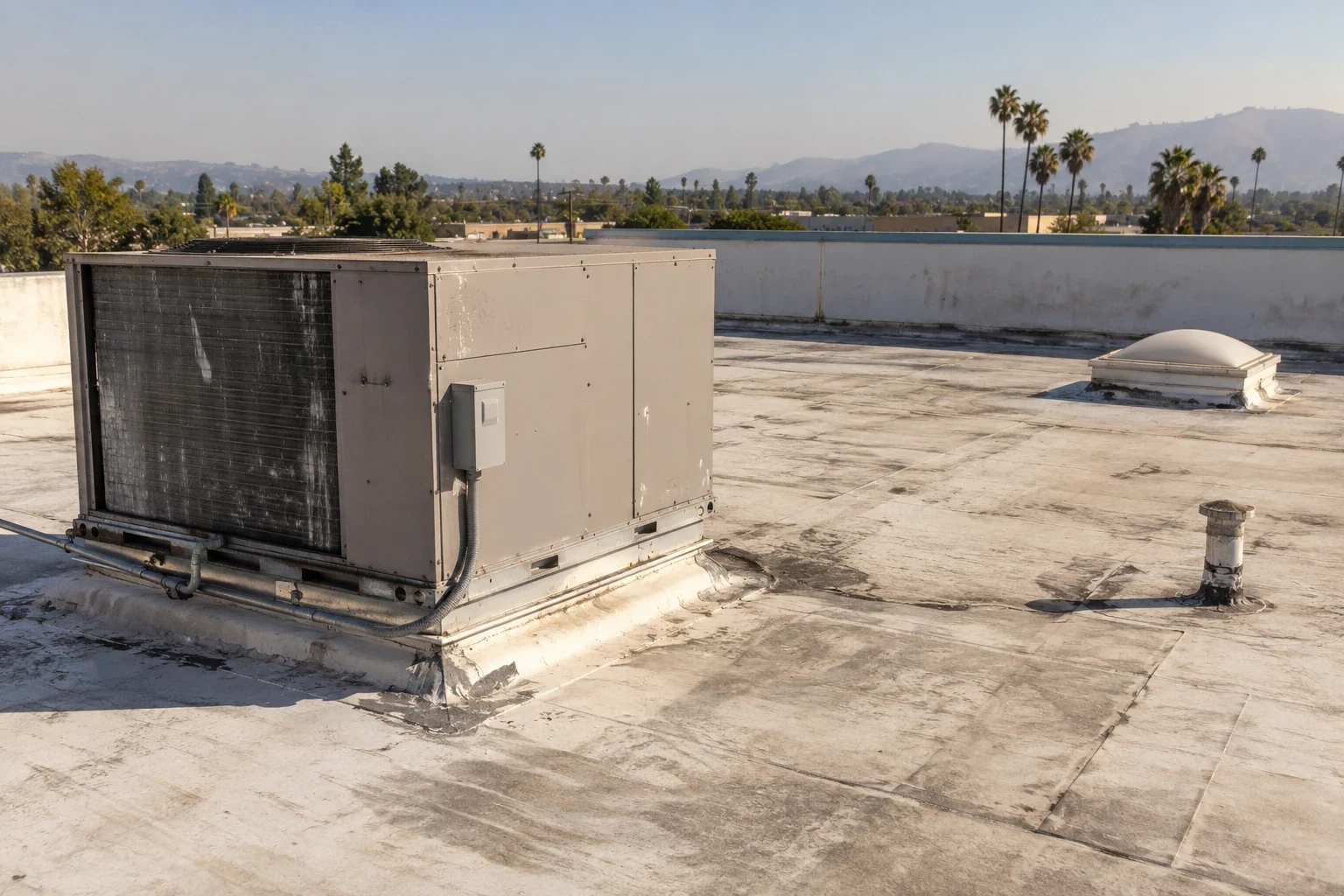
We document materials, drainage, seams, penetrations, edges, visible defects, and prior repairs where known. Photos should show both the detail and enough surrounding roof to locate it again. If interior leak reports exist, we compare them with likely water paths. An inspection can also identify areas where a test opening would materially change a repair boundary.
For suspected concealed moisture, an infrared moisture survey can help focus further review. Readings are interpreted with field observations and confirmed as needed; the survey is not a substitute for examining the layers. This distinction keeps the record useful for repairs, budgeting, and future comparisons.
Separate Urgent Work From Capital Work
We rank findings by active water entry, exposed substrate, safety, and the consequence of waiting. A loose edge above occupied space may need prompt attention. General wear without a failure can be monitored or grouped with planned work. The capital plan connects those choices to removal depth, insulation needs, access, edge details, and the possibility of recovering the assembly.
Garden Grove identifies manufacturing activity along Knott Street and Western Avenue and a planned auto-sales and repair cluster along Trask Avenue. These settings can involve equipment, loading, and service access that affect the timing of roof work. Our recommendations remain tied to the actual roof and operating limits confirmed with the property contact.
Keep Multi-Site Decisions Comparable
For owners managing more than one property, multi-site programs can track condition, open repairs, access notes, and maintenance visits in a consistent format. Each roof still needs its own inspection and boundary. A recurring issue at one site should not be carried over to a nearby building without evidence.
A roof asset record can preserve plans, photos, repair scopes, and updated equipment locations. After mechanical work, revisit the affected curb or penetration and add the closeout detail to the file. The record becomes more useful when each update identifies what changed and where.
Carry Access Notes Forward
Access planning belongs in the same record as roof condition. We note hatch or ladder limits, staging areas, sensitive interior zones, and contacts who can authorize entry. The next occupied-building work sequence can then account for those constraints before material arrives.
Commercial Roofing Questions
What belongs in a commercial roof condition report?
Record the assembly, roof zones, visible conditions, photographs, drainage, access limits, recommended actions, and any uncertainty that requires testing. Findings should be easy to connect to a work scope.
Can infrared readings confirm wet insulation?
They can identify patterns for further investigation, but interpretation should be tied to field conditions and confirmation methods. We describe what the survey supports and where an opening may be needed.
How do you rank repairs across several buildings?
We compare active leaks, safety, material exposure, interior consequence, access, and scope. Each site retains its own findings so the portfolio view does not blur local conditions.
Can a roof plan support a replacement budget?
Yes, when it is paired with current inspection findings, assembly information, and known operating constraints. We note areas that need confirmation before final quantities or removal limits are set.
Request a Roof Assessment
Use inspections, photo condition reports, maintenance, and capital planning to manage commercial roofs across Garden Grove properties.
Or call 555-555-5555 · [email protected]