
Roof Damage Repair · Garden Grove, CA
Commercial Roof Seam Failure Repair in Garden Grove, CA
Commercial Roof Seam Failure Repair
Repair commercial roof seam failures in Garden Grove after checking lap condition, moisture, system compatibility, and the surrounding roof field.
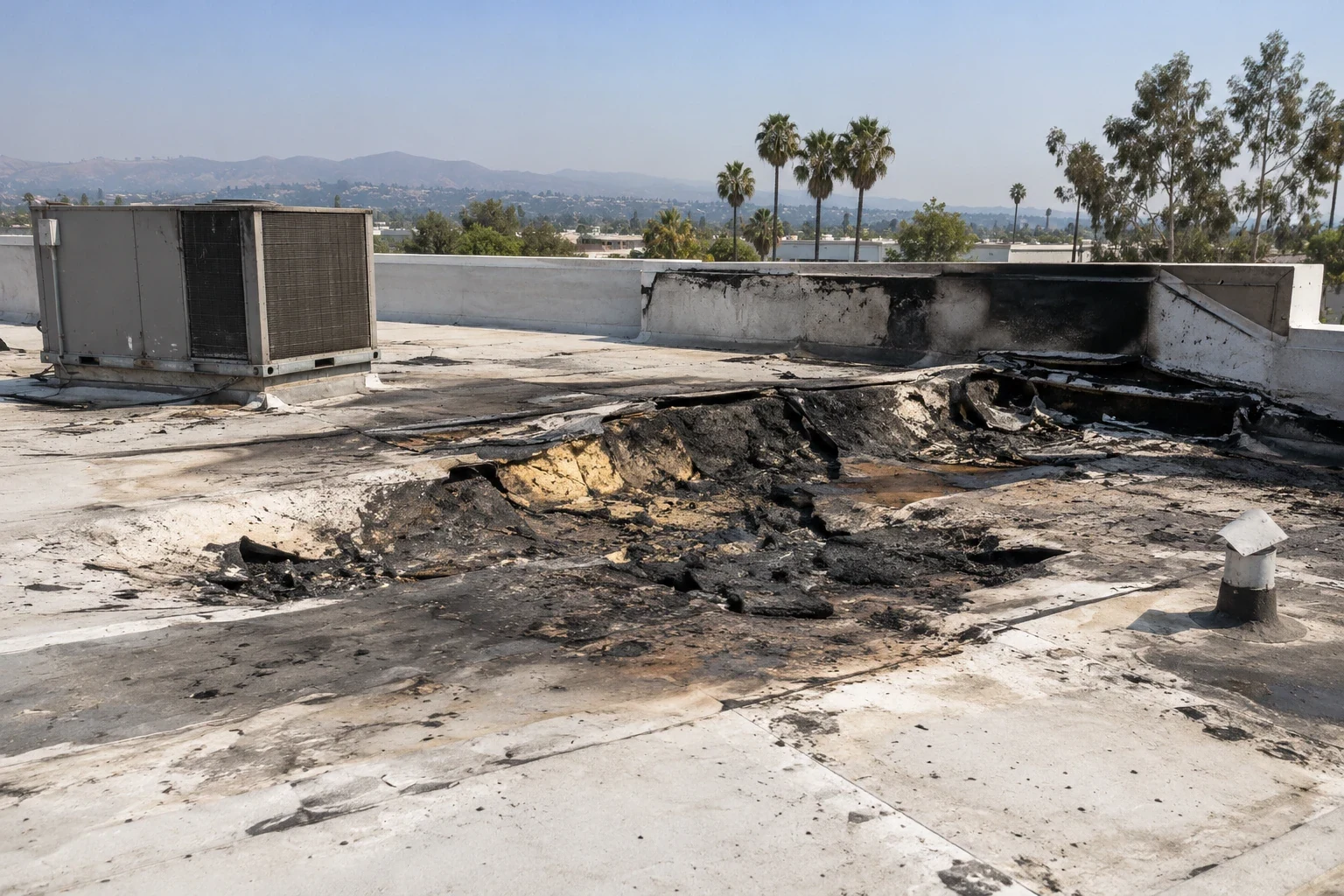
A separated roof seam can look like a narrow line while the repair area extends beyond the visible opening. The lap may be contaminated, the membrane may have shrunk, or water may have reached insulation beneath it. We inspect the seam and adjacent field, determine where bond or attachment remains sound, and set a repair boundary that can be closed with compatible materials. The visible gap is a starting point for the roof walk, not a complete measure of the failure.
Different assemblies use different seam details. A heat-welded thermoplastic lap, adhered membrane seam, mechanically attached side lap, and metal-panel joint need different preparation and repair methods. Confirm the roof system and its applicable installation instructions before selecting a patch. If the membrane type or prior repair material is uncertain, document that limit and verify compatibility before applying another layer.
Garden Grove’s commercial and industrial properties include varied roof assemblies. The Garden Grove Industrial District provides a broad service-area reference; the system and seam detail at the individual building govern the correction.
Check the Full Lap Before Making a Patch
Record where the seam runs, its direction, roof section, visible separation, and the date or conditions of any leak report. Inspect the lap edge, weld or adhesive line, fasteners where present, adjacent membrane, drainage, and nearby penetrations. Look for wrinkles, fishmouths, surface contamination, brittle material, punctures, and prior patches that could affect the receiving surface. Photograph the defect and the surrounding area so the repair boundary can be located after work.
Interior water may show up away from the seam, so compare the reported room with several likely roof paths instead of treating one open lap as a confirmed entry point. If the seam is wet, soft, or obscured by a prior coating, state whether the repair can proceed after preparation or needs a test opening. Record any section that is inaccessible or unsafe. The inspection should establish whether the defect is isolated or repeated across connected runs.
A commercial roof inspection can check related roof zones. If a seam opens at a wall or curb, the flashing repair scope may need a separate transition detail.
Prepare a Compatible Surface and Secure Tie-In
Remove failed or loose material only far enough to reach a stable bond line or attachment point. Clean and dry the receiving surface as required by the roof system, then confirm the patch material, width, lap, and fastening or weld method suit the existing assembly. A bead of sealant across a dirty or moving seam may conceal the separation without restoring its connection. If the membrane has shrunk or the substrate has shifted, determine whether that movement must be addressed before closing the lap.
Where the seam extends beneath wet insulation or across multiple roof zones, outline how much material will be opened and what protection is needed below. If the test area reveals deck deterioration or moisture beyond the estimated limit, stop and request direction before extending removal. The owner should receive photographs and a revised scope that identifies the new boundary, temporary dry-in, material assumptions, and any specialist review required.
A roof opening needing immediate cover can be handled through emergency roof repair while the permanent seam detail is reviewed. For a seam affected by uplift, inspect the nearby edge under the wind damage repair scope as well.
Use the Repair Method for the confirmed Roof System
Thermoplastic membranes typically rely on a compatible weld and confirmed bond; adhered systems may use a different patch and primer sequence; mechanically attached systems require attention to fasteners and load transfer; metal panels rely on their joint, clips, and seal details. These methods are not interchangeable. Identify the membrane or panel from records and field evidence, then follow the system requirements for preparation and repair. If an old coating or incompatible patch covers the lap, establish how the underlying seam can be reached without compromising the remaining assembly.
A local seam repair can be appropriate when the surrounding sheet and substrate remain serviceable. Repeated separation, widespread poor welds, brittle membrane, or water in the assembly may require broader evaluation. A coating is not a substitute for correcting an open seam, and a recover may obscure a recurring connection problem unless the existing roof is evaluated first. The repair proposal should state the seam length, material, surface preparation, test method where applicable, and what conditions are excluded.
For a thermoplastic assembly, review the TPO roofing detail or PVC roofing detail only after the system is identified. A condition review can be organized in a roof condition report.
Coordinate Seam Repairs With Other Roof Work
Before the crew starts, confirm roof access, staging, protection below, lift plans, and whether other vendors will work near the seam. A cable, support, curb, or drain can interrupt the lap and require a sequence with another trade. Mark the repair line and avoid burying the seam beneath new equipment or insulation before the roofer has inspected and accepted the tie-in. If a building remains occupied, the property contact approves access and interior protection for the affected zone.
For a multi-day scope, limit the open area to what can be prepared and closed during the agreed shift. Photograph the seam before cleaning, after preparation, and after the repair when the detail is visible. The closeout should identify any seam section deferred for weather, access, or a separate system review. If the repair uncovers a different roof material or prior patch, stop and confirm the right method before proceeding.
When several roof sections need comparison, a roof asset record can track each seam location. For water remaining after rain, also inspect whether ponding water is loading or exposing the same area.
Show the Repaired Seam and Any Open Condition
Record the roof zone, seam length or segment, repair material, preparation, lap or attachment, photographs, and any test performed. Note whether the field returned to service and what portion remains outside the scope. Store the record with roof plans, prior repairs, and manufacturer documents so future staff can identify the system before adding another patch. A closeout should describe the repaired seam, not imply that every lap on the roof has been tested.
Follow-up reviews can check seam edges, transitions, equipment changes, drainage, and new patches from other vendors. If a leak returns, record its date and interior location and compare it with the repaired segment, then inspect the adjacent field for another path. Do not assume a nearby issue is the same failure without confirming the roof detail.
Local climate records can inform seasonal maintenance, but they do not determine the cause of a seam opening. The service area includes several roof types, and the repair log should remain specific to the assembly observed at each property.
Commercial Roofing Questions
Can an open roof seam be sealed with caulk?
Only if sealant is part of a compatible, properly prepared repair detail. It does not replace a required weld, adhesive lap, fastening, or correction of movement beneath the seam.
How do you know what seam repair method to use?
Identify the existing membrane or panel and the original seam type from records and field conditions. Then follow the system’s applicable preparation and repair requirements.
Can a seam leak show up away from the opening?
Yes. Water may travel within the assembly before appearing indoors, so inspect the reported roof zone and adjacent details before assigning the entry point.
When does one seam problem require a broader roof review?
Repeated separation, similar defects on other runs, wet insulation, or widespread material deterioration can indicate the issue extends beyond one lap. Document those findings before expanding the scope.
What should be included in seam-repair closeout?
Include the roof location, repaired length, material and preparation, photographs, any test result, approved scope changes, and seam sections not included.
Inspect a roof seam
Share the roof plan, seam location, membrane or panel records, leak report, and prior repair details. We can confirm the system, inspect adjacent material, and define a compatible repair scope.
Or call 555-555-5555 · [email protected]