Roofing Capabilities · Garden Grove, CA
Commercial Roof Condition Reports in Garden Grove, CA
Commercial Roof Condition Reports
Get a Garden Grove commercial roof condition report with dated observations, roof-zone photos, scope limits, open questions, and recommended next steps.
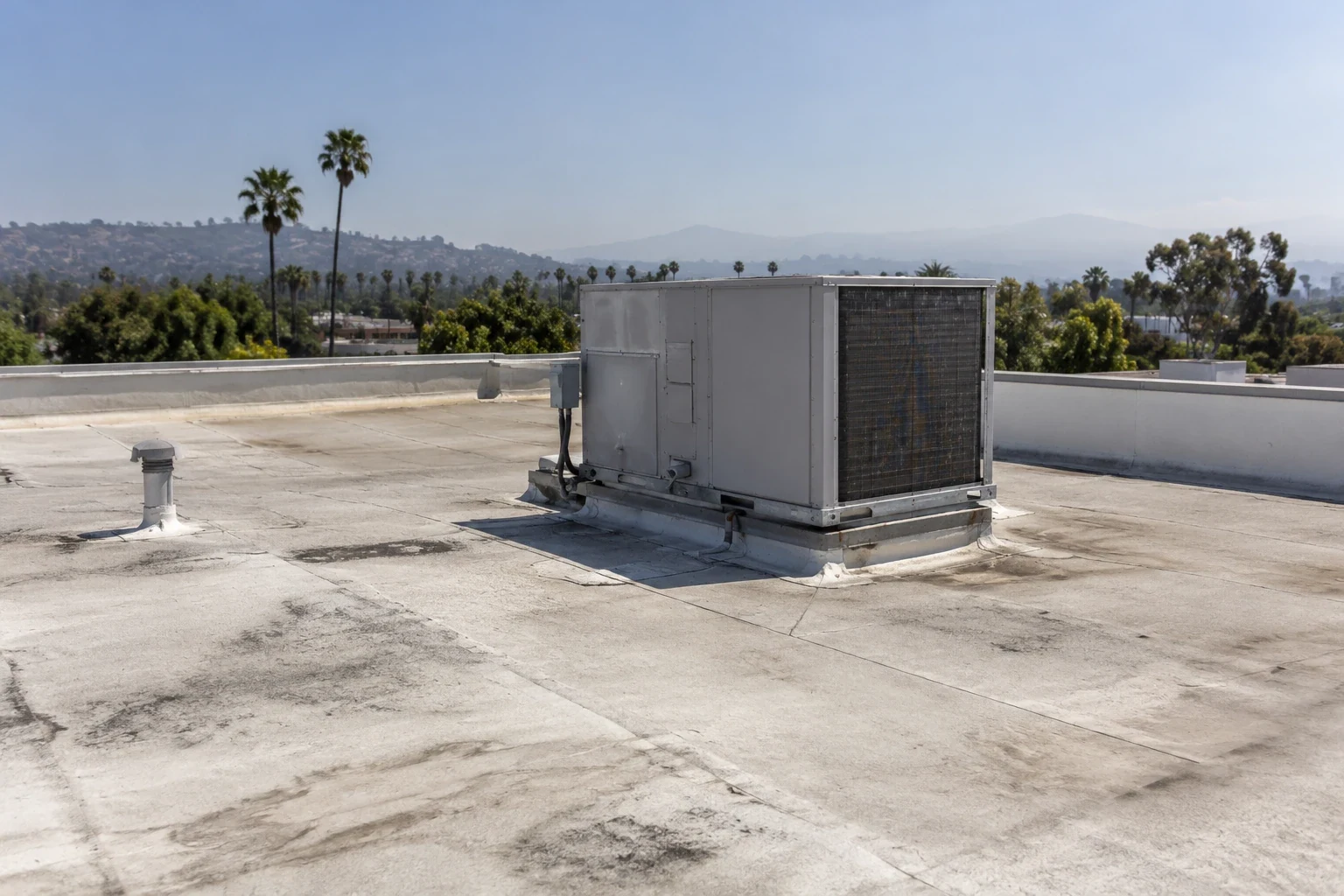
A report becomes useful when each roof-zone observation points to a decision and names what remains unknown. We connect each observation to a building and roof zone, describe what could be confirmed during the visit, and separate the current finding from its likely explanation or a proposed repair. The report also states what was inaccessible and which test, trade, or owner decision could change the scope.
Reports serve different needs: a leak investigation, a maintenance review, a transaction, a warranty concern, or a capital-planning meeting. The inspection boundary should match that purpose. A visual visit does not establish the condition of concealed layers, and a report should not imply that the entire assembly was tested when only the surface was accessible. Dated notes make it easier for a facilities team to compare a later visit with the earlier roof detail.
Garden Grove’s General Plan includes commercial, office, industrial, civic, and mixed-use areas. The Harbor Boulevard Corridor and Garden Grove Industrial District are local service areas; the inspection identifies findings at the specific property.
Record the Roof, the Observation, and Its Limits
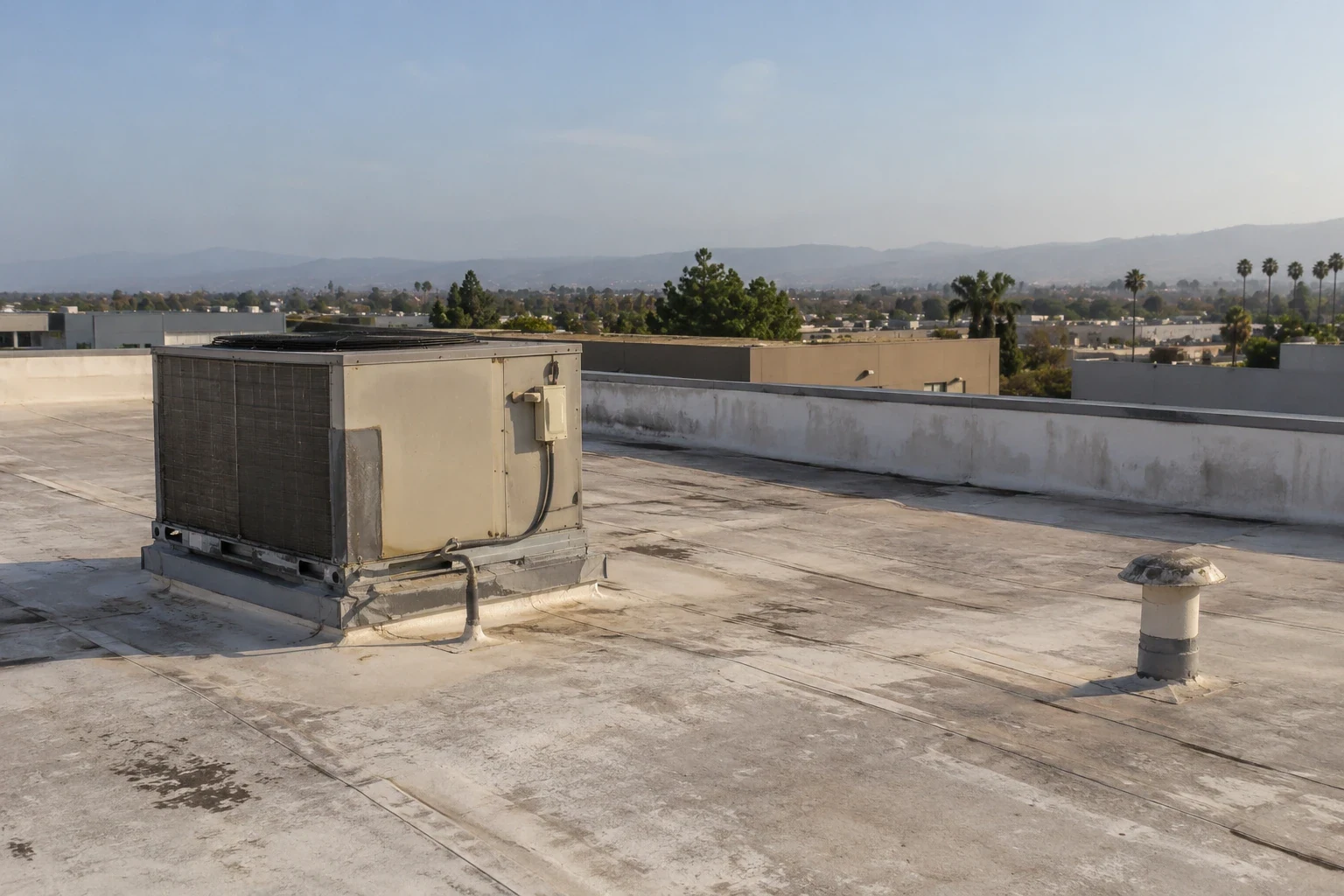
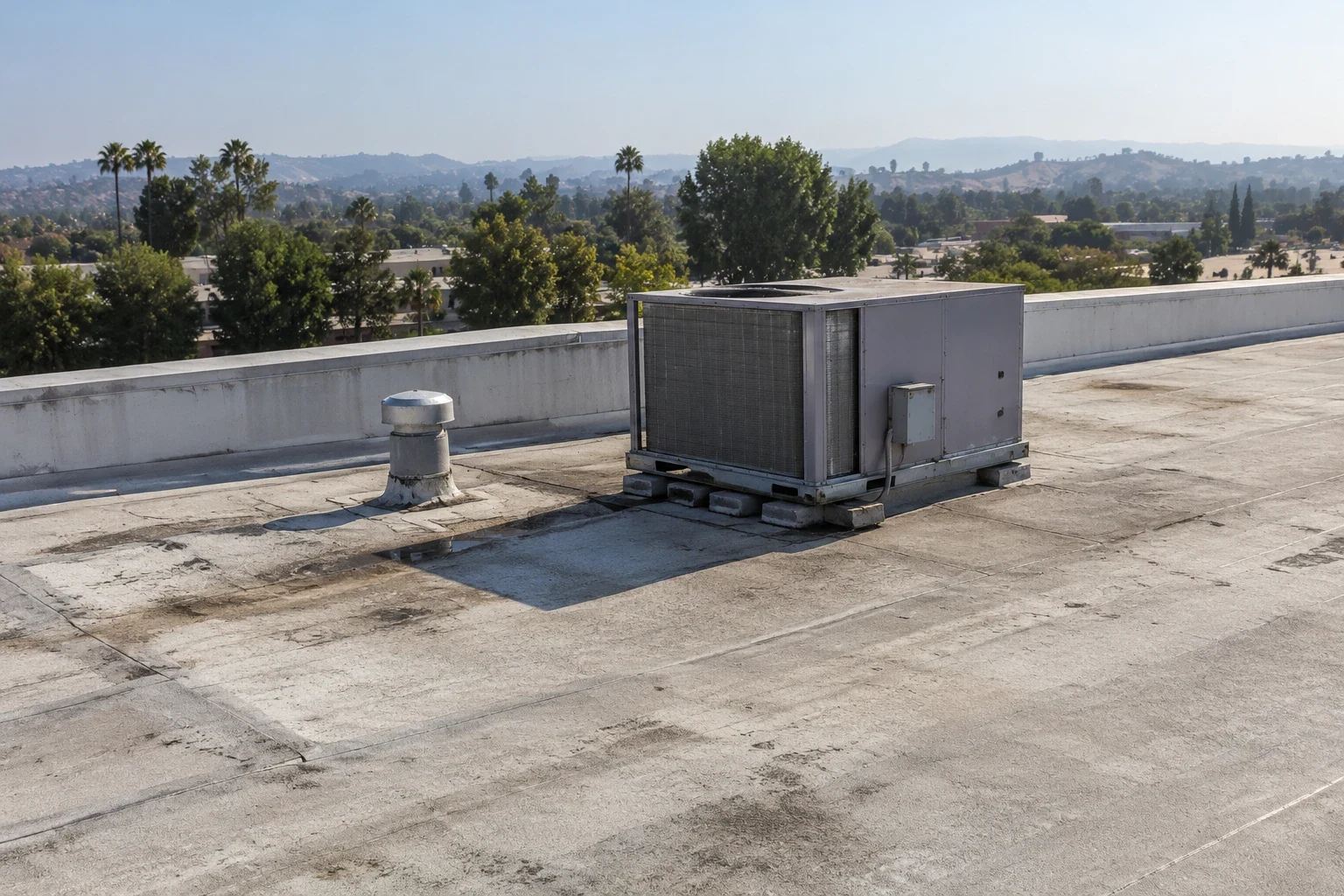
Start with the property identifier, roof plan, system information available to the owner, date of inspection, purpose, access route, and areas excluded. For each finding, record a precise roof-zone location, the visible condition, photo reference, and whether the observation is confirmed or uncertain. Include seams, drains, flashings, equipment curbs, penetrations, edges, and visible transitions that relate to the request. A photo should show the detail and enough surrounding roof to locate it.
When the owner reports a leak, capture the interior location and date, then use that report to guide the roof walk. Water may travel through an assembly, so the ceiling mark alone does not prove the opening above it. Distinguish visible material condition from an inferred cause, and identify whether an opening, moisture scan, manufacturer review, or other specialist input is needed. If a section was unsafe, blocked, or hidden beneath equipment, identify that limit rather than treating it as a passing result.
A commercial roof inspection can gather current observations. When the request concerns a transaction, the separate due-diligence roof survey can match the report scope to that review.
Explain What the Recommendation Resolves
A recommendation should point to the observed condition and describe what the proposed work would address. For a repair, identify the roof zone, material, tie-in area, protection, access, exclusions, and any assumption about hidden layers. If the work would expose wet insulation or deck damage, state how the contractor will document the finding and who must approve a change. This helps the owner compare a limited repair with broader work without treating a preliminary estimate as a confirmed project.
Where more than one option is reasonable, explain what each option includes and the condition that would make it unsuitable. A patch may address an isolated defect, but it does not prove the surrounding roof is sound. A coating or recover depends on material compatibility, substrate, drainage, and height transitions. Replacement may reach concealed layers but adds removal and temporary protection. The report should make those boundaries clear so a reviewer can see what is known and what remains open.
For current leak response, commercial roof repair can address a defined detail. If water is still entering, emergency protection can be evaluated separately from permanent work.
Use Findings to Compare Roof Options
Condition ratings help organize decisions when each rating has a stated basis. Define the scale, date, inspection method, and evidence behind the label. A priority category should reflect the observed issue and operational effect, not imply that a roof will fail on a predicted date. For a portfolio, apply the same criteria across buildings but keep observations and photographs attached to each roof section.
When estimates accompany the report, identify their date, scope, quantities, assumptions, and whether the price is preliminary or based on confirmed conditions. List any test opening, access, equipment movement, engineering review, or permit question that could change the cost. Keep completed repairs separate from recommendations that the owner has not approved. These distinctions give finance and facilities staff an accurate status for budgeting and work authorization.
Garden Grove’s code requirements include state standards and local amendments; verify the current permit path for the intended work with city officials. A roof capital plan can use the report to compare project timing after its findings and cost assumptions are reviewed.
Deliver a Report the Site Team Can Use
A practical report uses consistent roof-zone names, photo labels, dates, and short descriptions so another team can locate the detail. Include access restrictions, occupancy constraints, equipment interfaces, and the site contact who can answer a field question. If the roof plan is outdated, state what orientation or reference point was used during the walk. The report should tell the property manager what to coordinate next without exposing a tenant to a work area that has not been approved.
When repairs follow the report, update the record with the authorized scope, materials, before-and-after photos, changes, and remaining issues. A daily field update can distinguish completed work from protection that is temporary. If a contractor discovers conditions beyond the recommendation, document the new location and route a decision request before expanding the repair. The report remains a record of what the inspection found, not proof that unvisited areas were clear.
For portfolio owners, roof asset management can retain report history by building. A property-management workflow can route findings to the person handling tenant notice and approval.
Keep the Findings Current After Repairs
At closeout, retain the report date, purpose, inspected zones, observations, photos, recommendation, exclusions, and questions left unresolved. Add a later repair record without overwriting the original inspection. This preserves a sequence: what was visible before work, what the crew found after opening the roof, what was repaired, and what should be reviewed next. If a new leak is reported, compare its location and date with both the inspection and closeout records.
Roof conditions change with maintenance, weather, equipment work, and building alterations. If the report is old or a new event occurred, schedule a current review before relying on prior recommendations. A report can help plan the next inspection, while new roof issues may still arise between visits. The owner should treat new water entry or a new roof opening as a reason to reassess that area.
Garden Grove has a range of property types across its service area. Use the city and corridor pages to identify service coverage, then keep each report grounded in the roof zones actually inspected.
Commercial Roofing Questions
What does a commercial roof condition report include?
It can include inspection purpose, date, roof-zone map, visible observations, photos, access limits, recommendations, assumptions, and open questions. The scope should state what was not inspected.
Does a roof condition report confirm hidden moisture?
Only if the inspection method tests for it. A visual surface review should identify concealed layers as unknown and recommend an authorized test when that information could change the scope.
Can a report tell me when the roof will fail?
A report can describe current conditions and planning assumptions, but it cannot predict an exact failure date from a visual inspection alone. Identify the evidence and uncertainty behind any service-life estimate.
Can several buildings share one report?
A portfolio summary can compare buildings, but each roof needs its own map, dated findings, photos, and scope limits. Do not transfer a finding from one property to another.
How should a report be updated after a repair?
Keep the inspection record and add the approved work, materials, photos, changes, and remaining concerns as a separate closeout. Preserve dates so the sequence can be understood later.
Request a roof condition report
Share the roof plan, inspection purpose, access rules, prior repairs, reported concerns, and the contact for site decisions. We can document visible conditions and deliver findings by roof zone.
Or call 555-555-5555 · [email protected]