Commercial Roofing Services · Garden Grove, CA
Commercial Roof Leak Repair in Garden Grove, CA
Commercial Roof Leak Repair
Find and repair commercial roof leaks in Garden Grove, CA with a documented water path, controlled opening, compatible materials, and interior protection.
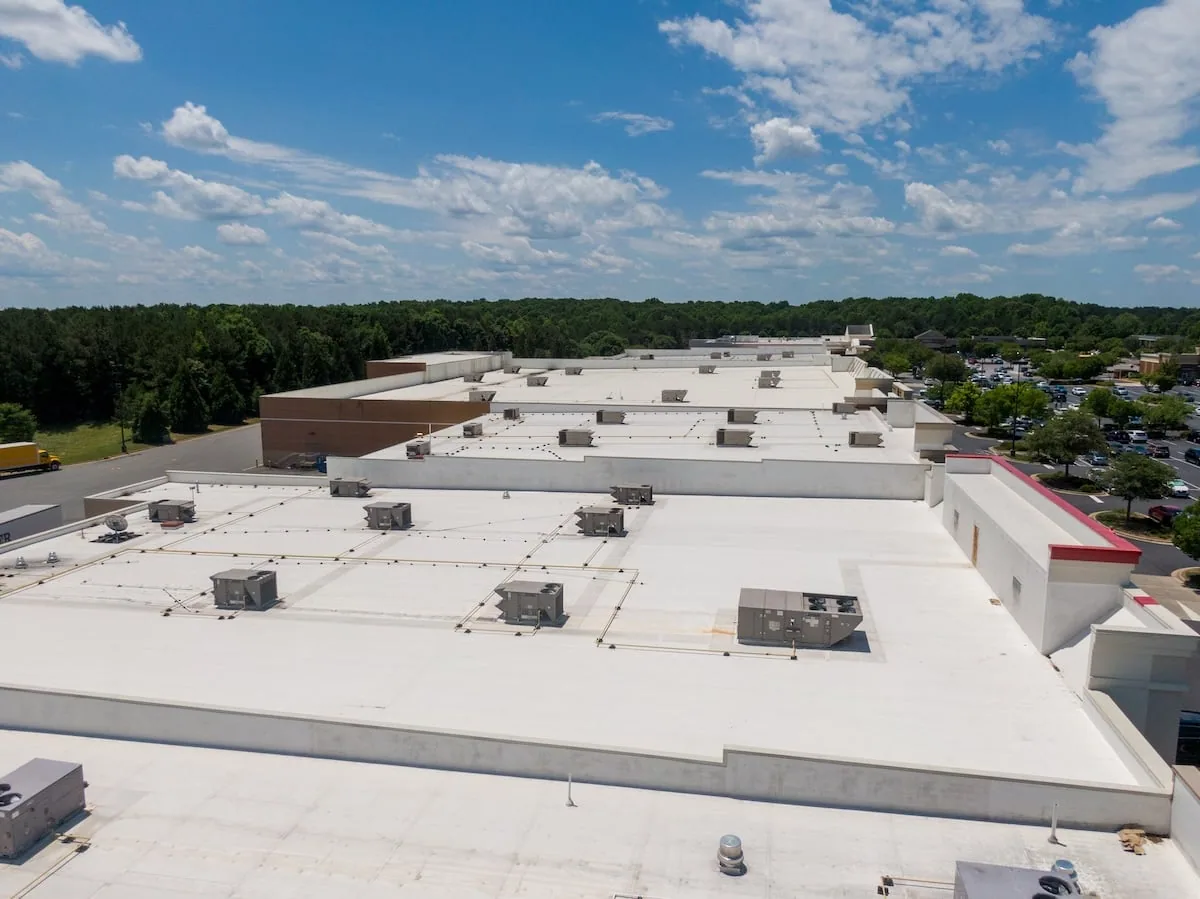
A ceiling mark can sit several feet from the roof opening that fed it. We begin a commercial leak repair in Garden Grove, CA by comparing the reported interior location with drains, seams, curbs, wall edges, and the slope that carries water across the roof. The first visible damp spot is evidence, not a repair boundary. We trace the likely path, inspect material transitions, and check the space below before choosing an opening. That work can separate a failed flashing detail from wet insulation or a drainage condition, giving the owner a repair scope tied to the roof rather than the stain alone.
Follow the Entry Path Across the Roof
Water may move beneath a membrane along a board joint, deck flute, or insulation facer before it reaches the ceiling. We start above the report and inspect the closest seams and penetrations, then work outward toward drains, parapets, and transitions. Interior timing matters too: a leak that appears only during wind-driven rain may point toward a wall or edge detail, while water after steady rain can implicate drainage or a low seam. We record weather observations supplied by the owner, roof conditions, and any temporary measures already taken. If the path is unclear, an inspection with test openings can locate concealed moisture before the repair is designed.
Garden Grove Boulevard includes a mix of commercial, office, and residential land uses in the city's planning framework. A leak above a retail suite can threaten inventory and customer areas; in the Knott Street and Western Avenue industrial district, a wet ceiling may sit near production equipment or stored material. We verify the room and operating function below the roof with the property team. Those details guide containment and scheduling, while the membrane, insulation, and deck determine what must be removed to close the leak.
Open Only Where the Findings Call for It
Once a likely entry detail is identified, we decide whether the repair can be made from the surface or needs a controlled opening. A loose seam may allow a local membrane correction; deteriorated flashing can require removal up the wall and into a sound termination; wet insulation must be removed rather than sealed under a patch. We photograph the area, mark the proposed boundary, and identify what would change it if demolition exposes additional damage. A stable tie-in often extends beyond the visible break because the adjoining material also needs to accept the new seam.
Multiple leak points near separate roof transitions may indicate that a narrow patch will not resolve the water path. We compare conditions across the affected zone and determine if a flashing correction, a drainage repair, or a broader membrane section is needed. If moisture is widespread, our infrared moisture survey can help prioritize test cuts. The final boundary follows confirmed material condition, not an arbitrary distance from the interior stain.
Choose a Repair That Bonds to the Roof System
The roof system needs to be identified before repair material is chosen. Thermoplastic membranes use welded seams; EPDM uses compatible adhesives and seam products; asphaltic systems call for matching bituminous materials. A coating can protect a suitable, prepared surface but cannot replace a failed flashing or dry wet insulation. We verify whether a patch will bond to the existing membrane and account for coating, dirt, prior repairs, and surface aging. The work order names the material and preparation steps so the crew does not apply an incompatible product over an unknown assembly.
Garden Grove's adopted 2025 California Building Code and local Title 18 amendments are part of permit coordination when a repair changes regulated components. We confirm the applicable path with the owner and officials. Where a repair reaches a wall, curb, or drain, the replacement material still needs a secure termination and an unobstructed flow path. The TPO seam detail and PVC flashing detail require different materials and preparation. We do not assume one patch product fits every section of a commercial roof.
Control Interior Exposure While the Roof Is Open
Active water entry can threaten electrical equipment, finishes, stock, and operating areas. Before the roof is opened, we agree on interior protection, material staging, a weather check, and the point where the crew can leave the area secure. Temporary containment may redirect active water, but it does not correct the membrane or flashing that admitted it. We keep the owner informed if rain or a concealed condition changes the sequence. Any exposed insulation or deck receives protection until the permanent detail can be completed.
A leak repair near a commercial corridor still needs property-level access confirmation. At the planned Trask Avenue auto-sales and repair cluster, vehicle movement and service-bay access may shape where materials can be staged. We confirm the usable route with the site contact. For an after-hours event, emergency roof response can stabilize active entry while a permanent repair is organized. The plan lists who receives updates and what evidence is needed before a concealed area is closed.
Check the Repair After the Next Wet Cycle
At completion, we inspect the patch perimeter, weld or adhesive bond, flashing laps, and nearby drain path. Photos show the opening, materials removed, and completed repair. We document whether wet board or deck was found and where the approved work stopped. If the owner reports another stain, the record helps determine whether water came through the repaired detail or arrived by a different route. A closeout statement should separate what was repaired from any adjacent area that remains under observation. A dated note about wind, rainfall timing, and indoor conditions can help explain the next inspection.
Roof traffic after a repair can disturb a termination or create a separate puncture, especially when equipment service changes the roof. A maintenance inspection can record those changes and clear debris from drains. If the leak returns, compare the timing and location with the documented water path before authorizing another patch. We can recheck the affected roof zone, inspect the surface and interior, then prepare a follow-up scope that addresses the demonstrated cause rather than layering material over an unresolved condition.
Commercial Roofing Questions
Why does water show up far from the roof leak?
Water can travel across the underside of a membrane, along insulation joints, or through deck flutes before it reaches the ceiling. We compare the stain with roof slopes, seams, penetrations, and drainage routes. If the route remains uncertain, a small test opening may be needed before repair material is selected.
What temporary control can limit active water entry while a permanent scope is prepared?
We can assess whether a temporary cover or diversion is appropriate while the permanent scope is prepared. The building contact should protect contents and flag sensitive equipment beneath the affected zone. Interim protection limits exposure only; final work still needs a dry, sound tie-in.
What if the leak appears only during wind-driven rain?
That timing makes wall terminations, edge metal, parapets, and penetrations important to inspect. We check how rain can reach those details and whether the membrane terminates securely. Wind-driven entry does not identify one cause by itself, so the repair follows the observed opening and water path.
How do we know the repair solved the leak?
We check the completed material bond and flashing details, then retain photographs and a record of the repair boundary. The next rainfall and the building's interior report provide follow-up evidence. If water returns, we compare its timing and location with the original path to see whether the repair failed or a separate entry point exists.
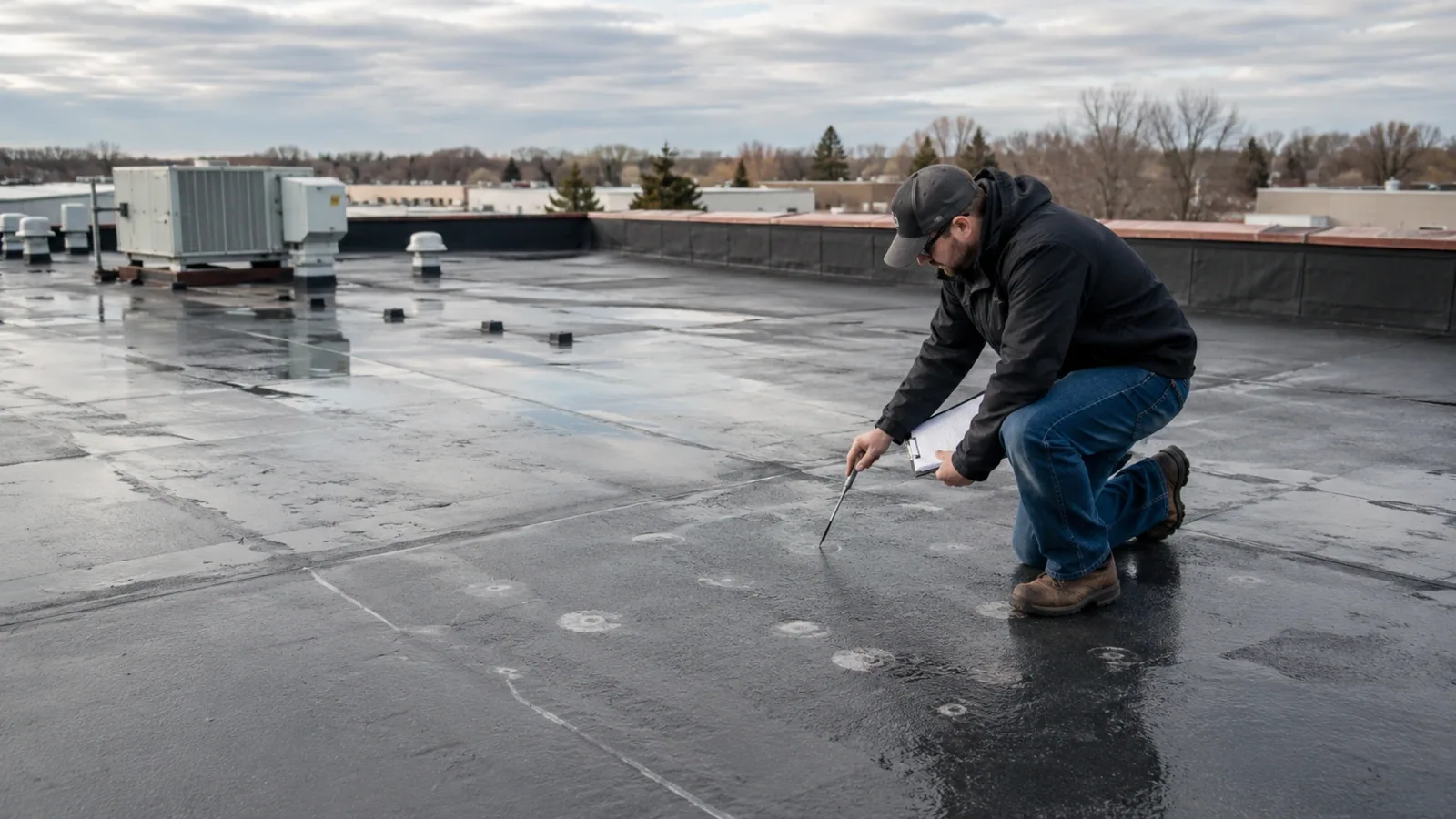
Measure the roof before choosing the repair path
Arrange a roof walk with available plans, leak records, and access constraints. We will trace the assembly, mark the work boundary, and prepare a scope for your Garden Grove building.
Or call 555-555-5555 · [email protected]