Roof Systems · Garden Grove, CA
Commercial Modified Bitumen Roofing in Garden Grove, CA
Commercial Modified Bitumen Roofing
Commercial modified-bitumen roofing in Garden Grove, CA details reinforced plies, lap repairs, flashing, application controls, and maintenance.
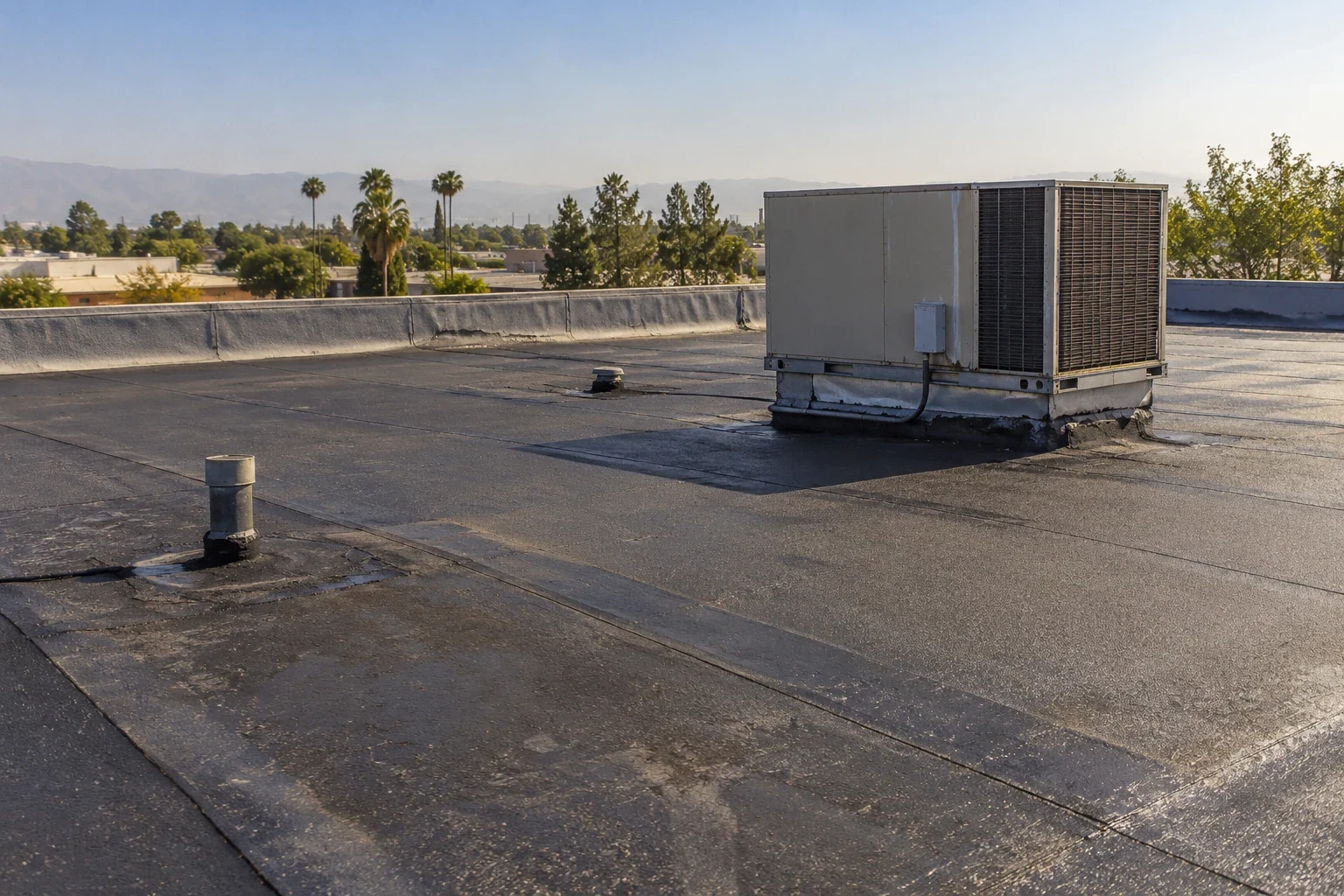
A modified-bitumen roof is built from reinforced asphalt sheets, and its seams, cap sheet, and flashing must form a continuous water-shedding surface. Before work in Garden Grove Boulevard commercial corridor, we inspect the existing layers, surface condition, drains, and transitions. The owner needs to know whether a repair can reach stable material or whether multiple layers and wet insulation require removal. The scope identifies the approved application method, fire and access controls, and how the completed seams and edges will be checked.
Check Sheet Laps and Surfacing Before Repair
We look for open end laps, fishmouths, ridges, splits, exposed reinforcement, displaced surfacing, and flashing that has pulled away from a wall or curb. At drains, we check how the membrane turns into the bowl and whether granules or debris limit flow. A surface blister may need closer review to determine whether moisture is trapped below it. The inspection records repair layers and any prior patch that affects preparation. We identify whether the roof is torch-applied, self-adhered, or installed with another approved method from records or accessible details, rather than assuming from appearance.
Garden Grove's commercial, office, industrial, and mixed-use properties vary in roof access and operations. The Garden Grove Boulevard Corridor has commercial and office buildings whose tenant schedules can limit access to roof work zones. The planned Trask Avenue Auto Center cluster adds vehicle activity to nearby commercial blocks, so the property manager confirms actual loading and staging routes before mobilization. A moisture survey can identify which zones need repair or test cuts before material selection.
Extend the Repair Through the Reinforcement Layers
A durable repair reaches sheet and surfacing that can receive the new ply. We remove loose or split material, dry and prepare the base, and install compatible reinforcing sheets with the required overlap. The repair should not end at a moving crack or cross an unreinforced edge. At a parapet, curb, or drain, the flashing detail must reach a stable termination. If water has damaged insulation or the deck, that layer must be corrected before new asphaltic material closes the area. The owner receives photos of exposed conditions and approval points for added work.
When one lap has opened but the surrounding field remains stable, a localized repair may be appropriate. A seam correction addresses repeated openings after the substrate is checked. If the roof has several old plies or broad deterioration, we compare replacement with a repair plan rather than adding another layer without confirming weight, drainage, and roof height.
Select the Application Method and Reinforcement
Modified bitumen systems use asphaltic sheets with reinforcement, but installation can involve torch application, self-adhered products, or hot asphalt according to the approved system. Each method has its own surface preparation, temperature, fire prevention, and lap requirements. We identify base sheet and cap sheet, reinforcement, surfacing, and the way flashing connects to the field. The specification names the application method and any required fire watch or substrate protection. We follow project documents and manufacturer instructions for the selected product.
The project documents should identify the approved application method, material layers, flashing, and required fire controls before the crew mobilizes. A built-up roof uses multiple plies of asphalt and reinforcing fabric, while EPDM has a different membrane and seam method. We compare assemblies by substrate, detail geometry, access, and planned maintenance, not by assuming one product can correct an unsuitable base.
Control Heat, Fire, and Material Staging
Application method changes the jobsite setup. We coordinate material staging, cylinder storage if applicable, hot-work controls, fire watch, ventilation, and access around occupied rooms. The crew plans daily tie-ins and protects finished sheets from foot traffic or tool damage. Any open section is closed to a secure stopping line before a shift ends. If wind, moisture, or site restrictions prevent application, the sequence changes rather than leaving a loose sheet exposed.
Trask Avenue's planned auto-sales and repair cluster may bring vehicle routes near staging areas, while industrial properties can have different access controls. The property manager confirms actual conditions. An occupied-site plan identifies tenant routes and work hours. If torch work is not appropriate for the building or substrate, we review another approved application method with the design team before mobilizing.
For torch work, we confirm combustible materials, roof openings, wall cavities, and any concealed voids near the application area before setting the fire-control boundary. The work plan identifies who maintains the fire watch, how long monitoring continues after hot work, and how the crew communicates a stop condition. For self-adhered or hot-asphalt methods, storage temperature, substrate condition, and ventilation can change the sequence. We keep containers and rolls staged so they do not block drains, exits, or access to rooftop equipment. If wind or moisture makes the selected method unreliable, the crew secures the roof and reschedules that zone rather than closing a questionable lap. The daily report captures the application area, weather conditions, and any change approved by the owner.
We break the work into roof zones so completed plies are not used as an uncontrolled walkway. The route for rolls, propane equipment where allowed, hot asphalt, and debris containers is confirmed before mobilization. At each shift boundary, the tie-in is inspected for loose edges, exposed reinforcement, and water paths that could reach the building overnight. A site contact should know when ventilation, loading, or access restrictions affect nearby operations. If a change in application method is proposed, we document the revised product and fire controls before that method reaches the roof. These checks make the job sequence visible to the facility team and give the owner a clear record of any area deferred for safer conditions.
Inspect Laps and Surfacing at Handoff
Closeout reviews end laps, side laps, flashing, edge terminations, drain details, and surfacing continuity. We photograph the completed field and identify repairs or areas retained from the old roof. The record lists application method, product layers, approved concealed work, and any fire-watch or safety documentation required by the project. If there are changes in roof height, we check where the system meets curbs and adjacent sections so runoff remains directed toward outlets.
Debris, rooftop traffic, and later penetrations can damage the cap sheet or open a lap. A maintenance schedule can check seams, surfacing, drains, and transitions. If a split appears, a repair review confirms whether the base ply and insulation remain stable. Keeping the assembly record with the building plans helps the next crew identify layers before cutting into the roof.
Commercial Roofing Questions
What causes a modified-bitumen seam to open?
Movement, poor adhesion, contamination, water exposure, or an unsuitable tie-in can affect a lap. We inspect the seam, nearby flashing, and substrate before deciding whether a local repair can reach stable material. The repair record notes the application method and the adjacent conditions that were checked.
Can another ply be installed over the existing modified bitumen?
Only if the existing assembly, attachment, moisture, deck capacity, drainage, and roof height support another layer. We confirm layer count and condition before recommending a recover. Wet or loose material needs correction, and permit requirements should be confirmed for the proposed assembly.
Is torch-applied roofing appropriate for every building?
No. The method depends on the approved system, substrate, fire controls, access, and building conditions. We plan hot-work protection and fire watch when specified. If the site or roof assembly cannot support that method, the team should review another application option before work starts.
How do you maintain a modified-bitumen roof?
Keep drains clear, inspect laps and flashing, and record foot traffic or equipment changes. The roof should be checked for displaced surfacing, exposed reinforcement, and open seams. A maintenance visit can distinguish debris removal from a repair that needs additional plies or substrate work.
Measure the roof before choosing the repair path
Arrange a roof walk with available plans, leak records, and access constraints. We will trace the assembly, mark the work boundary, and prepare a scope for your Garden Grove building.
Or call 555-555-5555 · [email protected]