Roof Systems · Garden Grove, CA
Commercial EPDM Roofing in Garden Grove, CA
Commercial EPDM Roofing
Commercial EPDM roofing in Garden Grove, CA addresses seams, adhesive preparation, flashing, insulation, and repair boundaries by roof zone.
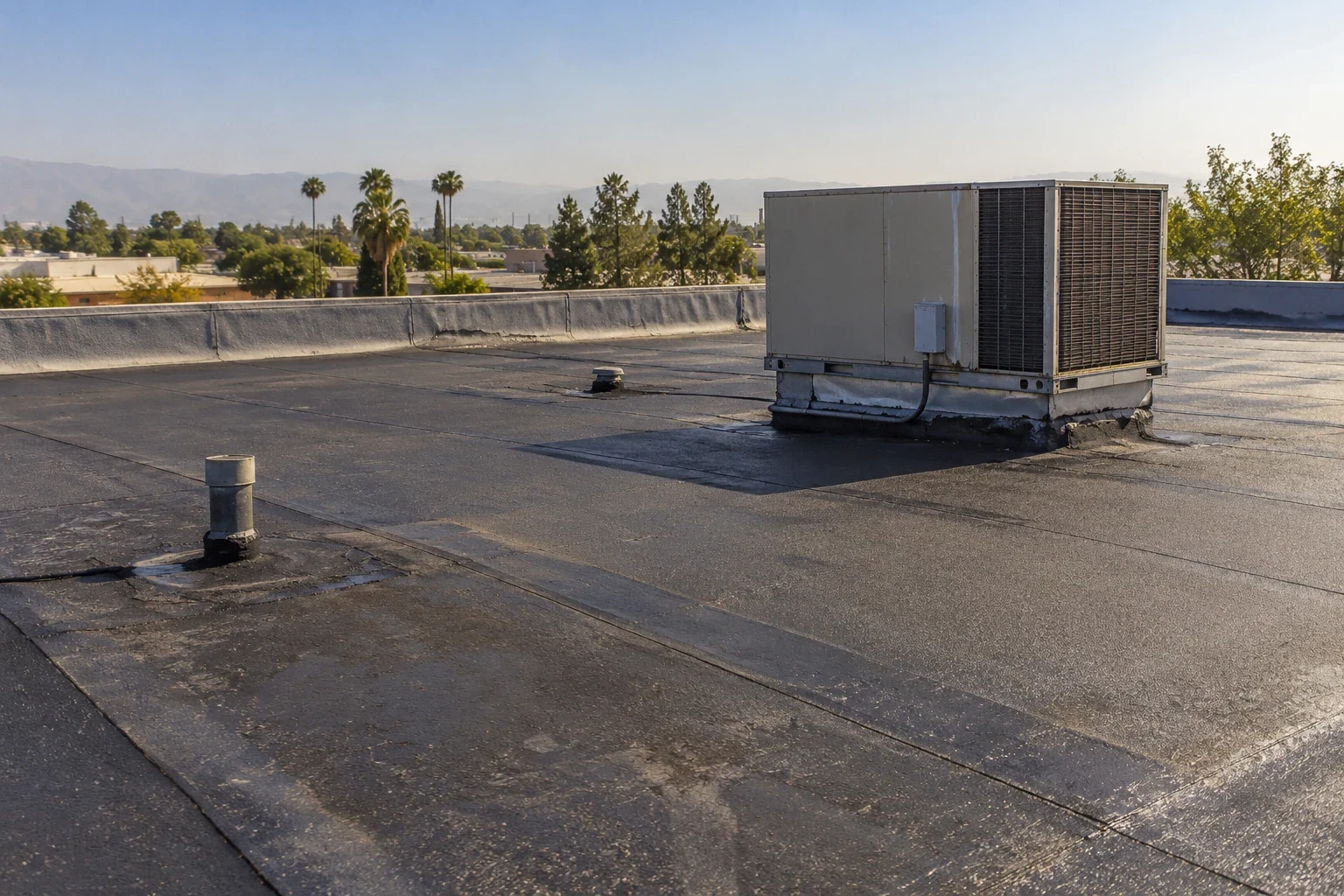
Check the EPDM lap first: the field sheet condition and repair-material compatibility set the boundary. We inspect those connections on a commercial property in Knott Street and Western Avenue industrial area before choosing repair or replacement. The roof system, adhesive, substrate, and drainage determine how a repair can be made. We document where the membrane is secure, what surface preparation is needed, and whether insulation below the area has been affected. That record gives the owner a useful boundary for the next roofing decision. The owner should also know which areas can accept routine roof traffic and where protective walkways are specified. A product choice does not remove the need to protect seams from equipment service, dropped tools, or later trade work.
Check Seams, Adhesion, and Perimeter Securement
We inspect EPDM field seams, tape edges, cover strips, flashing, fasteners, and locations where the membrane has shifted or wrinkled. A seam that lifts may indicate poor adhesion, contamination, or movement in the roof assembly. At penetrations, the boot must fit the pipe and remain clamped without pulling at the field sheet. We check terminations at walls and edges where wind or standing water can expose a weak bond. If moisture is suspected, a test opening verifies insulation and deck condition before patching.
Garden Grove's city planning materials describe commercial, office, industrial, civic, and mixed-use areas. Along Garden Grove Boulevard, office and retail use may put occupied space below roof work; in the Knott Street and Western Avenue industrial district, equipment access can affect movement across the membrane. We confirm those site conditions with the building contact. A moisture survey can help select test openings where the existing assembly is concealed.
Bond New EPDM to Clean, Dry Material
EPDM repairs need compatible primer, adhesive, seam tape, or flashing product selected for the existing membrane. We remove loose material, clean the bond area, and allow the surface to meet the product's preparation requirements. A patch should extend past the tear or open seam to a stable area and use rounded corners where specified. We press the bond and check the edges before closeout. If the existing sheet is brittle, contaminated, or wet underneath, a small surface patch may not last; we expand the inspection to determine whether more material must be removed.
A pipe or curb needs a separate flashing connection, not a wide sealant bead over the membrane. A penetration detail repair can replace a boot or rebuild a curb transition. A seam correction checks the adjacent tape and sheet before the repair is sized. If widespread adhesion loss or moisture appears, we compare broader restoration with replacement using the confirmed roof conditions.
Choose Adhesives and Flashing for the EPDM System
The installation specification identifies membrane thickness, fully adhered or mechanically attached assembly, insulation, cover board, seam products, flashing, and edge securement. Adhesive coverage and open time must follow the product instructions and field conditions. Mechanical attachment can create a different wind path and seam layout than an adhered sheet. We check the substrate for moisture, cleanliness, and suitability before applying bonding materials. At drains and metal edges, the EPDM must transition to compatible accessories that keep water outside the assembly. In an adhered assembly, adhesive coverage and open time must follow system instructions, and the sheet must be rolled or pressed into the bond as specified. On a mechanically attached assembly, fastener lines and seam overlap need to work together. We confirm these details in the approved submittal and keep the installation record with the repair history.
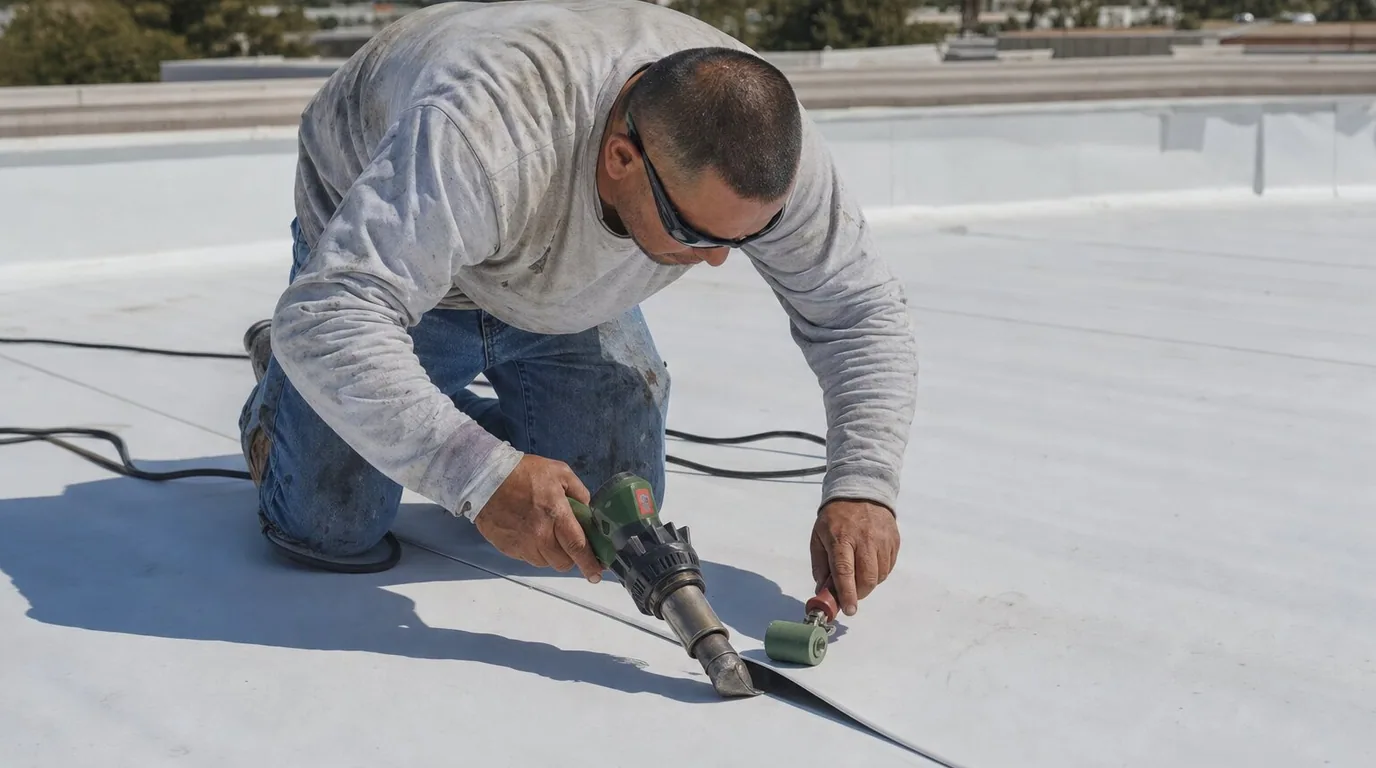
For an EPDM scope, the submittal should identify the membrane, primer, seam tape, flashing accessories, and attachment method as one coordinated assembly. EPDM does not use the heat-welded seam detail of TPO or PVC. The scope reflects that difference in surface preparation and quality checks. We check the approved product instructions and project documents before work begins so field repairs follow the selected system rather than a generic detail. If the existing roof includes another membrane, a separation layer or removal may be needed to avoid material incompatibility.
Protect the Membrane From Traffic and Contamination
Tools, adhesive containers, metal edges, and debris can damage or contaminate rubber membrane. We stage materials on a protected path, keep adhesive areas clean, and limit foot traffic across completed seams. The installation progresses to a secure stop, with exposed substrate covered if work is interrupted. When another trade needs roof access, we define a walkway or route and coordinate its timing with the property contact. Adhesive work also needs conditions that allow the material to bond before the area is exposed to rain or service traffic. Cleaning products and later sealants should be checked for compatibility before they are applied to EPDM. The maintenance log can note the product used and the repair area for future review.
Garden Grove's planned auto-sales and repair area on Trask Avenue may make vehicle access relevant to staging at nearby properties; the site contact confirms the actual route. The city's industrial district can have separate equipment access needs. An occupied-site sequence identifies delivery and tenant routes. restoration review is appropriate only where the surface and existing layers suit the proposed coating system.
Keep EPDM Repair Products Identified
Closeout checks seam edges, tape and flashing bonds, fasteners, perimeter transitions, and drainage. We provide photos and note the repair product or assembly installed, where new sheet meets retained material, and what concealed conditions were found. The owner can use that record when scheduling equipment service or comparing a later proposal. If a section could not be accessed, the report lists it as a separate follow-up area instead of treating it as cleared. When a leak appears at a seam, we check whether the tape is lifting along its full length or only at a localized point. That distinction can change the patch size and whether adjacent sheet needs to be released and rebonded. The owner receives the observed condition and the repair boundary in the closeout notes.
Maintenance should keep drains accessible and prevent other trades from placing incompatible sealants or adhesives on the membrane. planned maintenance visit can check seams and penetrations. If a tape edge lifts, a repair evaluation should verify whether the bond or substrate has failed before a replacement patch is installed. We retain closeout photos with the building's roof records so the next crew can identify the system and repair boundary.
Commercial Roofing Questions
How do you repair a small EPDM tear?
We clean and prepare the surrounding membrane, use compatible primer and repair materials, and extend the patch to sound material. The repair boundary also considers the insulation and cover board beneath the tear. If the surface is wet, contaminated, or loose, we remove more material or investigate before closing the roof.
Can EPDM seam tape be reused?
A lifted or contaminated seam needs inspection before any tape is replaced. We check the existing bond, surface condition, and whether movement has affected the adjacent sheet. New seam products must be compatible with the roof system and applied over a properly prepared area.
Is EPDM repair the same as TPO repair?
No. EPDM generally uses compatible primer, adhesive, seam tape, and flashing rather than the heat-welded joint used for TPO. We identify the existing membrane before choosing repair materials. The surface preparation and quality checks should match the system being repaired.
What should be included in an EPDM replacement scope?
Specify attachment method, insulation and cover board, membrane, seam products, flashing, edge terminations, drain details, and test procedures. Include substrate assumptions, concealed repair approvals, material staging, foot-traffic limits, and closeout documentation. Those details make the scope more useful than naming membrane thickness alone.
Measure the roof before choosing the repair path
Arrange a roof walk with available plans, leak records, and access constraints. We will trace the assembly, mark the work boundary, and prepare a scope for your Garden Grove building.
Or call 555-555-5555 · [email protected]