Roof Systems · Garden Grove, CA
Commercial KEE Roofing in Garden Grove, CA
Commercial KEE Roofing
Commercial KEE roofing in Garden Grove, CA specifies compatible membrane, welded seams, attachment, flashing, and documented field testing.
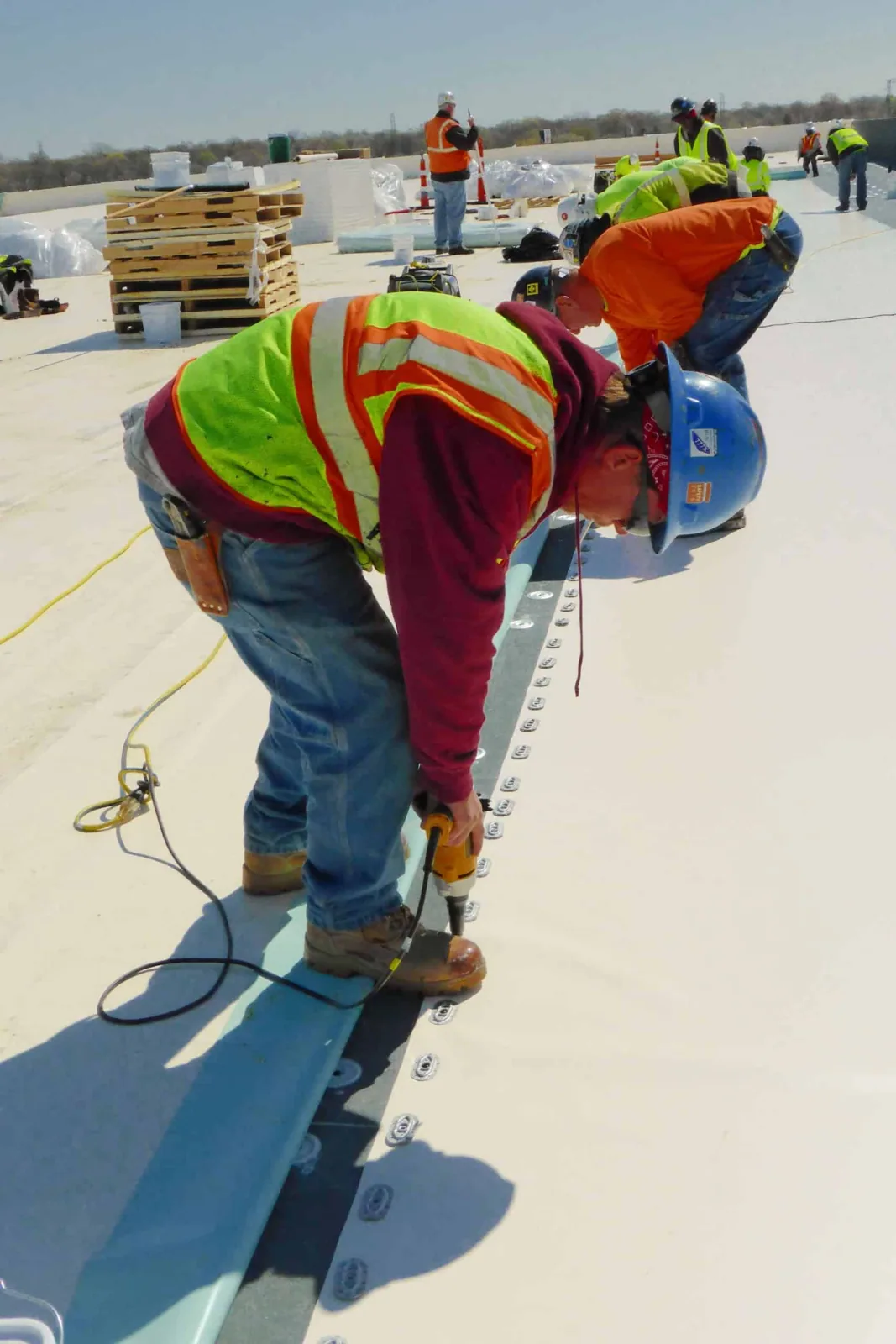
A KEE roof is a thermoplastic membrane system, so the field seams, flashing, substrate, and edge securement must be selected as one assembly. Before proposing installation in Knott Street and Western Avenue industrial district, we inspect the existing roof, drainage, and areas where other materials meet. The specification identifies the membrane, attachment, insulation, cover board, seam work, and details at curbs and drains. We compare KEE with other compatible roof systems using the building's actual conditions, then document the approved material and repair limits for the property team.
Confirm the Existing Membrane and Its Condition
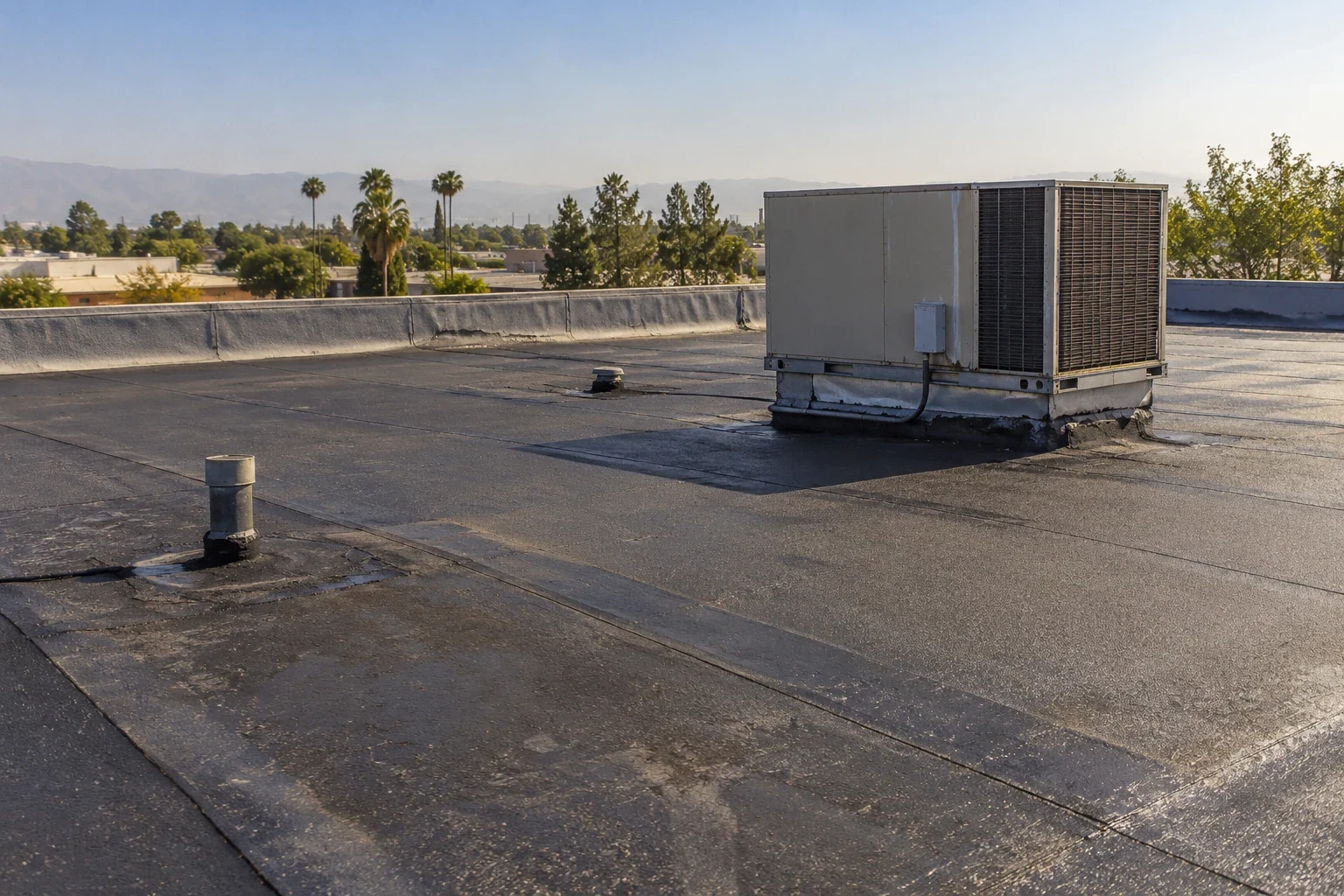
We inspect seams, field sheet, corners, penetrations, prior patches, and edge transitions before selecting a repair. A surface can appear intact while moisture has reached cover board underneath, so a test opening may be needed where the result affects scope. We identify whether the existing system is KEE or another thermoplastic membrane, then check compatibility before welding new material. The report also notes rooftop equipment, drain placement, and surface residue that could affect adhesion or seam work. A repair plan uses the product requirements rather than visual color alone.
Garden Grove includes retail, office, industrial, and mixed-use areas. Along Garden Grove Boulevard, the city plan recognizes mixed commercial and office uses; the Knott Street and Western Avenue district includes manufacturing activity. We confirm the access and equipment conditions for the specific roof. A roof inspection can record seams and transitions before a KEE replacement or repair is designed.
Weld the Detail Into a Stable Field
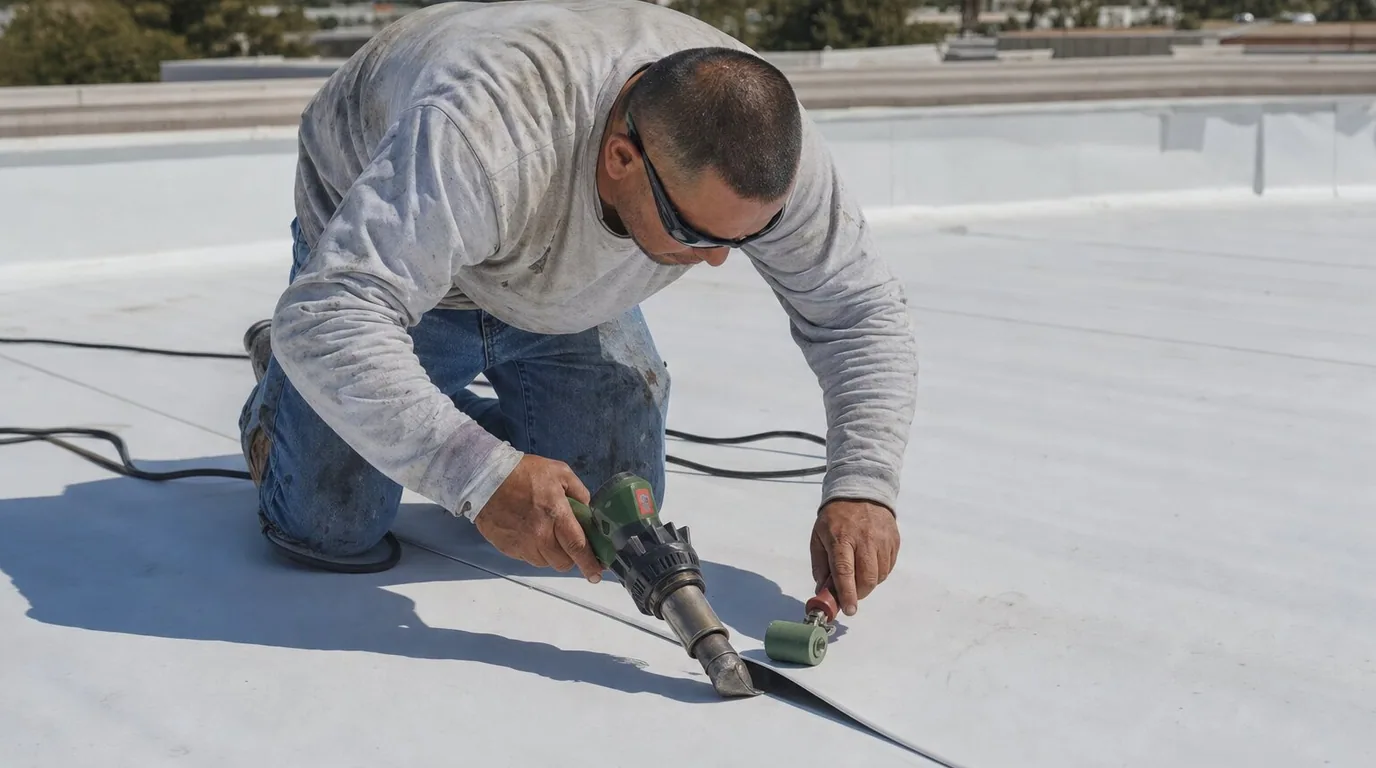
New material must bond to a surface that is clean, dry, and compatible with the specified KEE system. We remove loose or contaminated membrane and extend the repair to material that can accept the weld. At corners and pipes, a field patch may need a formed flashing detail rather than a flat sheet. We test seams as work proceeds and photograph the completed welds. If the board beneath the membrane is wet or compressed, that layer needs correction before the new sheet can be secured.
A localized puncture may support a repair; multiple weak seams or widespread surface deterioration may require a broader assembly plan. The repair scope identifies the prepared area and the closeout check. We compare a replacement when the substrate or attachment no longer supports local work. An existing recover option should be evaluated against layer count, drainage, and approved KEE attachment rather than presumed suitable.
Specify Membrane, Attachment, and Flashing Together
The KEE product's installation instructions govern seam welding, flashing, primers, and compatible repair materials. The project design also identifies insulation, cover board, attachment, perimeter securement, and drainage. We confirm whether the assembly is mechanically attached, adhered, or otherwise specified, and how the attachment connects to the deck. The scope describes where sheet seams fall relative to drains, curbs, and roof edges. If the existing roof uses another membrane, a tested transition or removal may be needed before new KEE is installed.
The project submittal should identify the KEE membrane, attachment, flashing, and seam-testing requirements together so the field crew can verify the specified assembly. A TPO membrane and PVC system share thermoplastic welding but are not automatically interchangeable with KEE products. We follow the specified manufacturer's details and record approved substitutions so later repairs use a compatible product.
Before a field repair, we confirm the existing sheet's identity from project records, product markings, or a documented sample where necessary. That check matters when a building has been expanded in phases and roof areas do not share one membrane. We map the transition, confirm whether the existing material can accept the proposed weld, and identify the manufacturer's required test method. If compatibility cannot be established, the scope includes a transition detail or removal to a known substrate. The owner receives the product name, batch information when available, and photographs of the completed test and repair zone. Those details help later crews distinguish KEE from another thermoplastic sheet and select an appropriate repair material.
We also check the roof's age and repair history before calling a section suitable for a new weld. A prior coating, cleaning agent, or incompatible patch can leave residue that changes the preparation needed at the tie-in. The crew marks the test area, prepares a small sample, and verifies that the specified settings create a continuous bond before production repairs begin. If the sample fails, we stop and confirm the membrane identity and surface condition instead of increasing heat or adding sealant. At the edge of a completed repair, a second visual check confirms that the new sheet lies flat and that the flashing does not pull against the field seam. The closeout notes which tests were performed and where the repair stops.
Move Rolls and Equipment Without Scuffing the Field
We plan delivery, lifts, roll staging, and access paths before moving membrane to the roof. A completed area is protected from foot traffic, sharp tools, and other trades. Work zones advance to a stable stop with open drains and a secure perimeter; if conditions prevent the next sheet run, the crew dry-ins the exposed edge. A property contact identifies operating rooms or equipment below, and the plan names who receives an update when the work area changes.
Trask Avenue's planned auto-sales and repair area can make vehicle routing relevant to material delivery at nearby sites. We verify actual parking and loading conditions with the building team. An occupied-building plan protects tenant and production access. A drainage sequence keeps sumps and outlets visible while the new assembly changes finished roof height.
Keep the Product Record With the Roof Plan
Closeout checks welded seams, corners, flashing, edge securement, drains, and the connection to retained roof areas. We provide product information, seam test records, photographs, and a marked plan of repaired or replaced zones. The owner can use this record to identify the system before authorizing future repairs. If an existing roof section remains, the closeout shows where material changes and what transition was installed.
Roof equipment work may add a penetration or disturb a seam, so the service team should use the approved detail and protect the membrane. A maintenance visit can inspect the visible welds and roof edges. If a seam opens, a failure assessment checks the adjacent sheet and board before repair. We retain photos to show which product and detail were used.
Commercial Roofing Questions
How is a KEE membrane different from TPO or PVC?
KEE, TPO, and PVC are thermoplastic roofing systems, but their formulations and manufacturer installation requirements differ. The product documents govern welding, flashing, and repair compatibility. We identify the selected membrane and install the approved detail rather than using one system’s procedure for another.
Can a KEE roof be repaired with standard PVC material?
Do not assume the materials are interchangeable. We identify the existing system, check product requirements, and use a compatible repair membrane and flashing. If the original system is not documented, a field check or product record may be needed before the repair is specified.
What should be included in a KEE roofing proposal?
Include the membrane product, thickness, attachment, insulation, cover board, seams, curbs, drains, perimeter details, testing, and closeout records. The proposal should describe surface preparation and explain how concealed wet material will be handled. Any substitution needs project approval before installation.
How do you check a new KEE seam?
The installer follows the product’s welding instructions and tests seams during the work. We verify completed welds with the specified method, correct areas that do not hold, and record test results with the roof zone. The same quality check applies at field laps and flashing transitions.
Measure the roof before choosing the repair path
Arrange a roof walk with available plans, leak records, and access constraints. We will trace the assembly, mark the work boundary, and prepare a scope for your Garden Grove building.
Or call 555-555-5555 · [email protected]