Service Areas · Garden Grove, CA
Commercial Roofing in the Brookhurst-Chapman Area
Brookhurst-Chapman Area
Commercial roof repair, inspections, maintenance, and replacement planning for buildings around Garden Grove’s Brookhurst and Chapman commercial area.
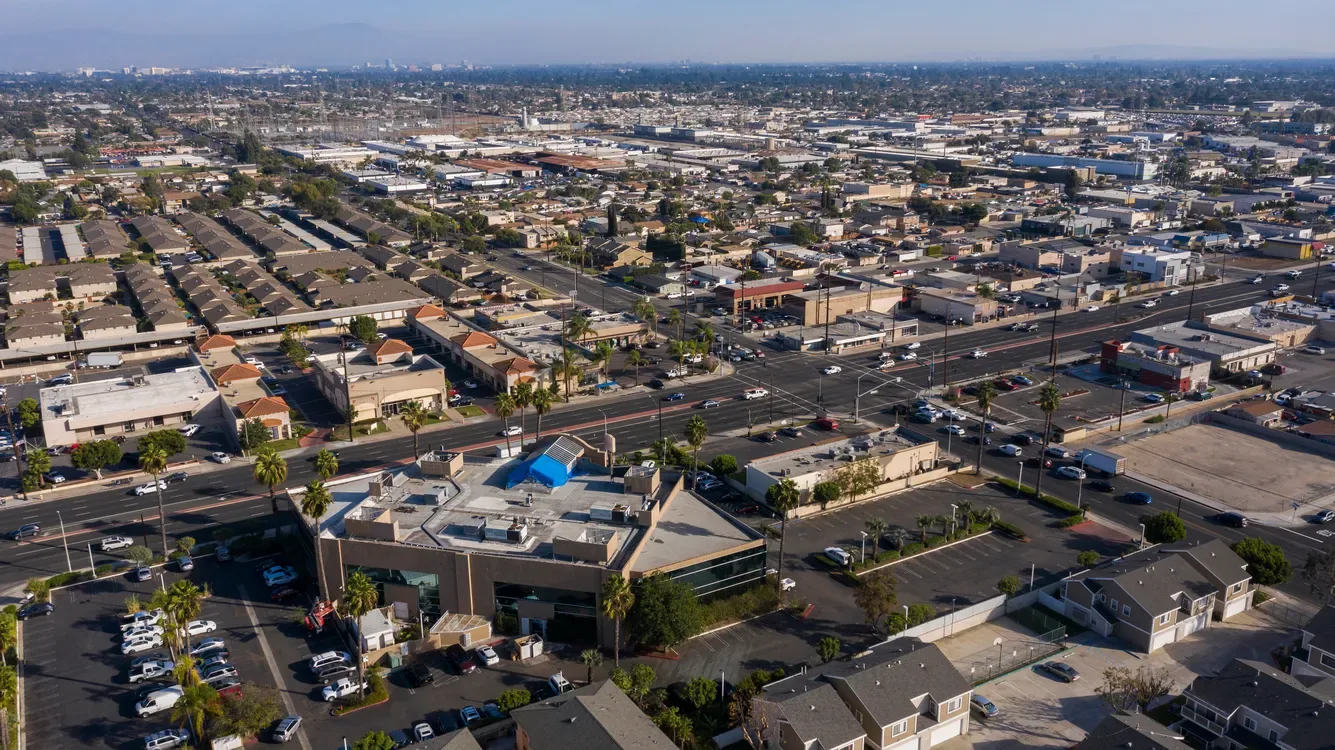
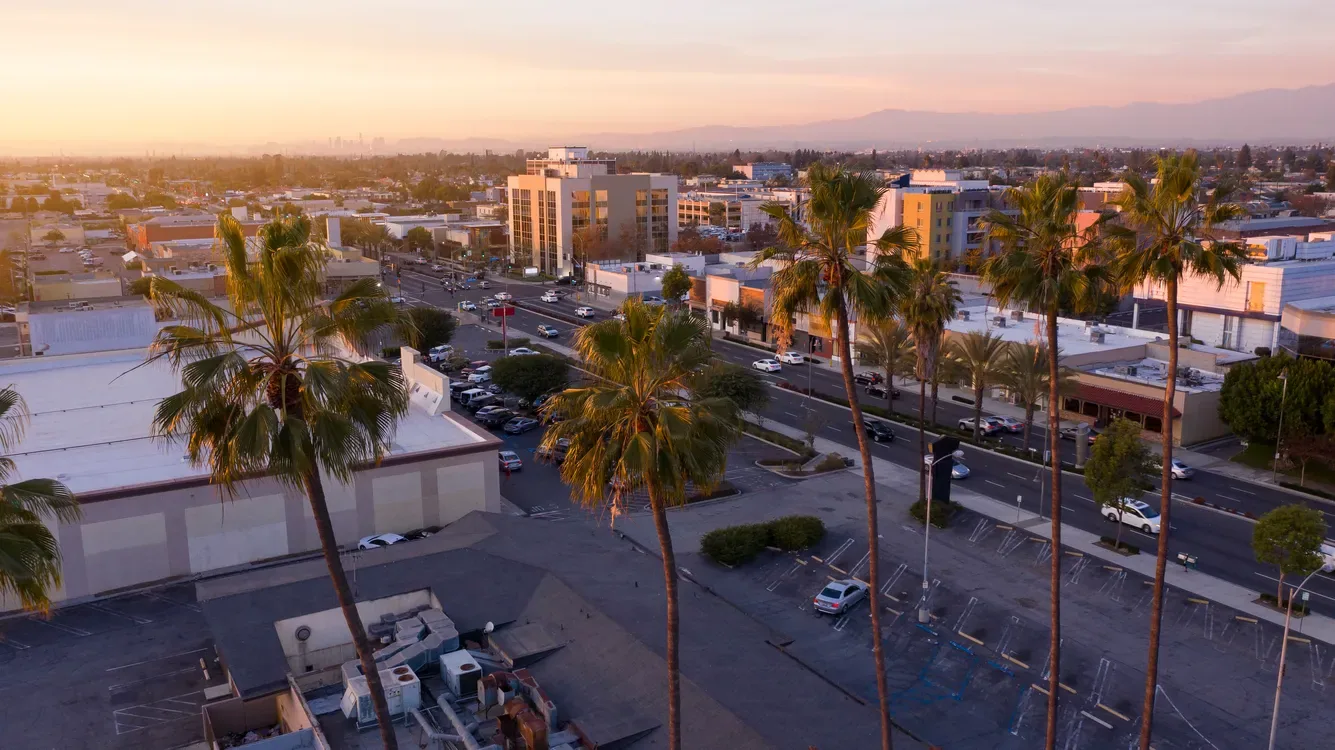
A commercial roof near Brookhurst Street and Chapman Avenue serves a mix of businesses, so a leak can interrupt more than one kind of operation. Around this commercial intersection, roughly 42 acres include office-financial, office-entertainment, and commercial uses, with shopping serving Garden Grove residents and nearby communities. That mix makes customer access, deliveries, and occupied suites practical planning concerns; the building’s own assembly and condition still guide the roofing scope.
We start at the building. Our inspection follows the visible water path from interior symptoms to roof-level details, including seams, penetrations, edges, drains, and transitions. We distinguish an isolated failure from a wider assembly concern before recommending work. For properties in this commercial area, the right scope also accounts for customer access, deliveries, occupied suites, and the owner’s schedule. Owners can also review our broader Garden Grove service area and nearby West Grove Business District. The roof itself decides whether the next step is a repair, maintenance visit, coating evaluation, or replacement study.
Trace the Leak Across the Roof Assembly
Water marks inside a retail or office suite do not always sit below the roof opening. Water can travel along a deck flute, framing member, conduit, or insulation layer before it becomes visible. During a commercial roof inspection, we record the interior location, ask when the symptom appears, and compare it with roof details above and around that area. At roof level, we look for open seams, aged sealant, displaced counterflashing, punctures, blocked drainage, and transitions at walls or equipment supports.
Drainage deserves a deliberate check. A drain bowl may look clear while debris remains in a sump or downstream leader; a low point can also retain water because the roof plane has settled. We note the location and extent of ponding rather than treating any standing water as proof of a single cause. Where safe access and conditions allow, photographs and measurements make it easier to compare later visits. A scoped commercial roof inspection helps owners decide whether a spot repair addresses the failure or whether several details point to a broader maintenance issue.
Set a Repair Boundary That Can Be confirmed
A useful repair scope describes what will be opened, prepared, restored, and checked. Depending on the existing system, work may involve cleaning and drying a defined area, repairing a puncture, reinforcing a seam, replacing wet insulation, or restoring flashing at a curb. We identify compatible materials and explain where the repair stops. This keeps a small leak response from quietly turning into an undefined promise to correct every condition across a larger roof.
Some observations need a second step. A roof may have concealed moisture, multiple membrane layers, or details hidden beneath equipment. If a moisture survey, test cut, or manufacturer review would change the recommended scope, we explain why before proceeding. The resulting recommendation can then be compared with the owner’s budget and priorities. For active water entry, commercial roof leak repair can address the confirmed opening while the owner evaluates longer-term options. Where a repair cannot safely wait, emergency roof response focuses first on stabilizing exposure and documenting temporary measures.
Match the Work to the Existing System
Brookhurst and Chapman land-use designations do not tell us whether a particular property has TPO, PVC, EPDM, modified bitumen, built-up roofing, or a metal assembly. We verify the roof type where it is visible and check for prior repairs that may affect compatibility. The same surface color or apparent age does not establish the full assembly. If layers or concealed conditions remain uncertain, we state that limitation instead of treating an assumption as a fact.
For a serviceable roof with localized defects, repair may preserve useful life when the surrounding membrane and attachment remain sound. Coating work requires a different screen: adhesion, surface preparation, drainage, trapped moisture, and detail condition all matter. A coating should not conceal unresolved leaks or unstable substrate. If repeated repairs cluster across multiple sections, a commercial roof replacement comparison can help the owner weigh a larger project against continued repair spending.
Replacement planning begins with measurements and conditions, then considers phasing, tear-off or recover limits, drainage, edge details, penetrations, and the building’s use during construction. A written proposal should distinguish base scope from allowances and identify exclusions that could change cost or schedule. Selection follows the building and specification, not a district-wide assumption.
Plan Around Customers, Staff, and Deliveries
The office and commercial mix near Brookhurst Street and Chapman Avenue makes coordination a practical part of roof work. Before mobilization, the owner or property manager can identify loading windows, customer entrances, occupied suites, sensitive equipment, and areas that must remain accessible. We confirm the roof access route, material staging area, fall-protection approach, and any restrictions on lifts or deliveries. Those details can affect sequence and daily setup even when the physical repair is limited.
On an occupied building, divide the work into manageable sections and explain where noise or access changes may occur. Temporary protection should be planned for penetrations, open roof areas, and forecast conditions. If work pauses, the crew needs a defined end-of-day closure plan so exposed materials are protected. The site contact should know who can approve a change if concealed damage appears after an area is opened.
For a larger project, a phased occupied-building reroof plan can sequence roof areas around business activity. The schedule should identify inspection hold points, material deliveries, debris handling, and how the completed section will be separated from active work. Where a commercial space shares access with neighboring tenants, communication should state the affected route and timing clearly. These steps do not eliminate every disruption, but they help the property team make specific preparations rather than react to an unexpected closure.
Leave the Next Decision Easier
Closeout should connect the proposed scope to the work actually completed. Record the roof area, preparation, materials installed, restored details, and any condition left for follow-up. Photographs should show both a close view of the repair and enough surrounding context to locate it later. If access prevented inspection of a section, identify it explicitly. A report that distinguishes observed, repaired, and uninspected areas gives a future manager a reliable starting point.
Routine maintenance can then focus on confirmed needs: clearing drainage paths, checking seams and flashing, reviewing prior repair areas, and documenting changes. The interval should reflect the roof system, exposure, building use, and the owner’s maintenance plan. After significant weather or mechanical work, a targeted check may be more useful than repeating a generic walkthrough. We can provide a photo-based roof condition report to organize observations by section and priority.
The office and commercial uses around Brookhurst and Chapman provide context for the district, while property records and an inspection should document the actual roof. Keep warranty information, inspection notes, proposals, and repair photographs together by building and roof area. If a leak returns, that history can distinguish a recurrence at a repaired detail from a separate failure.
Commercial Roofing Questions
What types of uses are found around Brookhurst and Chapman?
The roughly 42-acre district includes office-financial, office-entertainment, and commercial uses, with shopping that serves Garden Grove and nearby communities. We inspect each property separately.
Can you tell whether a leak is coming from the roof?
We compare interior symptoms with roof details, drainage, penetrations, and transitions. If the entry point remains unclear, we explain what additional inspection or testing would help narrow it down.
Can repair work happen while a business stays open?
Often, work can be sequenced around occupied areas, but the access route, noise, deliveries, and protection needs must be confirmed for the specific building before scheduling.
When should an owner consider replacement instead of repair?
The decision depends on confirmed assembly condition, repair history, moisture, drainage, and project goals. We document those factors so the owner can compare a defined repair with a replacement scope.
Do you provide roof reports for property managers?
Yes. A useful report identifies the roof sections inspected, observed conditions, photographs, access limits, recommended next steps, and completed work where applicable.
Need a commercial roof assessment near Brookhurst and Chapman?
Share the building address, roof concern, and access requirements. We will confirm the property details and recommend an inspection or repair scope based on what the roof shows.
Or call 555-555-5555 · [email protected]