Industries We Serve · Garden Grove, CA
Commercial Roofing for Property Management Companies in Garden Grove, CA
Property Management Companies
Coordinate commercial roof inspections, repairs, and capital planning in Garden Grove with tenant-ready scopes and building-specific records.
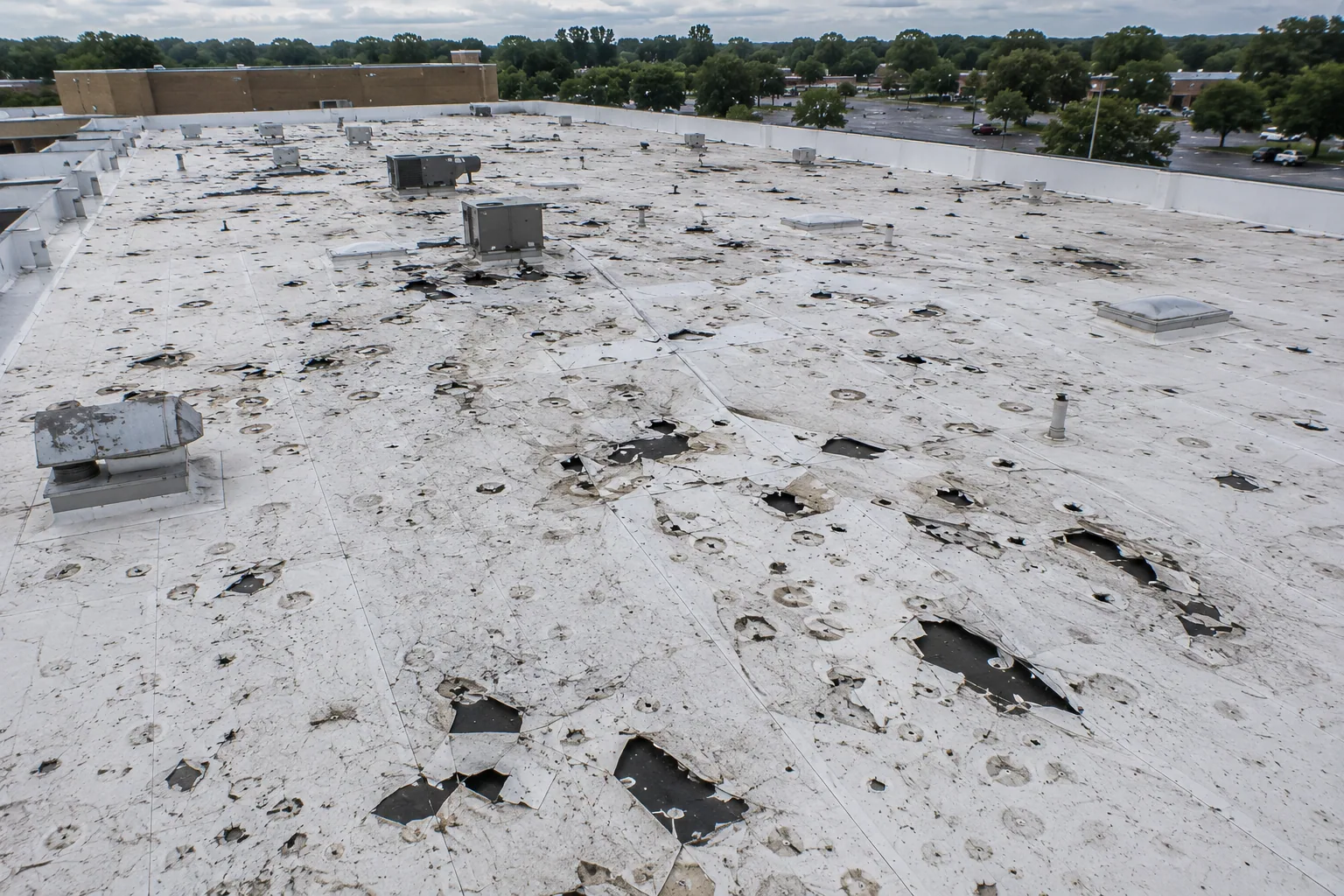
Property managers need a roof process that works across leases, buildings, vendors, and ownership approvals. A tenant may report water in one suite while the entry point lies at a different roof transition; the manager needs a reliable inspection record before promising a repair. We document the condition, identify the roof zone and work boundary, and provide a clear next step the property team can route for approval. That record supports communication without turning a tenant’s first report into a confirmed diagnosis.
Portfolios in Garden Grove may include office, retail, industrial, residential, and mixed-use properties. Even buildings with similar tenants can have different assemblies, roof ages, equipment, and project history. We review the available roof file and walk the relevant areas, then separate the confirmed defects from questions that need testing or a specialist. The resulting scope can be organized by property and roof zone so owners can review costs and timing without losing the site-level detail.
Managers overseeing properties in the Harbor Boulevard Corridor or Garden Grove Industrial District can use the same reporting fields across sites while keeping each building’s actual findings separate.
Turn Tenant Reports Into Roof-Specific Findings
Start with the tenant’s room, date, reported impact, and any recent work by a roofer or equipment vendor. Water may travel along a deck or framing before it appears inside, so an interior stain does not establish the roof opening. We compare the report with seams, drains, penetrations, wall connections, and transitions near the affected zone. The assessment states what was visible, what could not be accessed, and what evidence would resolve an open question.
A useful property record identifies roof type and condition, available warranty information, prior repairs, equipment additions, and known access limitations. If several tenants report leaks, map them by building before deciding whether they share one entry point. An inspection can prioritize immediate protection, a localized repair, a test opening, or a capital evaluation. The manager should be able to explain the scope without overstating what a visual review confirmed.
A roof condition report can organize findings for ownership review and future budgeting. Pair it with the property’s inspection record and lease responsibilities, while leaving legal interpretation to the owner’s advisors.
Coordinate Access, Tenants, and Ownership Approvals
Before work begins, the manager coordinates tenant notices, roof access, keys or escorts, staging, deliveries, lifts, debris handling, and areas that must remain open. The scope should identify the building and roof zone, describe expected disruption, and show where temporary access changes may occur. Ownership or property leadership decides what requires approval and how the change is communicated. Crews follow the approved route and do not enter tenant spaces unless the access process allows it.
Where a property remains occupied, divide the work into phases with a start point, daily boundary, contact, and end-of-shift protection. A plan can help preserve loading, customer, and emergency routes while roof sections are active. Before staging, check whether parking, sidewalks, or building entrances are shared with other tenants. If the work could affect equipment, identify its vendor before the roof is opened.
When a concealed condition changes the recommendation, document the location and ask the authorized representative to approve any expansion. A clear chain for field decisions keeps a service request separate from a capital project. For portfolios managed by a real-estate investor or REIT, the owner-reporting workflow can align asset decisions with property-level evidence.
Compare Options Across Sites Without Assuming the Same Roof
Repair, recover, coating, or replacement decisions should reflect the assembly and condition at each property. We record membrane or panel type, insulation, drainage, perimeter details, equipment transitions, and known repairs where evidence is available. If a recommendation depends on concealed layers or attachment, identify a test opening or qualified design review before final pricing. A portfolio comparison can summarize cost and priority, but it should not erase differences in roof condition.
A localized repair may address an isolated defect on an otherwise serviceable surface. Repeated leaks, widespread deterioration, wet insulation, or failing edges can require broader evaluation. A coating should be considered only where material compatibility and substrate condition support preparation; it does not remove trapped moisture. A recover needs review of added height, attachment, drainage, and existing layers. Each alternative should state its assumptions and work limits in plain language.
For capital projects, group properties by similar scope only after confirming their details. Garden Grove’s building standards use the 2025 California code framework with local amendments in Title 18; confirm permits and current requirements for each property with the building official. The owner may use a roof capital planning summary to compare timing across assets.
Manage Vendors and Keep Roof Changes Documented
Property managers often coordinate HVAC, plumbing, electrical, signage, and communications contractors in addition to the roofer. Identify who approved each curb, line, or support and who owns its maintenance. The roofing contractor can repair flashing within scope, while qualified equipment trades handle shutdown or movement. New penetrations should be reviewed by the owner, documented, and added to the building record before future inspections. For major capital work, coordinate roof sequencing with a general contractor who is managing other trades.
A field update can note the active zone, deliveries, weather, access changes, and decisions waiting for ownership approval. Temporary openings need a defined dry-in method. If an opened area reveals additional damage, keep photos and notes tied to the roof zone and request direction before adding work. The manager can then update affected tenants with accurate timing and cost information.
Keep emergency access clear and record the site contact who can pause roof activity when conditions change. Follow the property’s own emergency procedures for temporary protection and tenant notices. A consistent vendor log gives the next manager a history they can verify rather than guess from memory.
Build a Roof File the Next Manager Can Use
Closeout should identify the property, buildings and roof zones addressed, completed repairs, materials, photographs, approved changes, exclusions, and follow-up needs. Keep it with roof plans, warranties, invoices, leak reports, and vendor work orders. A concise file helps a new manager understand what was inspected and what remains outside scope.
Maintenance visits can check drains, seams, flashing, edge metal, rooftop supports, and visible changes from tenant work. Record the date, roof zone, and any condition needing another visit. The manager can use those records to prioritize service calls, plan capital work, and respond to tenant reports with a factual update. An inspection schedule supports planning, while new leaks and weather-related damage can still arise between visits.
Managers coordinating a warehouse or office asset can compare property-type considerations with warehouse roof planning and office-building roof records. A roofing contractor should provide site-specific observations, while the manager retains control of tenant communication, approval, and vendor administration.
Commercial Roofing Questions
What should a property manager collect before requesting an inspection?
Share roof plans, repair and warranty records, tenant reports by date and location, access rules, and recent equipment work. That helps focus the assessment.
Can multiple buildings be reviewed under one portfolio plan?
Yes. A common report format can support comparison, provided each building and roof zone keeps its own observations and scope boundaries.
How do you handle a tenant leak report?
Record the room, date, and impact, then inspect the related roof areas. The ceiling location guides the assessment but does not prove the opening above it.
Who approves work beyond the original repair scope?
The property’s authorized owner or manager decides. The contractor should document the condition and request approval before expanding the work.
What should transfer when a property manager changes?
Provide roof plans, repair records, warranties, open service items, access procedures, and the latest zone-based condition report.
Organize a portfolio roof review
Share property lists, roof records, tenant reports, access rules, and approval contacts. We can document conditions by building and prepare scopes for ownership review.
Or call 555-555-5555 · [email protected]