Commercial Roofing Services · Garden Grove, CA
Infrared Roof Moisture Survey in Garden Grove, CA
Infrared Roof Moisture Survey
Infrared roof moisture surveys in Garden Grove identify candidate areas for test cuts and explain what must be confirmed before repair.
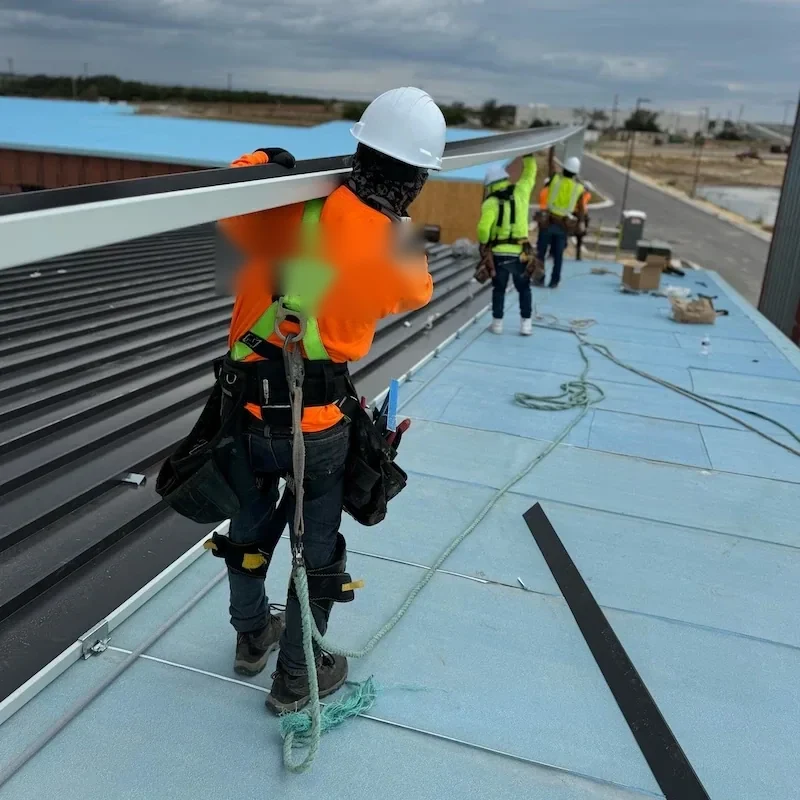
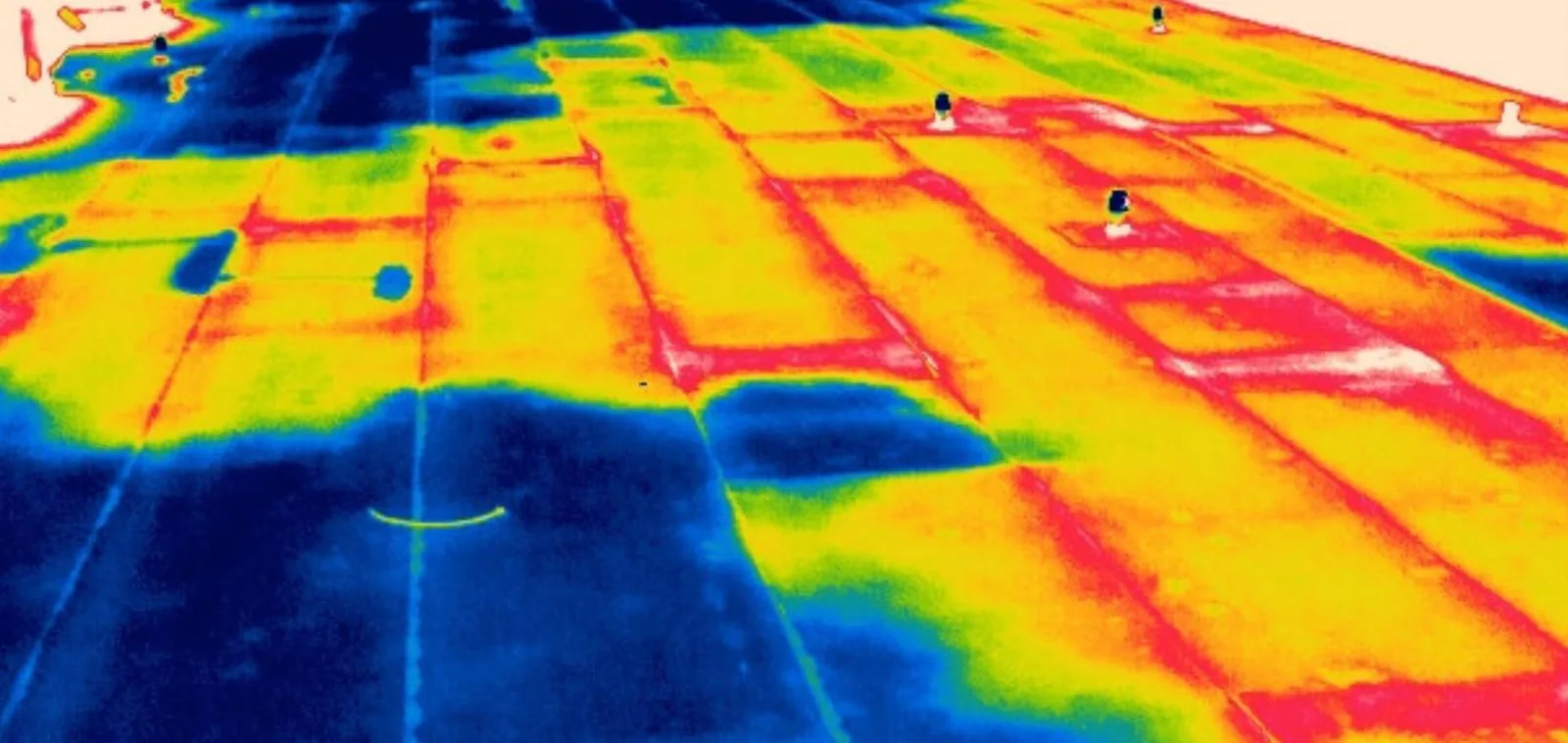
An infrared scan is a way to select where a roof opening may answer a moisture question. For a commercial roof in Garden Grove, CA, we first identify the suspected area, the roof system, and conditions that could affect the surface temperature. We collect thermal and reference images, interpret patterns alongside visible conditions, and mark locations for confirmation. A scan is not a direct moisture reading through every roof layer, and the result can be affected by construction, weather, shading, and equipment. The value comes from pairing the pattern with targeted verification before a repair or replacement boundary is approved.
Prepare the Roof and the Question
Before a survey, we review available plans, leak reports, prior repairs, and the roof's construction. The technician records the time and conditions, identifies transitions and equipment, and captures both thermal images and standard reference views. A change in surface temperature may point to retained moisture, but it may also reflect insulation differences, shade, reflectivity, or a roof detail. We compare candidate areas with known dry sections and describe any limitation that changes interpretation. The survey should answer where test cuts may be most informative, not produce a color map without a clear next step.
Garden Grove includes commercial, office, industrial, civic, and mixed-use areas. A survey over a storefront near Garden Grove Boulevard may need to protect tenant contents below; in the Knott Street and Western Avenue industrial district, equipment placement and access affect where a technician can work. We coordinate with the facility contact before setting scan paths. The roof inspection adds hands-on observations at drains, curbs, seams, and wall transitions where a thermal pattern needs context.
Before scanning, we confirm whether recent repairs, surface washing, or a change in interior temperature could affect the pattern. Recording those details helps the reader compare one zone with another and decide whether an opening will provide useful evidence.
Verify Patterns Before Setting the Cut Line
A thermal anomaly is a candidate location, not proof of wet insulation. We mark each area, compare it with the standard image, and recommend a test cut where opening the assembly can confirm moisture or layer condition. The cut should be placed where the finding will change the scope, and the opening must be repaired with a detail compatible with the existing system. If test results are dry, the next step may be a different inspection question. If wet board is confirmed, we extend the repair boundary until the retained material is suitable for tie-in.
Several separate anomalies may require staged verification rather than one large removal area. The result can guide a localized repair if moisture is limited or support a larger replacement discussion when material condition is widespread. For systems being considered for a second layer, a recover evaluation must account for confirmed wet material and remaining layer count. We document the sample locations and findings so a proposal shows what was opened, what was found, and where uncertainty remains.
Interpret the Scan Within the Roof Assembly
Thermal response depends on the full assembly: membrane color, insulation type and thickness, cover board, deck, attachment, and interior conditions. A roof with mixed materials or recent patching can produce patterns that need extra caution. We note whether the surface is reflective or shaded and whether rooftop equipment blocks a scan area. The survey report identifies the equipment used, conditions recorded, image pairs, and the limits of interpretation. It does not label a roof section as wet solely because it appears warmer or cooler than the surrounding field.
Garden Grove adopts the 2025 California Building Code and related standards with local modifications in Title 18; these requirements may affect how an opening is restored or a broader project is permitted. We coordinate those project questions with the owner and building official. A confirmed repair needs material compatible with the roof, whether the assembly is a TPO membrane or another system. The scan helps choose where to investigate; it does not choose the replacement material or determine code compliance.
We preserve the image-to-location connection in the file, making it clear which roof zone should be opened and which comparison area was used.
Schedule Around Access and Thermal Conditions
Survey timing depends on surface conditions and safe roof access. We agree on the entry point, roof zones, interior areas that require protection, and equipment that must remain available. Wind, shading, rain, or a recently applied patch can affect image interpretation. The technician records those conditions rather than treating every scan as equivalent. If parts of the roof cannot be accessed, the report marks the limit and avoids extending a finding to the unscanned area. Test openings can follow after the image review, with a separate work window for restoration.
Harbor Boulevard, Beach Boulevard, Brookhurst Street, and Chapman Avenue are among the city's named commercial streets, while Trask Avenue includes a planned auto-sales and repair cluster. Those facts provide broad context; the site contact confirms parking, vehicle paths, and access arrangements at the actual property. A building access plan helps coordinate testing above active rooms or production areas. We identify who will approve each test cut and how the opening will be protected and restored before the survey begins.
Tie Each Image to a Confirmation Step
The report organizes thermal and standard images by roof zone, labels anomalies for review, and lists the confirmation method recommended for each. It distinguishes observations from confirmed moisture and includes the test results once openings are made. The owner can then compare candidate areas against repairs and future surveys. A clear key prevents a temperature pattern from being mistaken for a measured moisture reading. Where a pattern is inconclusive, we state what additional access or testing would resolve it.
After repair, the closeout record should show how each opening was restored and whether additional wet material was removed. A condition report can pair test results with repair photographs. A later maintenance check can review drains, seams, and new penetrations but will not replace a moisture survey when concealed wet insulation is the question. We keep the scan tied to decisions the owner can act on: test, repair, monitor, or evaluate a broader roof section.
Commercial Roofing Questions
Does infrared testing confirm wet insulation?
It identifies temperature patterns that may indicate retained moisture, but confirmation usually requires a test opening or another suitable verification method. Surface reflectivity, shade, construction differences, and equipment can affect the pattern. We mark candidate locations and explain which opening would answer the question before a repair boundary is set.
When is an infrared roof survey most useful?
It can help prioritize test cuts when a large low-slope roof has suspected moisture but few visible signs. The survey is most useful when plans, roof access, and leak history are available and conditions allow meaningful imaging. It does not replace a close inspection of seams, drains, curbs, and wall details.
Will every roof section be included in the scan?
Only accessible areas that can be imaged under suitable conditions are included. Rooftop equipment, shade, obstructions, and safety limits may leave gaps. The report identifies unscanned areas and avoids treating the imaged portion as representative of the entire roof unless the data supports that conclusion.
What happens after a thermal anomaly is identified?
We review the paired reference image, locate the pattern on the roof plan, and recommend a test opening if confirmation would change the scope. The opening is documented and restored with a compatible repair detail. If the sample does not show moisture, we reconsider the pattern rather than extending a wet-area assumption.
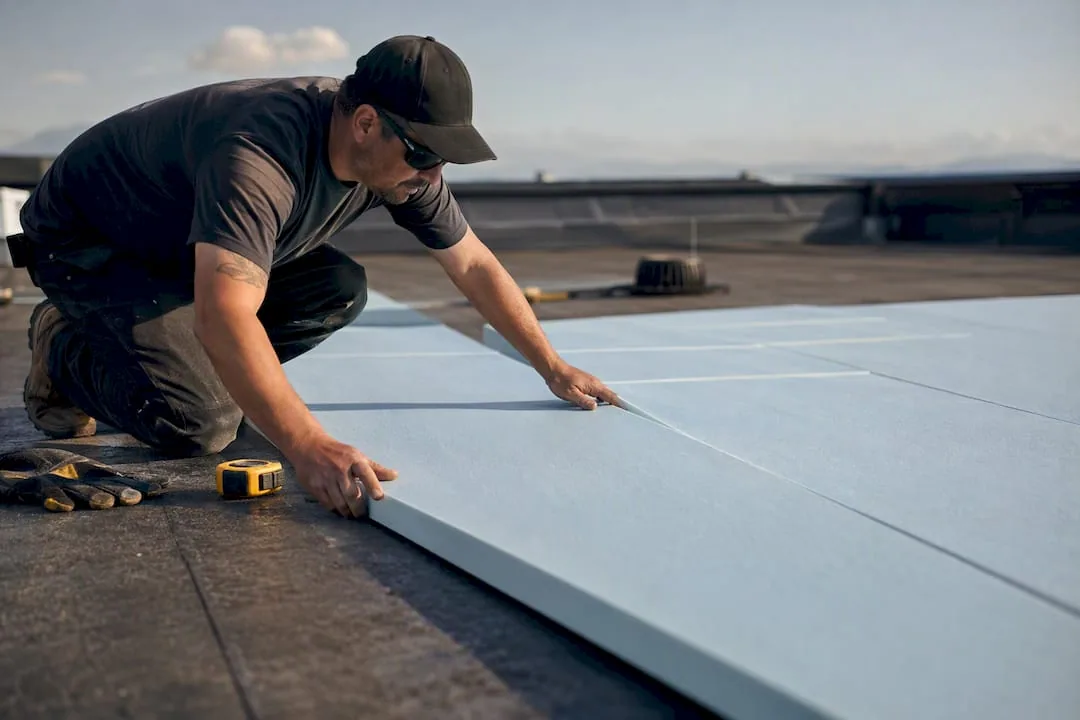
Measure the roof before choosing the repair path
Arrange a roof walk with available plans, leak records, and access constraints. We will trace the assembly, mark the work boundary, and prepare a scope for your Garden Grove building.
Or call 555-555-5555 · [email protected]