
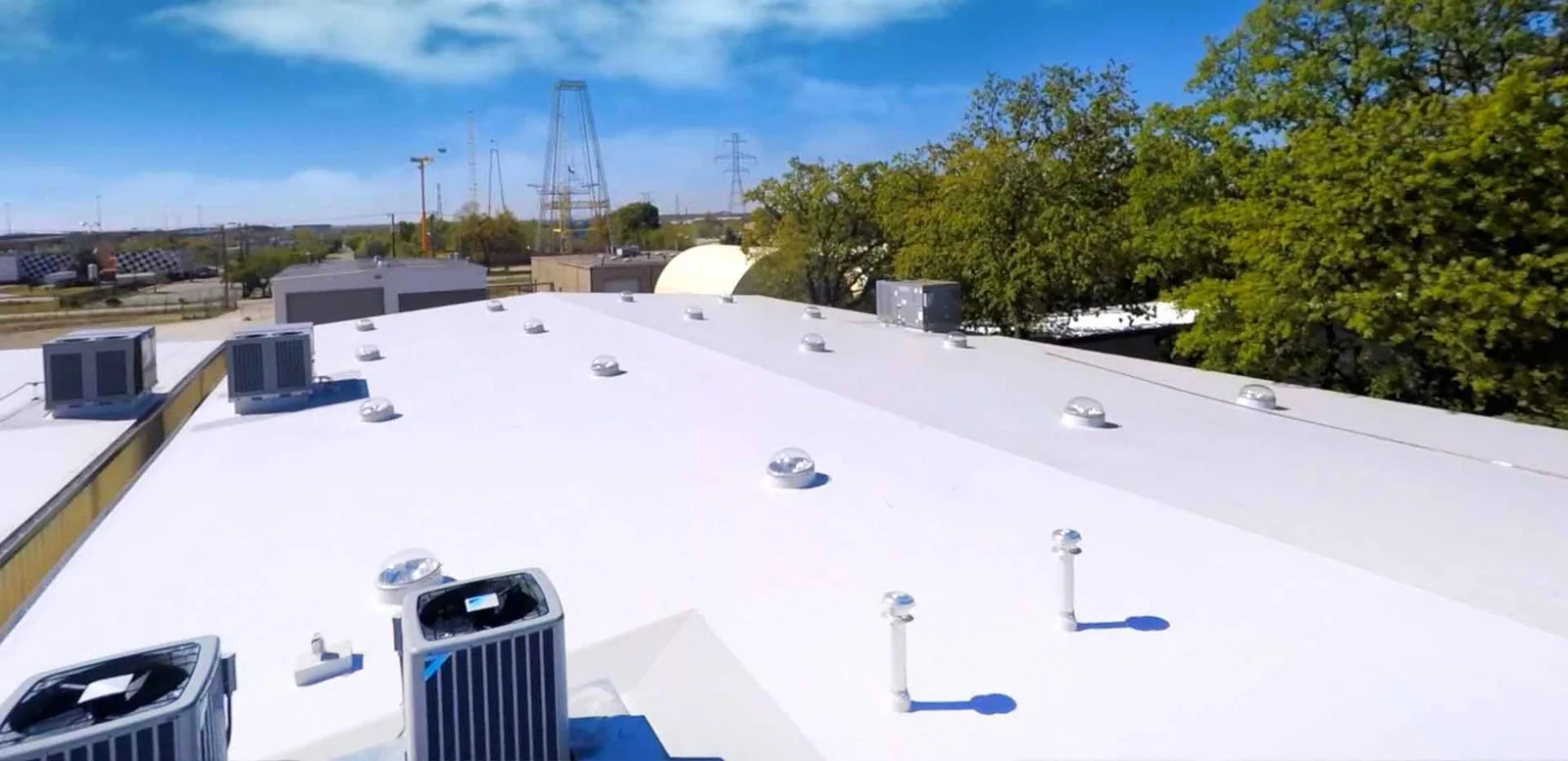
Roof Systems · Garden Grove, CA
Commercial TPO Roofing in Garden Grove, CA
Commercial TPO Roofing
Commercial TPO roofing in Garden Grove, CA includes membrane, insulation, attachment, flashing, tested seams, and documented closeout.
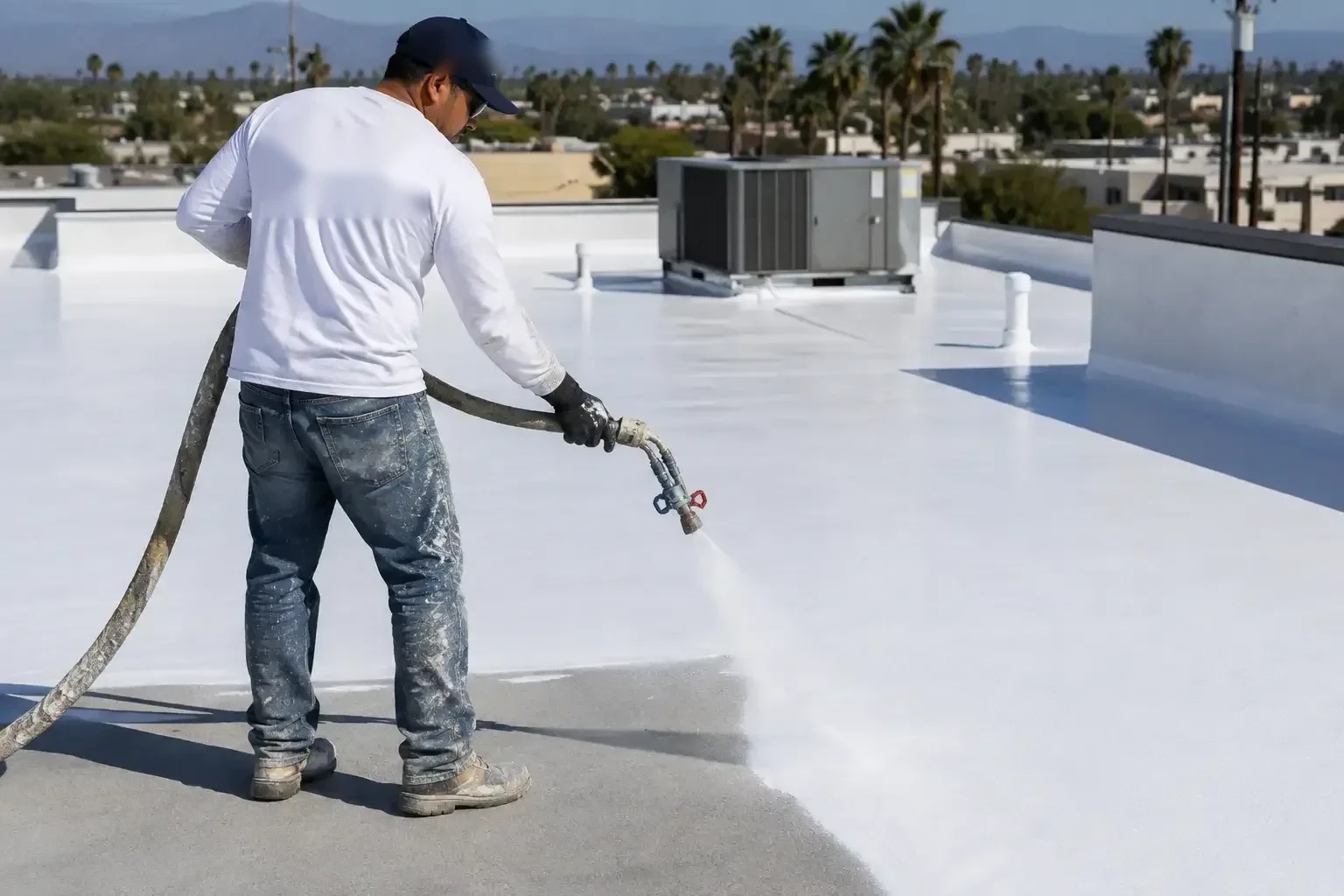
A TPO roof depends on continuous heat-welded seams and secure edges, not only the membrane sheet across the open field. For a commercial building in Western Avenue industrial area, we inspect the existing assembly, deck, drainage, and curb transitions before proposing installation or repair. The scope identifies membrane thickness, insulation and cover board, attachment, perimeter details, and how each seam will be tested. A system comparison should include preparation and access as well as the membrane itself, giving the owner a clear view of what the finished roof needs to perform.
Check the Field, Seam, and Edge Conditions
We begin with the membrane field, then trace seams to corners, curbs, drains, and parapets. A weld can appear closed but release under a probe if temperature or surface preparation was wrong. We look for open laps, shrinkage, punctures, patch edges, and fasteners that have backed out. The substrate also matters: wet insulation or a crushed cover board can undermine the attachment. We record each condition by roof zone and note whether the assembly can be repaired locally or requires a test opening to check concealed material.
Garden Grove includes commercial, office, industrial, civic, and mixed-use properties. A roof over Garden Grove Boulevard's mixed commercial and office area can sit above occupied tenant space; in the Knott Street and Western Avenue industrial district, equipment and production access may affect where work can be staged. We confirm actual operating requirements with the owner. A roof inspection documents the substrate and transitions before a new TPO assembly is selected.
Set Each Weld on Clean, Stable Material
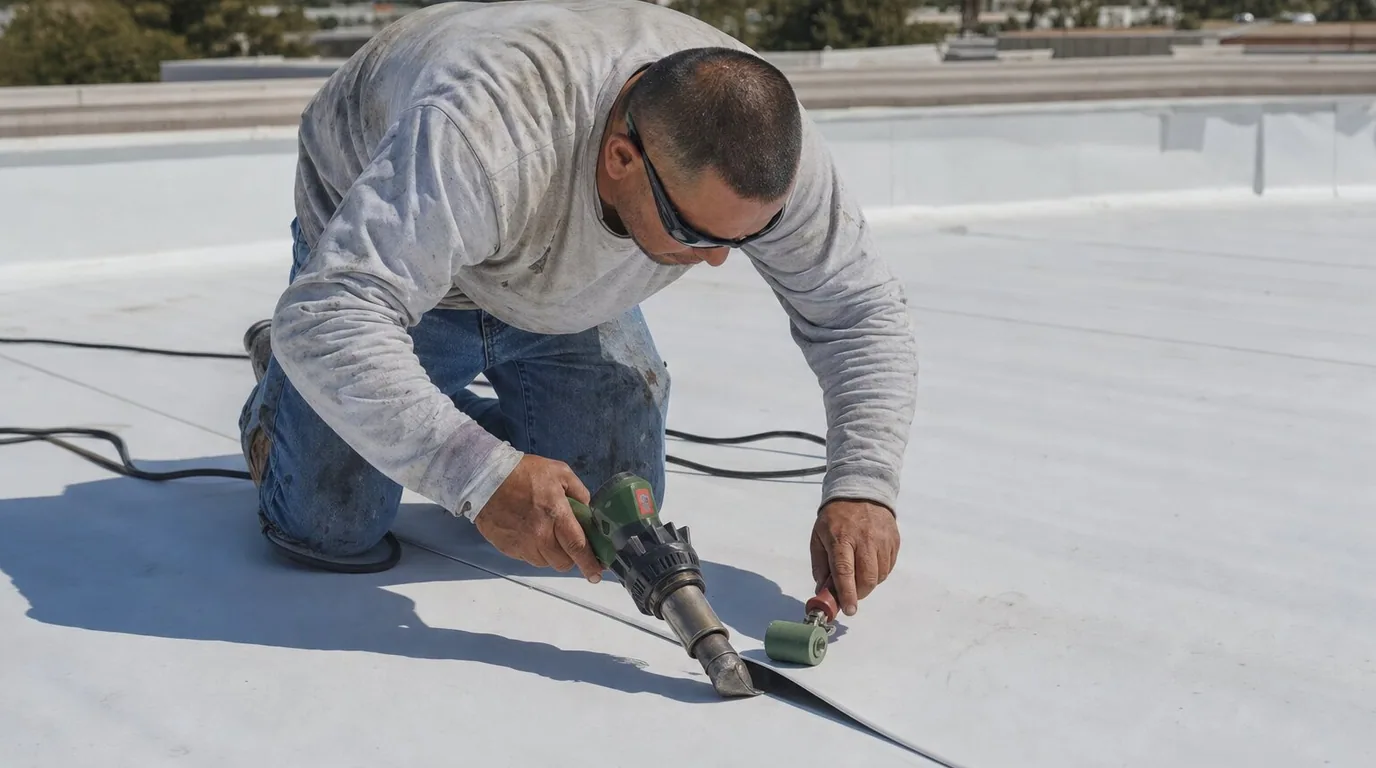
Before welding, the surface has to be clean, dry, and prepared for the membrane system. We remove loose material, check that the substrate is stable, and arrange sheet layout so seams avoid drains, corners, and unnecessary cross-joints. The weld settings follow the product instructions and field conditions. We test seams as the work proceeds and rework any area that does not hold. At a curb, wall, or drain, the field sheet connects to a separate flashing detail; the scope shows where that transition starts and how it terminates. We also inspect seams before installing a patch or cover board, since a weld placed over dust or adhesive residue may not fuse across the full width. The crew uses a seam probe and scheduled test welds to verify the process in field conditions. Where the sheet meets a metal curb, we confirm the transition material and securement before the field run reaches the opening.
When repair is appropriate, we cut back to membrane that can receive a new weld and prepare the patch with rounded corners and sound overlap. If water has reached insulation, the work boundary extends to a stable board edge. A roof repair can correct a limited seam or puncture, while a cover-board replacement supports the new sheet where the substrate has failed. For widespread deterioration, the owner can compare full replacement with a recover only after the existing layers are confirmed.
Specify the Complete TPO Assembly
The membrane is one layer in a roof assembly. We identify insulation type and thickness, cover board, attachment pattern, vapor-control needs where specified, perimeter securement, flashing, and drainage details. Mechanical attachment, adhesive, or another approved method affects labor and wind resistance. A designer or engineer sets project criteria; we install to the approved documents. The scope also lists metal edge work and how new sheets tie to existing systems. Material compatibility must be checked at repairs and transitions, particularly where coatings or older membrane remain.
For the specified TPO assembly, the submittal should state membrane thickness, attachment, seam testing, flashing details, and edge securement as a coordinated system. The design team confirms the permit path and project criteria before installation. TPO installation details differ from PVC membrane and EPDM roofing, including how seams are joined and how repairs are made. We compare those systems against the existing substrate, drainage, and operating conditions rather than treating any membrane as interchangeable.
Plan Sheet Movement and Daily Dry-In
Large membrane rolls require a planned path from delivery to roof, with safe staging, lifting, and access around equipment. We divide the field into zones, align sheet layout with the dry-in sequence, and keep drains open as the crew advances. Adhesive and welding work must stop at a secure edge if weather or an exposed condition delays the next run. For occupied sites, we coordinate hoist routes and noise with the property team. If a concealed repair changes the sequence, we reset the daily limit before the crew leaves the roof. Sheet layout can reduce awkward narrow strips at roof edges and minimize cross seams near drains. We review those choices with the approved shop drawings and field dimensions before rolls are opened. If the roof geometry differs from the plan, the change is recorded and reviewed before the crew cuts material.
Where a loading dock or service corridor serves the property, we agree on a single controlled route for rolls and welding equipment with the site manager. We keep deliveries clear of active vehicle paths and confirm roof access before lifting material. A changed access condition can affect sheet layout and the day's dry-in boundary. Our occupied-building sequence sets protected zones, while a drain detail plan keeps outlets accessible as new insulation changes roof height.
Verify Seams Before Turning Over the Roof
Closeout checks completed welds, flashing, edge securement, fasteners, drains, and tie-ins to adjacent roofs. We keep seam-test records and photographs that identify each roof zone and repair boundary. The owner receives the installed membrane and insulation description, approved changes, and care requirements provided for the system. A clear record also notes where older material remains. The roof file gives future crews a way to locate transitions and choose repair materials compatible with the installed membrane. The turnover file can note seam locations tested, repairs completed, and any weather or access issue that changed installation sequence. If a later inspection finds an open weld, those records help identify whether the issue sits at an original seam, a repair, or a new penetration.
Later equipment work can puncture the sheet or leave debris at a drain. maintenance visit can check accessible seams, penetrations, and drainage. If a weld opens, a seam repair assessment should examine the adjacent material before a patch is sized. We document the location and closeout method so follow-up work stays tied to the actual assembly.
Commercial Roofing Questions
What makes a TPO seam reliable?
A clean, compatible surface and properly controlled heat allow the two membrane sheets to fuse. The crew should test welds as installation proceeds and correct weak areas before they are covered or placed in service. At edges and curbs, the field seam connects to a separate flashing and securement detail.
Can a TPO roof be patched after a puncture?
Often, if the surrounding membrane is sound, clean, and large enough to accept a welded patch. We remove loose or contaminated material, inspect the cover board, and extend the repair to a stable boundary. If insulation is wet, that board needs removal before the membrane is closed.
How do I compare TPO installation proposals?
Compare the full assembly: membrane, insulation, cover board, attachment, perimeter securement, flashing, drain elevations, seam testing, and closeout records. Also review how concealed damage is approved and what access protection is included. A price for membrane material alone does not show whether transitions and substrate are covered.
Does a white TPO roof automatically reduce energy use?
Surface reflectance can affect solar absorption, but building energy use also depends on insulation, HVAC efficiency, operating hours, occupancy, and utility rates. We can specify the roof assembly and provide product information; a building-specific energy analysis is needed to estimate operational change.
Measure the roof before choosing the repair path
Arrange a roof walk with available plans, leak records, and access constraints. We will trace the assembly, mark the work boundary, and prepare a scope for your Garden Grove building.
Or call 555-555-5555 · [email protected]