Commercial Roofing Services · Garden Grove, CA
Commercial Roof Drain and Scupper Repair in Garden Grove, CA
Commercial Roof Drain and Scupper Repair
Commercial roof drain and scupper repair in Garden Grove, CA checks the outlet, flange, membrane tie-in, and flow path at commercial buildings.
Water at a roof drain should enter the bowl and leave through a clear outlet, not collect at the seam where the membrane meets the metal. On a commercial building in Garden Grove, CA, we inspect the drain, sump, flashing, and nearby slope as one assembly. A blocked strainer is a maintenance item; a loose flange or split membrane calls for repair. We record the point where water can enter and whether the drain path remains open. That distinction helps the owner decide whether to clear debris, correct the detail, or investigate a broader drainage problem. The visit also notes whether the strainer can be removed for routine cleaning and whether the visible outlet is reachable without moving stored property.
Trace the Flow From the Field to the Outlet
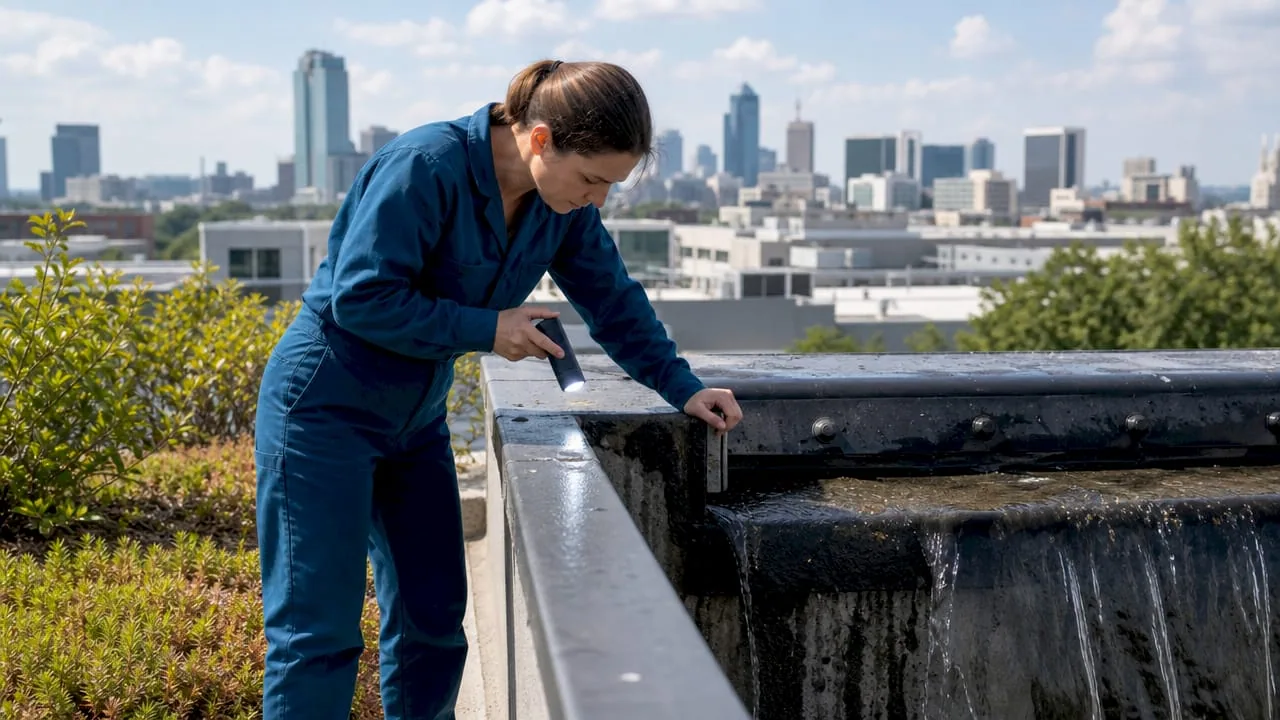
We begin upstream of the drain and follow the roof slope to the bowl, checking for debris, sediment, displaced strainers, and standing water. Around the flange, we look for open membrane laps, corrosion, failed sealant, and movement where the metal meets the roof. We also check the overflow path and confirm that discharge is not obstructed at the visible outlet. Water marks or ponding can point to a low area, but a surface walk does not establish how long water remained or whether the deck is wet. Where concealed moisture matters, we identify a test location.
Garden Grove has commercial, office, industrial, and mixed-use building areas, so drain access can be over tenant space or equipment. In the Knott Street and Western Avenue industrial district, a process roof may have several roof zones and equipment bases near a drainage route. Along Garden Grove Boulevard, a retail or office roof may need clear pedestrian access below the work. We coordinate with the property contact and record the drain by roof zone. A roof inspection can add broader condition context when several drains share the same low area.
Repair the Bowl, Flange, and Membrane Connection
Drain repair begins with the connection between the bowl and roof membrane. We remove unsound flashing or membrane, prepare the surface, and rebuild the tie-in using a material compatible with the existing system. A replacement bowl may be needed if corrosion or deformation prevents a secure connection. The repair also considers sump shape and finished height; a new layer cannot leave the inlet proud of the field or create an edge that traps runoff. If water has damaged insulation, we mark the affected boundary and open the assembly for owner approval before extending the work. We test the repaired drain connection only after the surrounding membrane is secure and the outlet can safely receive water.
When the membrane is sound and debris is the only obstruction, the appropriate action may be cleaning and a maintenance record rather than a repair. If the flange has failed, a flashing correction should extend to a stable perimeter. A damaged section of field sheet may need a separate roof repair. We identify the sequence and whether the overflow drain remains available during work so the owner understands how runoff will move if rain arrives before closeout.
Match the Detail to the Roof System
Drain details differ across TPO, PVC, EPDM, asphaltic, and metal roof assemblies. We identify the existing membrane and use compatible flashing or accessories. Thermoplastic sheets may be welded to a matching drain boot; EPDM usually needs an approved adhesive connection; asphaltic systems use compatible bituminous details. The specification describes bowl material, clamping components, membrane transition, and debris protection. We avoid covering the drain opening with coatings or mastic that can obstruct flow or make future service difficult.
Garden Grove adopts the 2025 California Building Code with local changes in Title 18. If the repair changes a regulated component, the permit path should be confirmed with the building official. A TPO drain detail and a rubber membrane drain require different preparation and attachment. The building's drainage plan also affects whether a scupper, overflow, or secondary outlet should be inspected. We document the flow path and the repair material so future roof work can follow the same system logic.
Keep an Outlet Available During the Work
Before work, we identify the primary and overflow outlets, protect the opening from debris, and confirm where water can discharge while the drain is under repair. We coordinate interior protection if removing the bowl or opening the roof exposes occupied space. The work zone needs a dry-in plan and a method to restore flow before the crew leaves. If several drains connect to a shared leader, the property team can identify access points below and any operational limits. We photograph the outlet before and after clearing or repair so the record shows the condition changed.
Trask Avenue's planned auto-sales and repair cluster may put vehicle circulation near a roof access route at some properties. Garden Grove's commercial plan also names Harbor Boulevard and Brookhurst Street. We verify actual staging and discharge conditions with the site contact. A phased work plan can keep entrances and loading areas clear while multiple drain details are corrected. When a roof holds water after drains are cleared, we record the area for a separate slope or insulation review instead of widening the drain repair by assumption.
Verify Flow and Schedule the Next Check
At completion, we inspect the membrane tie-in, bowl connection, clamping components, overflow path, and visible outlet. We remove loose debris and confirm water can reach the drain, then photograph the detail and note any remaining ponding or access limit. If work exposed wet insulation, the closeout identifies the material removed and the final tie-in boundary. A future maintenance visit can use the same roof-zone label to check for debris, movement, or new roof traffic near the drain.
Drain screens should remain accessible for cleaning, and other trades should keep fasteners, sealant scraps, and packaging out of the bowl. A maintenance visit can check strainers, scuppers, and overflows together. If water continues to stand after the outlet is clear, a ponding-water evaluation can distinguish a low spot from a blocked path. We keep those tasks separate so each recommendation addresses the condition observed.
Commercial Roofing Questions
What is the difference between a blocked drain and a drain failure?
A blocked drain has debris or another obstruction that limits flow. A drain failure involves a damaged bowl, loose flange, split flashing, or a failed connection to the membrane. We inspect the outlet and surrounding detail before recommending cleaning or repair, then record any water path or damaged insulation nearby.
Can a new drain be installed without replacing the whole roof?
Often, when the surrounding membrane and substrate are sound and the new bowl can tie into the existing system. We check the sump, roof height, membrane compatibility, and outlet connection. If removal exposes wet or unstable material, the repair boundary may need to extend beyond the drain opening.
Why is there still water near the drain after cleaning?
The roof may have a low area, a raised drain bowl, a blocked line below the roof, or an outlet that cannot carry water away. We check the visible flow path and note whether the issue lies beyond the roof surface. If the drain is clear but water remains, the next step is a separate drainage assessment.
How should we maintain roof drains?
Keep strainers accessible, remove debris without damaging the membrane, and check the flange, sump, overflow, and visible discharge path. A maintenance record should identify each drain by roof zone and note any ponding after cleaning. Repairs to a loose bowl or membrane connection should be authorized separately from routine clearing.
Measure the roof before choosing the repair path
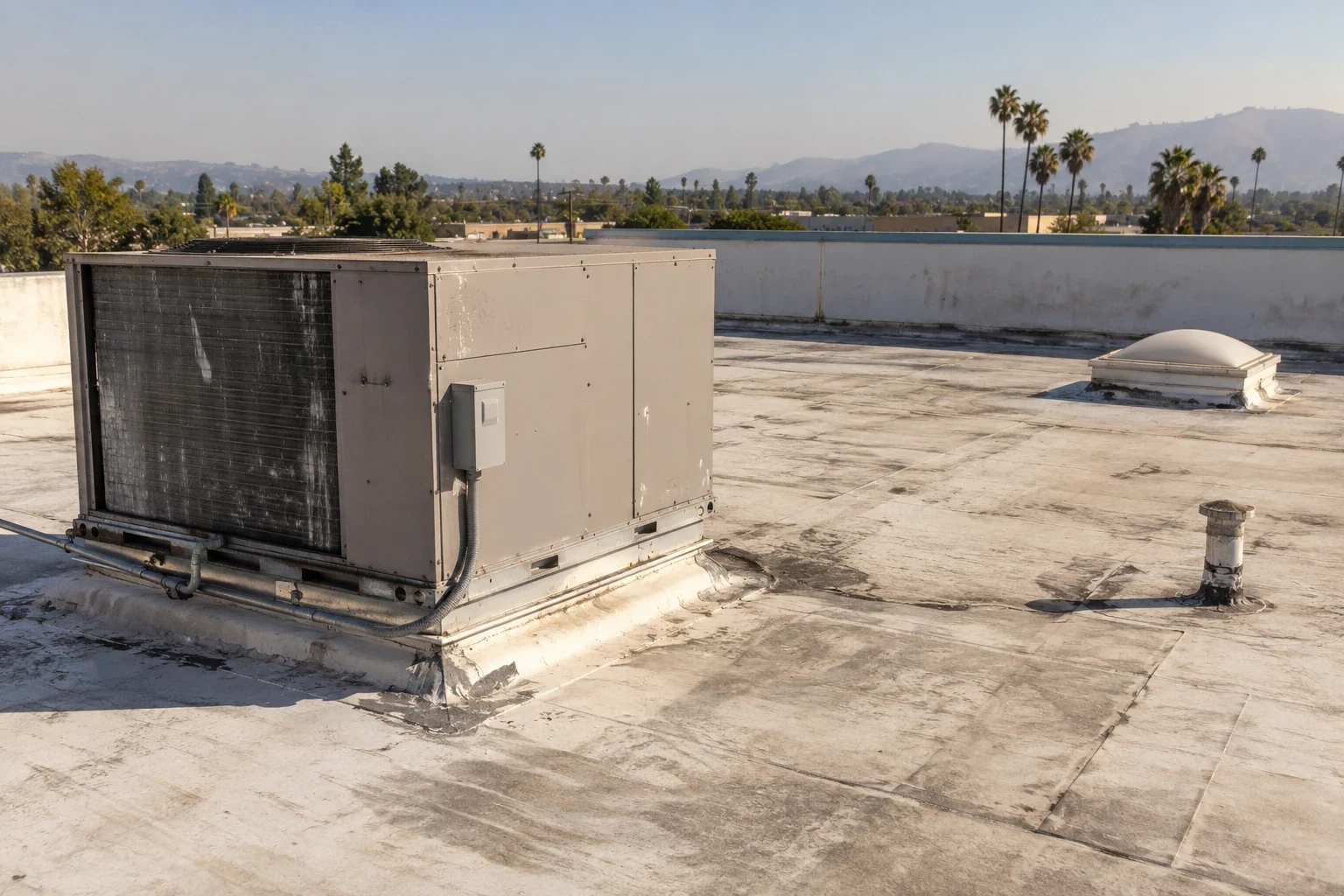
Arrange a roof walk with available plans, leak records, and access constraints. We will trace the assembly, mark the work boundary, and prepare a scope for your Garden Grove building.
Or call 555-555-5555 · [email protected]