Commercial Roofing Services · Garden Grove, CA
Commercial Roof Maintenance in Garden Grove, CA
Commercial Roof Maintenance
Commercial roof maintenance in Garden Grove, CA checks drainage, seams, edges, and new penetrations, with findings recorded by roof zone.
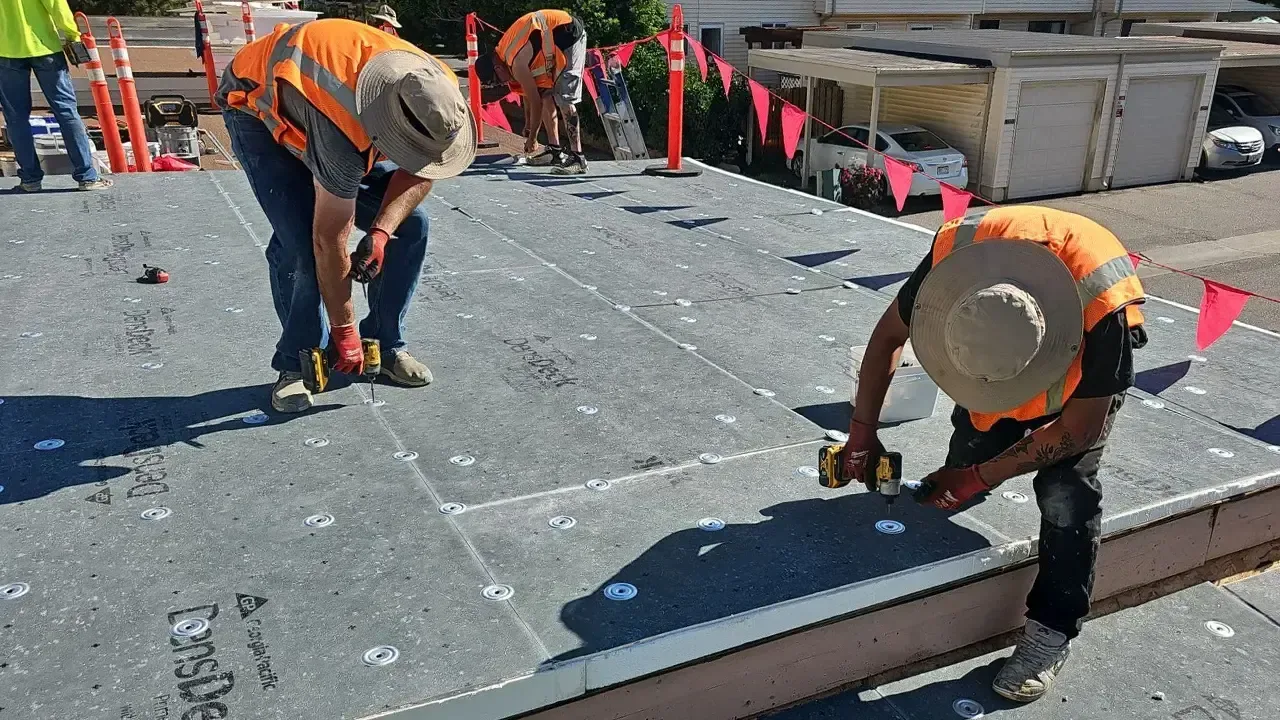
Leaves caught at a roof drain can keep water against a seam long after the rain has passed. A maintenance visit in Garden Grove, CA starts by clearing the flow path, checking the surrounding membrane and flashing, and recording what changed since the last inspection. The work is organized by roof zone so the owner can distinguish routine debris removal from a repair that needs authorization. A consistent record makes it easier to plan labor, coordinate equipment service, and catch a small opening before it wets insulation or the deck.
Inspect the Details That Collect Water and Movement
We check drains, scuppers, sumps, overflow paths, seams, curb flashings, wall terminations, and edge metal. Each item is viewed in context: debris at an inlet may explain standing water, while an open lap nearby may need a separate correction. We note loose fasteners, penetrations added by other trades, surface wear, and patches that have begun to lift. Photographs should show the finding and enough surrounding roof to locate it again. The visit also records access limitations, equipment changes, and areas that need a closer inspection rather than describing concealed conditions as confirmed.
Garden Grove includes commercial, office, industrial, and mixed-use buildings, so maintenance routes may pass above occupied retail, offices, or production areas. In the Knott Street and Western Avenue industrial district, equipment service can change roof traffic and introduce new penetrations. We ask the building contact what work occurred since the prior visit, then compare those records with visible conditions. A condition inspection may be needed when a finding reaches beyond routine upkeep or its water path is unclear.
Separate Maintenance Items From Repairs
Cleaning a drain and correcting a failed drain flange are different tasks. We list housekeeping items separately from repairs so approval and scope remain clear. For a repair, the record identifies the affected roof zone, the observed defect, and the next action, such as resealing a curb, replacing a loose section, or opening the assembly to check wet board. We do not cover an active seam failure with a coating or treat a temporary patch as a completed repair. If the condition has spread, we explain where the boundary should be extended and what could change after removal.
Garden Grove's planning framework includes commercial and office uses along Garden Grove Boulevard, while the city's industrial district is associated with Knott Street and Western Avenue. These settings can have different access paths and rooftop equipment, so the maintenance sequence is confirmed with the property contact. A localized repair service addresses a documented defect; an asset condition record can support budget planning when repeated findings appear across several zones.
A visit can also compare repair priorities across roof zones and note whether a new rooftop unit changed the walk path or drainage pattern. We keep these observations tied to the building record so the maintenance plan reflects actual use, not a calendar alone.
Build Visits Around Site Access and Roof Traffic
Before scheduling, we confirm roof hatch or ladder access, fall-protection requirements, escort needs, and areas that must stay clear. Maintenance work can conflict with HVAC service, solar work, deliveries, or tenant operations if the sequence is not coordinated. We map the path from access point to each roof zone and keep tools or removed debris away from drains. A property manager can identify high-priority areas, but the field crew records what is actually visible at the time of the visit. If rain, unsafe access, or a roof condition prevents completion, the report states what was deferred.
Trask Avenue has a planned auto-sales and repair cluster, where vehicle movement or service-bay schedules may affect staging at nearby properties. The city's commercial framework also names Harbor Boulevard and Beach Boulevard. We confirm actual loading and parking constraints instead of assuming the same plan fits each roof. A building-access sequence can coordinate maintenance when an occupied facility needs multiple roof zones checked without blocking normal use.
Keep Drainage and Temporary Protection Functional
After debris is removed, we confirm water can move through the drain, scupper, and overflow path. A clean opening cannot correct a low spot or failed flange, so any continuing ponding is recorded for follow-up. We inspect temporary patches and exposed edges for lifting, but do not assume a patch has restored the original system. If a maintenance visit finds active water entry, we protect the interior as needed and arrange repair rather than leaving the issue under routine service. The owner receives a clear distinction between cleaned, inspected, repaired, and deferred items.
Garden Grove adopts the 2025 California Building Code and adds local provisions in Title 18. If maintenance identifies work that changes a regulated component, we flag it for project review and confirm the permit path with the building official. The service log records the observed condition and the follow-up needed; it does not replace that review. For surfaces eligible for restoration, a coating evaluation first checks adhesion and substrate condition; regular cleaning alone cannot prepare a failing assembly for a new coating.
When a drain component is damaged, we photograph the bowl, surrounding membrane, and connection before proposing a replacement. This shows whether the work stops at the surface or must extend into the assembly below.
Use the Record to Set the Next Interval
At closeout, we provide dated photos, a roof-zone list, drainage observations, completed maintenance tasks, and items needing approval. The record notes new penetrations or equipment work and assigns each repair recommendation a priority based on observed exposure. It should be specific enough that a different facility contact can find the location and understand what was done. Where no defect was found, we record the inspected area rather than making a blanket statement about the whole roof.
A maintenance interval should reflect the roof's condition, debris load, access, and changes to rooftop equipment. After a repair, the next visit can verify the documented seam or flashing and clear nearby drainage. We can prepare a capital plan when the owner needs to group repairs across roof zones, or schedule a return inspection for a specific finding. Keeping the repair history with the building helps the next decision start from observed conditions rather than an old assumption.
Commercial Roofing Questions
What gets checked during a commercial roof maintenance visit?
We review drains and overflows, seams, penetrations, curbs, wall transitions, edge metal, visible patches, and areas affected by recent equipment work. We clear accessible debris and record repair needs separately from routine service. The visit also notes roof zones that could not be reached or require a closer inspection.
Can routine maintenance prevent every leak?
No maintenance program can remove all roof risk. Regular checks can identify debris, open details, new penetrations, or visible damage before those conditions spread. We document what we find and recommend repair or testing when evidence supports it. Concealed moisture is not confirmed by a surface walk alone.
How often should our building schedule service?
The interval depends on the roof's condition, drainage, nearby debris, roof traffic, and changes from other trades. After an inspection, we can recommend a practical schedule based on those findings and revise it if new equipment or recurring debris changes the exposure.
What do you do when a maintenance check finds a defect?
We photograph the condition, identify the roof zone, and separate the repair from the routine visit. The owner receives the material or testing step needed to correct it and the point where approval is required if removal reveals more damage. Active water entry receives an immediate response plan.
Measure the roof before choosing the repair path
Arrange a roof walk with available plans, leak records, and access constraints. We will trace the assembly, mark the work boundary, and prepare a scope for your Garden Grove building.
Or call 555-555-5555 · [email protected]