

Roof Damage Repair · Garden Grove, CA
Commercial Roof Membrane Puncture Repair in Garden Grove, CA
Commercial Roof Membrane Puncture Repair
Repair a punctured commercial roof membrane in Garden Grove by finding the impact zone, testing the surface, and closing the detail with compatible materials.
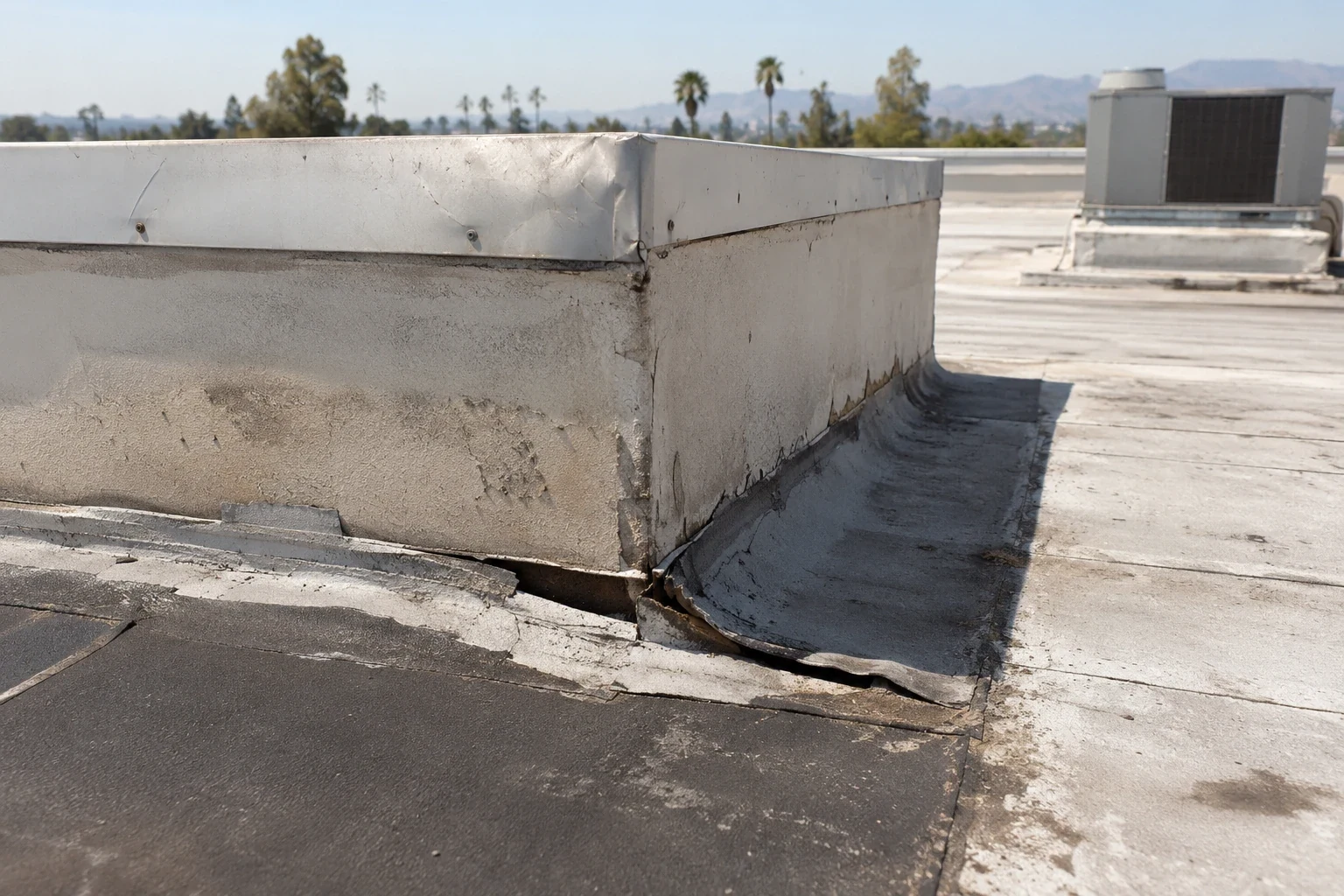
A small puncture can admit water while leaving most of the roof surface unchanged. The repair depends on where the membrane was struck, how the material is constructed, whether water has reached the insulation, and what caused the opening. We locate the reported damage, check the membrane around it, and document the receiving surface before preparing a patch. The repair boundary should include enough sound material for the system’s required bond or weld.
Foot traffic, dropped tools, maintenance carts, sharp debris, and later equipment work can all leave marks that resemble one another. Do not assign a cause from the shape of a hole alone. Record the reported timing and nearby work, inspect the surrounding roof zone, and note any earlier patch or concealed layer that could affect the correction. If the membrane is brittle, wet, or covered by an incompatible repair, verify how the assembly can receive new material before proceeding.
Garden Grove’s commercial and industrial properties include a range of roof assemblies. The Garden Grove Industrial District is a broad service area; the membrane and site history at the individual property determine the repair detail.
Find the Impact Point and Check the Material Around It
Record the date the puncture was noticed, the room below, weather, roof access history, and any recent vendor or maintenance activity. Inspect the mark and surrounding membrane for cuts, abrasion, crushed insulation, displaced ballast, punctured coating, loose seams, or other damage. Compare the location with rooftop paths, equipment work areas, stored materials, and debris. A close-up alone may hide whether the opening sits beside a lap, curb, or older repair, so include a wider photograph and roof-plan reference.
Check whether water is present below the surface and whether the area is soft, blistered, or delaminated. If material is concealed or the substrate cannot be assessed without opening the assembly, note that limit and obtain owner direction before testing. A puncture can be isolated, but a cluster of marks or a long abrasion path may require a larger scope. Keep the suspected cause separate from the visible condition in the inspection record.
A commercial roof inspection can assess adjacent seams and transitions. If the puncture sits near a split lap, seam failure repair may be evaluated separately.
Prepare a Patch That Reaches Sound Membrane
Before cutting or grinding, confirm the owner’s access and protection requirements, the material system, and whether any other reviewer needs to see the exposed condition. Remove loose or damaged material far enough to reach a stable perimeter, but do not enlarge the opening without checking the substrate and repair plan. Clean and prepare the receiving surface as required for the confirmed assembly. Water or dust trapped beneath a patch can interfere with adhesion or welding.
The patch shape, lap, weld, adhesive, primer, or fastener method must suit the system and manufacturer requirements. A surface dab of generic sealant may hide an opening without closing it. If the insulation is wet, the deck is damaged, or punctures extend under nearby equipment, stop and document the expanded condition before adding work. Protect the opening at the end of the shift, and make the additional boundary visible in the revised scope.
For active water entry, emergency roof repair can provide approved temporary protection while permanent materials are selected. A nearby edge or curb injury may also call for flashing failure repair if inspection confirms that transition is damaged.
Match the Patch to the Membrane Type
Thermoplastic sheets, EPDM, modified bitumen, spray foam, and coated assemblies use different repair materials and preparation. Identify the roof system from reliable records and field evidence before ordering a patch. For a thermoplastic membrane, the receiving area and weld need suitable temperature and preparation; a rubber membrane may require a compatible adhesive or cover tape; modified bitumen requires a repair method suited to its surface and reinforcement. Never assume that a kit intended for one roof type can be used on another.
If a prior coating or patch obscures the original membrane, test the compatibility before covering more area. Where the surrounding field is split or degraded, compare a repair that extends to sound material with a broader section replacement. A coating may protect an eligible surface but cannot fill a concealed void or restore a punctured base layer without the proper repair. State what the selected patch covers and what remains beyond its edge.
The EPDM system and TPO system require different seam and patch procedures. For a detailed damage review, a wind-damage inspection may be relevant only if roof evidence shows displacement beyond the puncture.
Check the Activity That Reached the Roof
Before repairs, ask which vendors or employees used the area and whether any tools, materials, supports, or carts crossed the puncture zone. Coordinate the inspection with roof access rules and escort needs. If equipment must be moved, its qualified vendor controls that work; the roofer should not disconnect a system outside the approved scope. Where inventory, occupied rooms, or electrical equipment sit below, the property contact approves protection before the repair area is opened.
For more than one puncture, mark each point and group repairs only after confirming the material and condition are comparable. Keep photos, patch materials, and repair dates tied to the roof map. At closeout, distinguish repaired openings from marks that were inspected and left unchanged. If the cause of impact is unknown, recommend a practical roof-access or vendor procedure without claiming the puncture will not happen again.
equipment curb service can address a confirmed system interface near the work.
Track Each Patch in the Maintenance File
Closeout should state the roof zone, membrane identified, puncture dimensions if measured, preparation, patch material, completed lap or weld, photographs, and any remaining condition. Record what was opened and whether moisture or substrate damage was found. Store the repair with the roof plan and vendor history so later inspections can identify the patch and avoid covering it with incompatible material.
During future roof access, use designated paths and avoid dragging tools, metal stock, or equipment over the membrane. After mechanical or electrical work, inspect the related roof zone for dropped fasteners, sharp debris, or new penetrations. A maintenance check can identify visible damage, but a new leak still needs its own inspection. Compare the report date and interior location with the repair history rather than assuming the previous puncture has reopened.
Garden Grove’s General Plan includes office, retail, industrial, civic, and mixed-use properties. The service area covers those building types; the roof record should remain specific to the membrane and repair at each property.
Commercial Roofing Questions
Can a small hole in a commercial roof be patched?
Often, if the surrounding membrane and substrate are sound and the correct repair materials are available. The inspection should check moisture and reach a stable perimeter before the patch is installed.
How can I tell whether a roof puncture damaged the insulation?
A surface view may not show concealed moisture. The contractor can inspect for soft or blistered areas and recommend an authorized test opening when the underlying condition would change the repair.
Can generic roof sealant close a membrane puncture?
Not reliably across all roof systems. Use a repair method and material compatible with the confirmed membrane and its installation requirements.
Should the puncture cause be included in the report?
Record the owner’s timing and nearby roof activity, but distinguish that account from the observed damage. The shape alone may not establish what caused the opening.
What should be documented after a puncture repair?
Closeout should state the roof zone, membrane, preparation, patch dimensions or boundary, material, photographs, and whether concealed damage was found or remains untested.
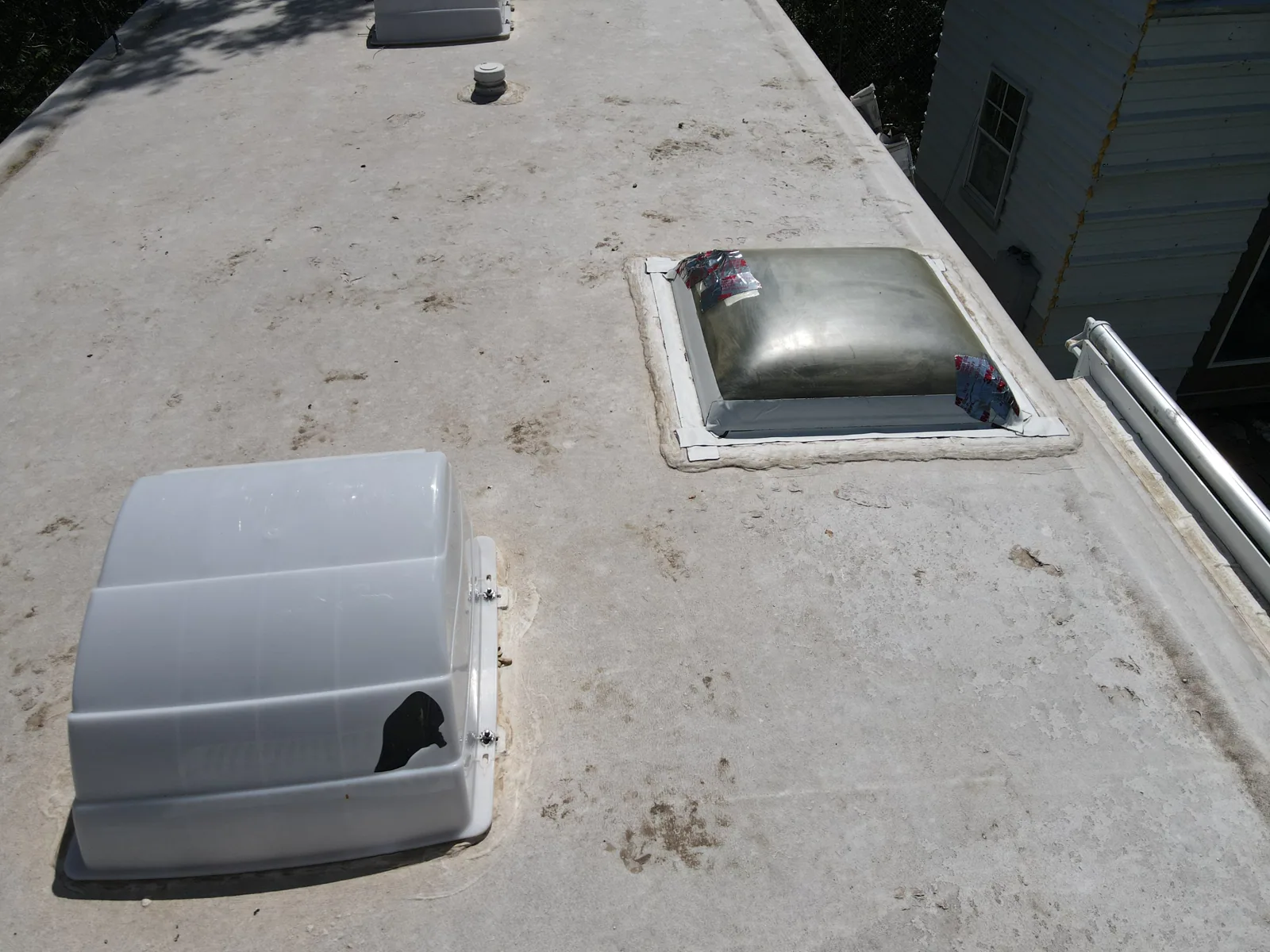
Repair a roof membrane puncture
Share the affected room, date, roof access history, system records, and any recent vendor activity. We can inspect the opening and surrounding material, then define a compatible patch scope.
Or call 555-555-5555 · [email protected]