Service Areas · Garden Grove, CA
Commercial Roofing in the Valley View Boulevard Areas
Valley View Boulevard Areas
Commercial roof repair, inspection, maintenance, and replacement planning around Valley View Boulevard shopping centers and corridors.
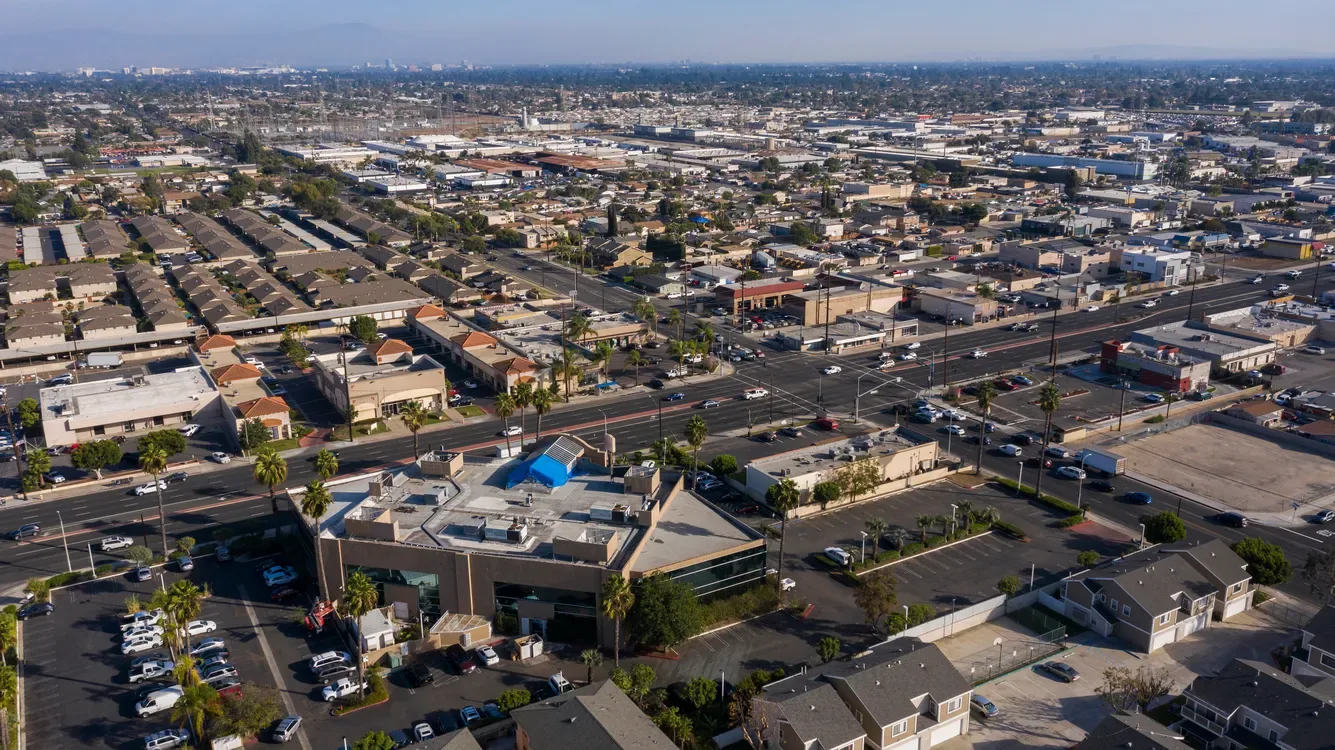
Commercial roofs near Valley View Boulevard may serve shopping centers with multiple tenants, separate entrances, and different operating hours. Garden Grove’s General Plan identifies commercial focus areas at Chapman Avenue and Lampson Avenue, describes existing shopping-center development at those intersections, and supports reinvestment in multi-tenant commercial properties. These are planning-area facts, not a condition report for an individual center. We verify the building, roof assembly, and access before advising an owner about repair, maintenance, or replacement.
For a multi-tenant property, one leak report may start in a store while the water path crosses a common roof area. We map reported symptoms to roof zones and inspect transitions, penetrations, drainage, and previous work. Our assessment also accounts for tenant access, deliveries, customer paths, and the property manager’s communication needs. A limited defect can receive a defined repair; repeated findings across several sections may warrant a broader condition review. The written recommendation explains the evidence and any remaining uncertainty.
Connect Tenant Reports to Roof Conditions
Begin with the details tenants can provide: the affected room, date, weather, whether the leak repeats, and any recent ceiling or mechanical work. Those notes help establish where to look, but an interior stain alone cannot identify the roof opening. We inspect the corresponding section and nearby seams, curb flashings, walls, drains, and overflows. Water may move laterally through a roof assembly, so we also check adjacent low points and transitions rather than stopping directly above the mark.
On a shopping-center roof, equipment can belong to different tenants or service contractors. Record visible units, piping, sign supports, and any recent changes. We identify who can authorize access and which areas could not be reached. A commercial inspection can organize findings by roof zone and urgency, giving the property manager a clear way to coordinate next steps. If the entry point remains unclear, describe whether moisture testing or a selective opening would narrow the diagnosis.
Give Tenants Clear, Accurate Repair Updates
A manager needs to know which roof detail is being repaired, what access or interior protection is required, and what work is excluded. Define the repair boundary, preparation, material, and final inspection step. If a neighboring flashing or drain also needs attention, list it as a separate condition. That keeps the repair from expanding without approval and prevents a tenant from hearing that the entire roof was fixed when only one detail was addressed.
For active water, protect goods and fixtures below, then stabilize the roof while a permanent repair is planned. Commercial roof leak repair should identify the likely path and whether a temporary measure remains. Let the tenant know what time the crew expects to work and whether an entrance, loading bay, or sales area will change. If interior ceiling restoration is required, coordinate that separately and document when the roof has been made watertight so follow-on work can proceed appropriately.
When a roof complaint comes from one suite in a multi-tenant center, protect the tenant’s contents while the building team checks whether the same roof section covers adjacent spaces. Keep the customer report factual: when water appeared, what surface was affected, and whether the symptom returned. Do not promise that work over one unit resolves a separate report in another unit until the roof details have been inspected. A shared condition may require a common scope, but separate penetrations can fail independently. Document the distinction so owners can approve one repair, several repairs, or a broader survey with a clear basis.
Plan Repairs for the Actual Shopping-Center Roof
Two neighboring retail buildings may have different roof ages and materials, even when they share a parcel or manager. We verify the assembly and any recover layers before proposing a patch, coating, or reroof. Check compatibility at seams and perimeter details, not just the broad field. If previous work is undocumented, photographs and selective verification may be more reliable than assuming a system based on age or surface color.
For a serviceable roof with isolated defects, repair and routine maintenance may be practical. A coating requires dry, sound substrate and functioning drainage; it cannot hide moisture or correct unstable details. A broad replacement should include edges, penetrations, drainage, equipment coordination, and phasing. Owners can compare a commercial roof replacement scope with continued repairs, and review TPO roofing only if the assembly and project requirements support it. The proposal should also state how tenant access and protection are handled.
Coordinate Work Across Shared Retail Areas
Before a crew starts, identify operating hours, delivery windows, customer entrances, accessible paths, and the contact for each tenant or center. Confirm roof access and staging so vehicles do not block a shared lane. If work will affect an entrance or loading point, communicate the change before mobilization and keep a safe alternative available. The actual property layout determines the plan; a district map cannot show a tenant’s current loading schedule.
For larger repairs or reroofing, separate the property into zones and define how each section will be opened and closed within the shift. State what noise, odor, or equipment movement tenants may notice. An occupied-building reroof plan can sequence work around business activity and include temporary weather protection. The property manager should know how field changes are approved and whom to contact if a leak appears during construction. Clear communication reduces confusion while preserving the crew’s focus on a watertight, inspectable installation.
Confirm how the center handles public notices, temporary barriers, and delivery access before the crew stages material. A roof project may touch only one tenant’s space while using a shared loading path or rear access lane. Assign a property representative to answer field questions and set a predictable time for daily updates. If the work crosses several buildings, label each building and roof zone separately in the schedule. The plan should explain where the crew will start, how the section will be closed at shift end, and when a tenant can expect the route to reopen.
Keep Shared-Roof Records Organized
Closeout records should identify roof areas, dates, repairs, materials, photographs, and remaining recommendations. If several tenants reported symptoms, list the report origin separately from the confirmed roof condition. Mark any section that was inaccessible and any temporary measure that needs another visit. Store the information with roof plans and warranties so the next manager does not have to rebuild the history from scattered tenant emails.
Routine checks can focus on drains, perimeters, seams, and high-traffic roof routes where service equipment may disturb details. After sign installation or HVAC work, verify the new penetration and flashing. A roof condition report helps owners compare conditions across buildings, while West Grove commercial service-area details cover another recognized Garden Grove business area. The Garden Grove Boulevard corridor page describes a different planned mixed-use focus area. Review the planned Garden Grove Boulevard corridor for adjacent context. Preserve invoices and photographs alongside each property’s record.
Commercial Roofing Questions
Which Valley View areas are in the City’s commercial plan?
The General Plan identifies commercial focus areas at Chapman Avenue and Lampson Avenue, including existing shopping-center development and multi-tenant reinvestment goals.
Can you coordinate with several tenants?
Yes. The property manager can identify tenant contacts, operating hours, deliveries, and affected areas so the work sequence and notices are property-specific.
Does one tenant’s leak mean the shared roof needs replacement?
Not by itself. We inspect the entry point, assembly, and surrounding condition before comparing a defined repair with broader options.
Will you document areas that were not inspected?
Yes. Access limits and uninspected sections should be identified so the report is not read as covering roof areas that were not reached.
Can you inspect more than one shopping-center building?
Yes. Each building and roof zone should have its own findings, even when the properties share ownership or management.
Need a commercial roof assessment in this area?
Tell us which building is affected, what you have observed, and any access or operating constraints. We will confirm the property details and recommend a next step based on the roof.
Or call 555-555-5555 · [email protected]