Industries We Serve · Garden Grove, CA
Commercial Roofing for Insurance Restoration in Garden Grove, CA
Insurance Restoration
Document commercial roof damage in Garden Grove with roof-zone photos, repair limits, temporary protection, and a clear scope for owner and insurer review.
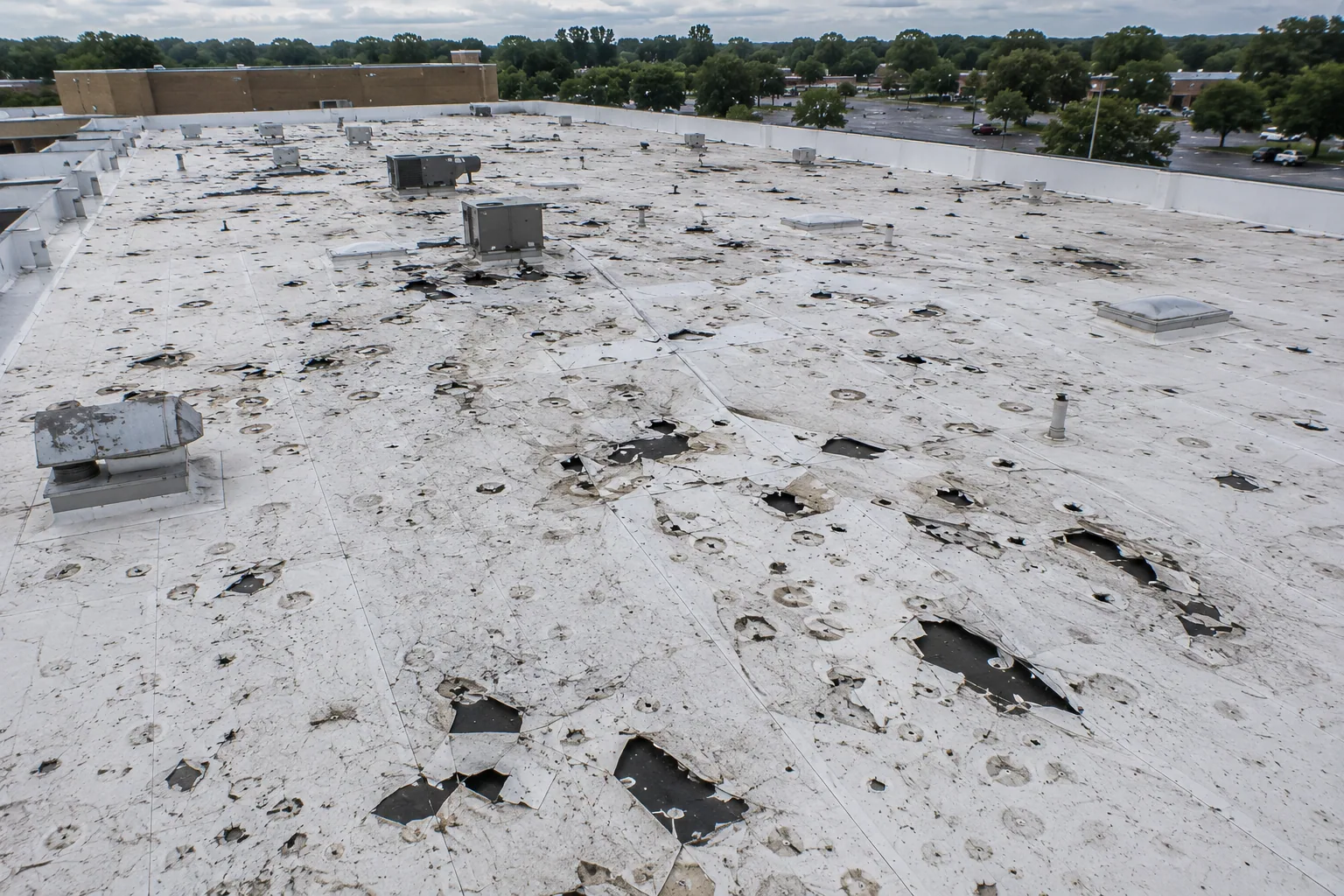
After a roof loss, the first task is to protect the building and record what can be seen. A wet ceiling or displaced panel may point toward a roof area, but it does not by itself establish the entry point, extent, or cause of damage. We inspect the roof detail, photograph the condition in context, and identify which material can be stabilized now and which question needs further review. The property owner can then coordinate its own claim process using a documented roofing scope.
Restoration work often moves through inspection, temporary protection, estimate review, authorized repairs, and closeout. The roofing contractor’s role is to describe roof conditions and the work required to address them. Coverage decisions and policy interpretation belong with the insurer and the owner’s qualified advisors. A clear report separates observed damage, pre-existing wear, concealed conditions, and proposed work so those conversations are based on roof evidence rather than an unsupported conclusion.
Garden Grove’s hazard planning addresses several risks to city property and infrastructure, while the local building stock includes commercial, office, industrial, and mixed-use property. The Harbor Boulevard Corridor and Garden Grove Industrial District provide area context; each claim and roof inspection remains specific to the property.
Separate Roof Observations From Cause and Coverage
Record the date of the event or first report, the affected rooms, visible impact, weather information provided by the owner, and any temporary measures already taken. On the roof, photograph the reported area and inspect nearby seams, flashing, drains, edges, penetrations, and equipment interfaces. Note the condition of adjacent material and whether there are earlier patches, open maintenance items, or signs that could predate the event. A photograph should show location and scale as well as the detail.
If the roof is unsafe, wet, or covered by debris, document the access limit and do not present an unseen surface as inspected. Where the cause depends on a concealed layer, attachment, or deck condition, state that a test opening or specialist evaluation is needed. A report can identify wind-related displacement or a failed seam as an observation, but a roofing contractor should not promise that a carrier will accept a claim. The owner decides how to submit records and who interprets policy terms.
A storm-damage roof inspection can document visible conditions. A broader commercial roof inspection can also identify maintenance items that are separate from event-related repairs.
Protect the Opening and Keep the Scope Traceable
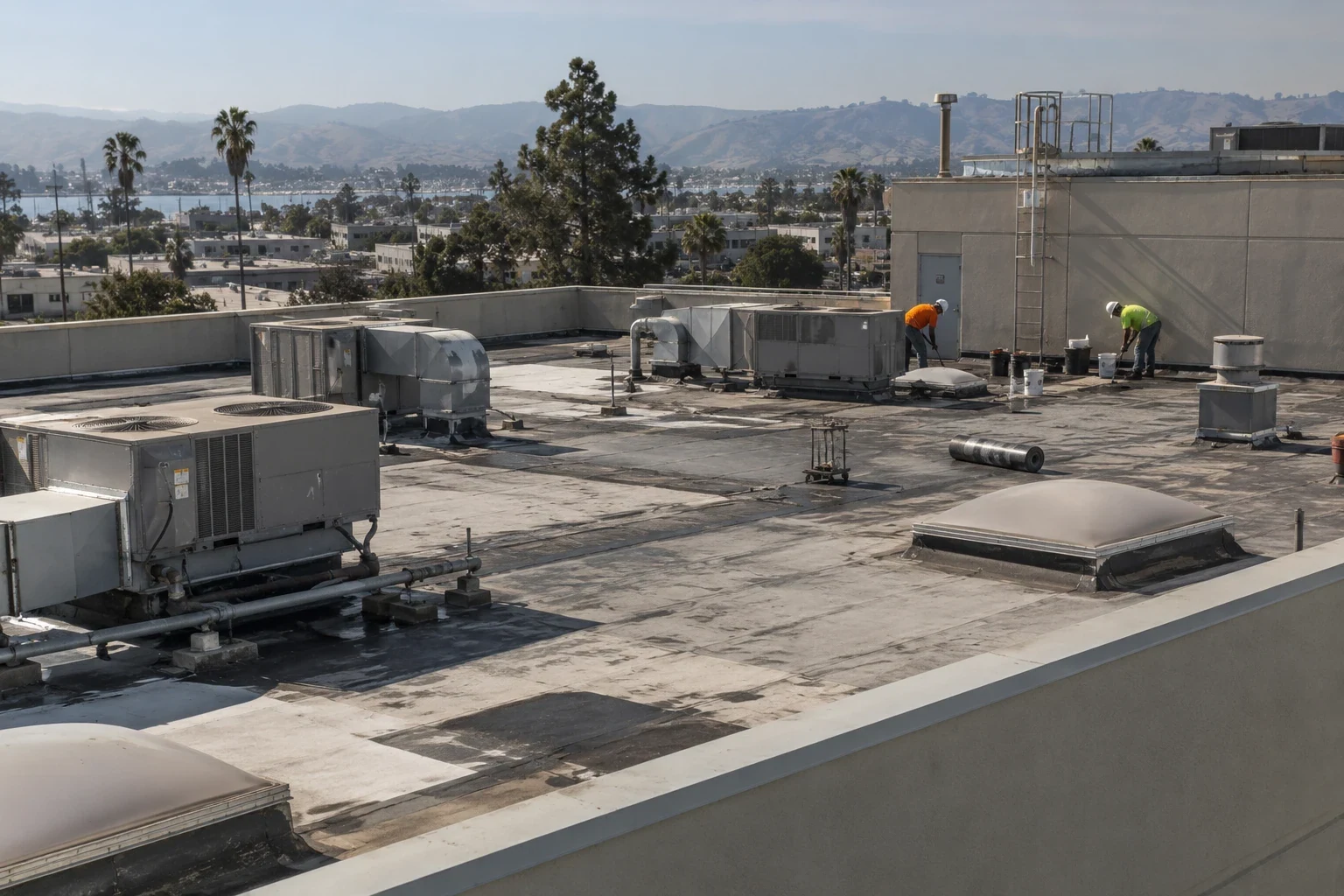
If water is entering, the owner may authorize temporary protection while the permanent scope is assessed. Document where the temporary measure begins and ends, what material was used, and what area still needs follow-up. Before removing damaged material, confirm access, interior protection, debris handling, and the person authorized to approve added work. A visible limit helps the owner and other reviewers understand which part of the roof was stabilized and what remains to be resolved.
Repair work should connect the observed failure to a stable tie-in. If a membrane edge is loose, inspect beyond the lifted section to determine whether the substrate can accept a new termination. If the deck or insulation is compromised, photograph the exposed condition, protect the opening, and request direction before extending the work. Keep a line between emergency dry-in, permanent repair, and unrelated maintenance so the owner can evaluate each item separately.
For an active opening, emergency roof repair can provide temporary protection within the approved scope. A flashing failure repair addresses a specific transition when the roof walk confirms that detail needs correction.
Prepare a Roof Scope the Owner Can Review
A repair, coating, recover, or replacement should be tied to the inspected assembly and its condition. A localized repair may suit a discrete failure when surrounding material is sound. Multiple failures, wet insulation, damaged deck, or deterioration beyond one section may require broader investigation. A coating needs compatible material and a prepared substrate; it will not resolve trapped moisture or an open leak path. A recover changes the existing layers and height, which can affect drainage, curbs, edges, and transitions.
For estimate review, state quantities, locations, materials, preparation, access, temporary protection, debris handling, equipment interfaces, exclusions, and assumptions about concealed conditions. Identify any item that cannot be priced conclusively without testing or authorization to open the assembly. If repair and replacement are both considered, compare the scope and remaining condition after each option. This gives the owner an understandable roofing record without implying that the contractor determines claim value or coverage.
Before mobilization, confirm permit submissions, plan review, and required inspections with city staff for the selected scope. Keep event-related observations separate from a broader maintenance assessment in the owner’s file.
Coordinate the Owner, Adjuster, and Site Contact
The property owner or manager sets site access and identifies the contact who can approve temporary protection and permanent work. If an insurer or independent adjuster needs to inspect before demolition, coordinate timing while keeping the building protected as authorized. Do not remove material needed for another inspection without direction from the owner. When a qualified mechanical or electrical vendor controls rooftop equipment, schedule that trade before moving a unit, line, or support.
At each stage, provide a dated update stating the roof zone inspected, photographs taken, temporary work completed, items awaiting approval, and what cannot be confirmed without additional access. If weather changes the plan, state which areas remain open and the method used to secure them. Keep the daily record tied to the claim or property file without combining unrelated buildings or events. The closeout should show what work is complete, what remains, and who received the update.
For a leased commercial property, a property-management record can help coordinate tenant access and owner approvals. Public facilities may use a separate agency review process for access and project documentation.
Keep the Claim File and Roof History Distinct
After authorized work, record the property, roof zone, repair limit, materials, photographs before and after, approved changes, temporary measures removed, and remaining conditions. Include any testing result or vendor handoff relevant to the repaired detail. Give the record to the owner or its named representative for the property file. If a future leak occurs, the next inspection can compare its location and date with the prior repair instead of assuming the same event or cause.
Once immediate restoration is complete, the owner can schedule a separate condition review for drainage, seams, edges, penetrations, and equipment changes. That review may identify maintenance needs unrelated to the loss. Keep those observations in their own scope so later estimates and project records remain clear. A maintenance visit can track conditions but cannot predict every future leak or establish how an insurer will treat a later report.
Garden Grove properties span business corridors and industrial areas, but a service area describes where crews may work, not what a particular roof has experienced. The inspection record should remain tied to the building and event being reviewed. A roof warranty record can also be retained with the property’s repair history when applicable.
Commercial Roofing Questions
Can a roofer determine whether a commercial roof claim is covered?
No. A roofing contractor can document observed roof conditions and prepare a scope. The insurer and the owner’s qualified advisors address coverage and policy interpretation.
What should the owner do when water is entering?
Contact the appropriate property representative, document the affected area, and arrange temporary protection authorized for the site. Keep records of the measure and schedule a roof inspection to define permanent work.
Should damaged roofing be removed before an adjuster visit?
Coordinate the inspection sequence with the owner and insurer before removing material that may need review. Protect the building as authorized and document any work required to prevent further exposure.
How should a restoration estimate describe the roof work?
Identify the roof zone, repair limits, material, preparation, access, protection, quantities, exclusions, and assumptions about concealed conditions. Separate confirmed work from items needing testing or approval.
Can maintenance findings be included in a storm repair scope?
They can be documented, but keep unrelated maintenance separate from event-related work so the owner can review each item clearly.
Document a commercial roof loss
Share the property contact, reported date, affected areas, roof plans, access requirements, and any inspection deadlines. We can document roof conditions and prepare a defined scope for owner review.
Or call 555-555-5555 · [email protected]