
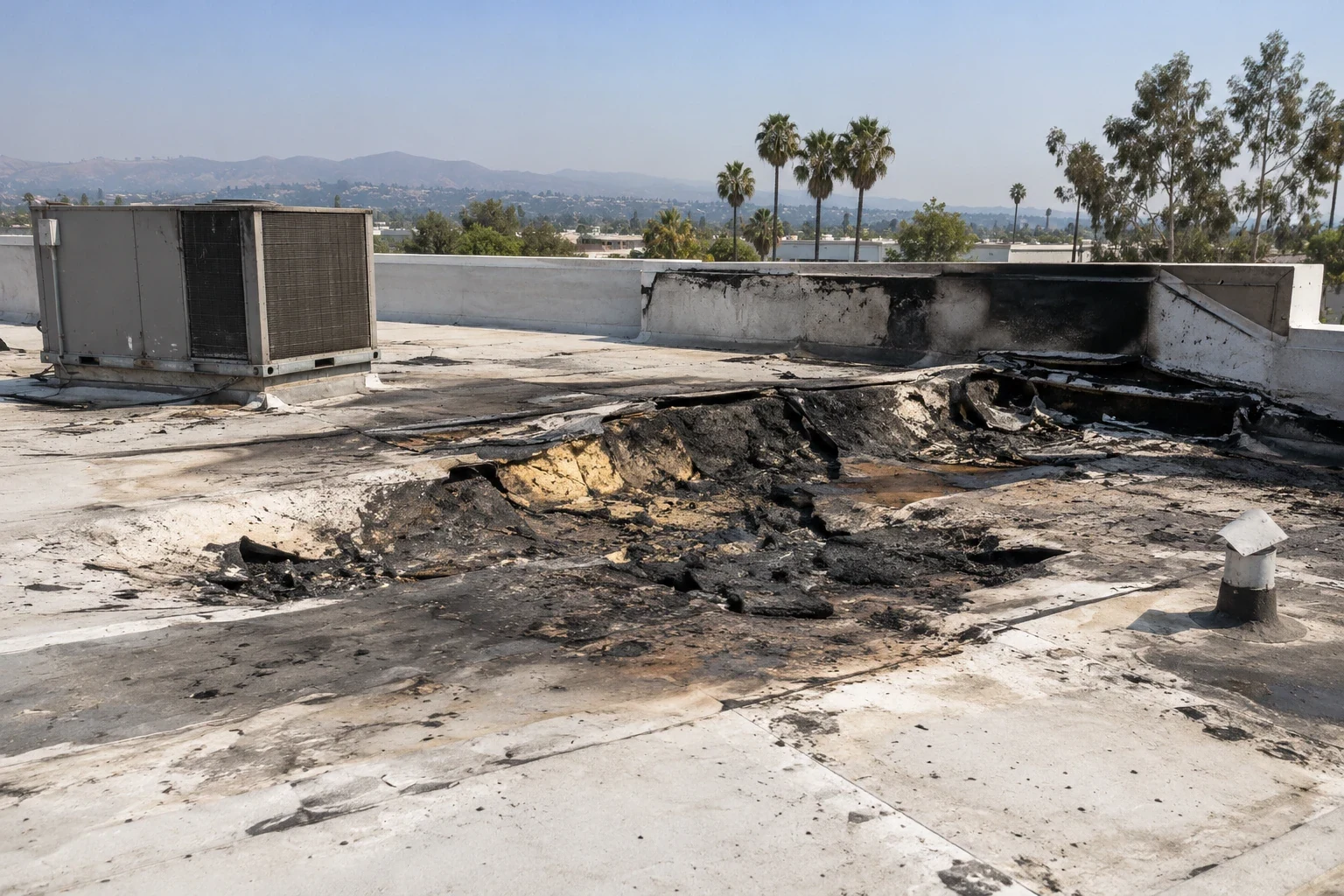
Roof Damage Repair · Garden Grove, CA
Commercial Fire-Damage Roof Repair in Garden Grove, CA
Commercial Fire-Damage Roof Repair
Assess Garden Grove commercial roof fire damage with safe access, documented materials, temporary protection, and a scope guided by the inspection.
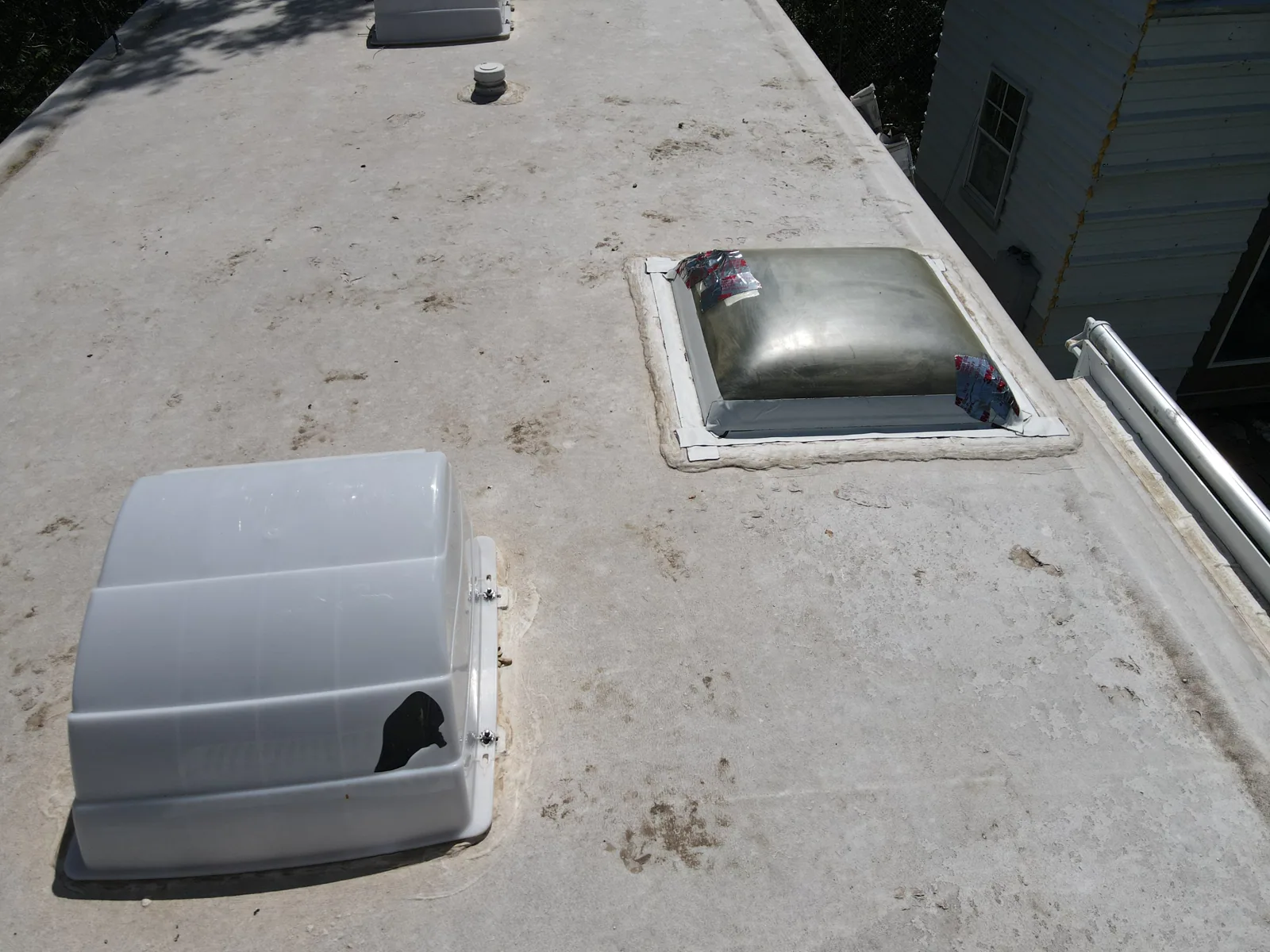
After roof access is released, mark the fire-affected zone and record visible conditions before a permanent repair is scoped. Do not treat a surface that looks intact from the ground as proof that the assembly is ready for repair. First follow the fire authority’s direction and the property’s safety plan. Once access is released, a roofing inspection can document visible damage, identify areas that need structural or environmental review, and set a temporary protection boundary for the owner.
Roofing observations should stay within the visible condition and the contractor’s scope. Heat can affect membranes, coatings, insulation, adhesives, metal, and deck materials in different ways. Water or debris may conceal the damaged area, and a fire-related opening can extend beyond the burned surface. The report should identify what was inspected, what remains inaccessible, and where a qualified structural, electrical, mechanical, or environmental professional needs to evaluate the building before roofing work proceeds.
Garden Grove’s local hazard plan addresses fire and other risks to city property and infrastructure. Commercial properties near the Garden Grove Industrial District sit within the broader service area, but the released site conditions and roof assembly control the assessment.
Wait for Safe Access and Map the Affected Roof
Confirm that the fire authority and property representative have released the roof area for inspection. Review the incident date, affected spaces, suppression activity, roof plans, and any emergency openings or debris removal. The roof walk should begin from a safe route and remain within approved limits. Photograph the condition from a stable position, record the roof zone, and identify any area that cannot be reached without clearance or specialist support.
Inspect membrane or panel surfaces, seams, flashing, edge metal, penetrations, rooftop equipment, and any visible deck or insulation. Look for blistering, distortion, opened laps, displaced fasteners, damaged curbs, or water intrusion. Do not infer the integrity of concealed layers from an undamaged surface. If structural behavior, electrical conductors, hazardous residue, or air quality is uncertain, pause and refer the condition to the qualified professional responsible for that issue.
A commercial roof inspection can document roof-level findings after access is approved. When the event also displaced edge material, a wind-damage review may help distinguish related exterior conditions.
Protect Exposed Areas Under Owner Direction
If the roof is open to weather, the owner may authorize temporary protection after the site is safe for that work. Record where the covering begins and ends, the attachment method, and the area that still needs permanent evaluation. Keep temporary protection separate from demolition and reconstruction. Coordinate with the incident team or insurer before removing material that another reviewer may need to inspect, and do not disturb a suspect component without the proper clearance.
Permanent roofing work should follow the approved repair or reconstruction plan. Remove heat-damaged material only after the owner confirms the boundary and the qualified reviewer approves the sequence. If the opening exposes compromised deck, insulation, or framing, stop and document the finding; the roofing scope should not make a structural repair decision. Mark the new limit and request direction before increasing the work area or changing materials.
For weather protection at an active opening, emergency roof repair can be scoped once access is approved. If the inspection identifies a separate membrane puncture, evaluate the puncture repair as its own roof detail.
Replace Only the Assembly That Can Be Evaluated
Material selection depends on what the qualified inspection confirms. A membrane may need localized replacement if heat affected a defined area and surrounding material can accept a compatible tie-in. Widespread blistering, delamination, lost attachment, or compromised insulation may require a larger roof section. Metal components can deform or lose their finish under heat; confirm their condition and attachment before reusing them. Coating or patching should not conceal a substrate that has not been assessed.
A replacement proposal should state which roof layers and metal details are included, how the building is protected during removal, and what remains subject to structural or environmental review. If the fire damaged HVAC, penetrations, or electrical lines, sequence those systems with the qualified trades before closing the roof. Document differences between the visible surface, removed materials, and the condition observed beneath them. The owner can then compare a defined repair with replacement assumptions and known exclusions.
Garden Grove’s 2025 California code framework includes local amendments in Title 18; confirm current permit and inspection requirements with city officials and the project’s design team. A roof condition report can preserve the inspection findings and open questions.
Coordinate Roofing With Restoration and Building Trades
Set a contact chain among the property owner, restoration manager, safety representative, and roofing contractor before materials arrive. Confirm site clearance, debris route, roof access, staging, utilities, temporary power, and any area that remains restricted. A mechanical contractor controls unit disconnection and restart; an electrician addresses electrical hazards; the structural professional evaluates deck or framing concerns. The roofer coordinates the membrane and flashing details only after the related interfaces are released.
When several crews work at once, identify which contractor opens, protects, inspects, and closes each roof zone. Daily notes should state what was completed, what is awaiting clearance, which opening remains protected, and what decision the owner must make next. Photos should distinguish original damage, removal, temporary cover, and final work. If a new condition changes the schedule, route the change to the authorized person instead of extending work by assumption.
A insurance-restoration scope can help keep roof observations separate from coverage determinations. For a facility with production or storage operations, manufacturing roof planning can help coordinate the space below the repair.
Keep Fire-Related Findings With the Repair Record
Closeout should identify the building and roof zone, approved repair limits, material removed and installed, photographs, temporary protection removed, vendor interfaces, and unresolved conditions. Include permits or inspection records provided by the owner or design team. State what could not be inspected and whether additional work remains with another contractor. A roofing completion record should not imply that utilities, structure, indoor conditions, or the entire property have been cleared.
After reconstruction, the owner can schedule a roof review of terminations, drains, penetrations, rooftop supports, and areas adjacent to the repair. Record any new equipment installation so future service calls can distinguish the original restoration from later changes. If water appears after turnover, report the room, date, weather, and roof zone. The next inspection can then check the relevant detail without assuming the cause matches the fire repair.
Fire is among the hazards addressed in Garden Grove’s local mitigation plan. After an incident, inspect the individual roof before setting its repair boundary. Keep the event record with the property file and use a heat and UV damage review only when separate surface exposure is observed.
Commercial Roofing Questions
Can a roofer inspect the roof immediately after a fire?
Only after the fire authority and property team release the area and access is considered safe. Structural, electrical, environmental, or air-quality questions need review by the qualified professional responsible for that issue.
Does a roof that looks intact need further evaluation after a fire?
Visible appearance alone may not establish the condition of concealed materials, attachment, or systems. An approved inspection can document the surface and identify where additional evaluation is needed.
Who decides what fire-damaged roofing should be removed?
The owner and project team set the authorized scope with input from the qualified design or safety professionals. The roofing contractor should document the roof condition and stay within that approved boundary.
Can temporary roof protection be installed while restoration is planned?
It may be possible after access is released and the owner approves the method. Record the covered area, attachment, and any remaining exposure, then coordinate the permanent work sequence.
Does a roofing report determine insurance coverage?
No. A roofing report describes visible conditions and proposed work. The insurer handles coverage decisions, and the owner can ask its own advisor to interpret policy terms.
Document fire-related roof conditions
Share the approved access status, roof plans, affected building area, incident information, and restoration contact. We can inspect visible roofing conditions and define the next roof-level step within the released scope.
Or call 555-555-5555 · [email protected]