Roof Damage Repair · Garden Grove, CA
Heat and UV Roof Damage Repair in Garden Grove, CA
Heat and UV Roof Damage Repair
Assess heat and UV wear on Garden Grove commercial roofs with a surface and transition review, compatible repair options, and documented remaining conditions.
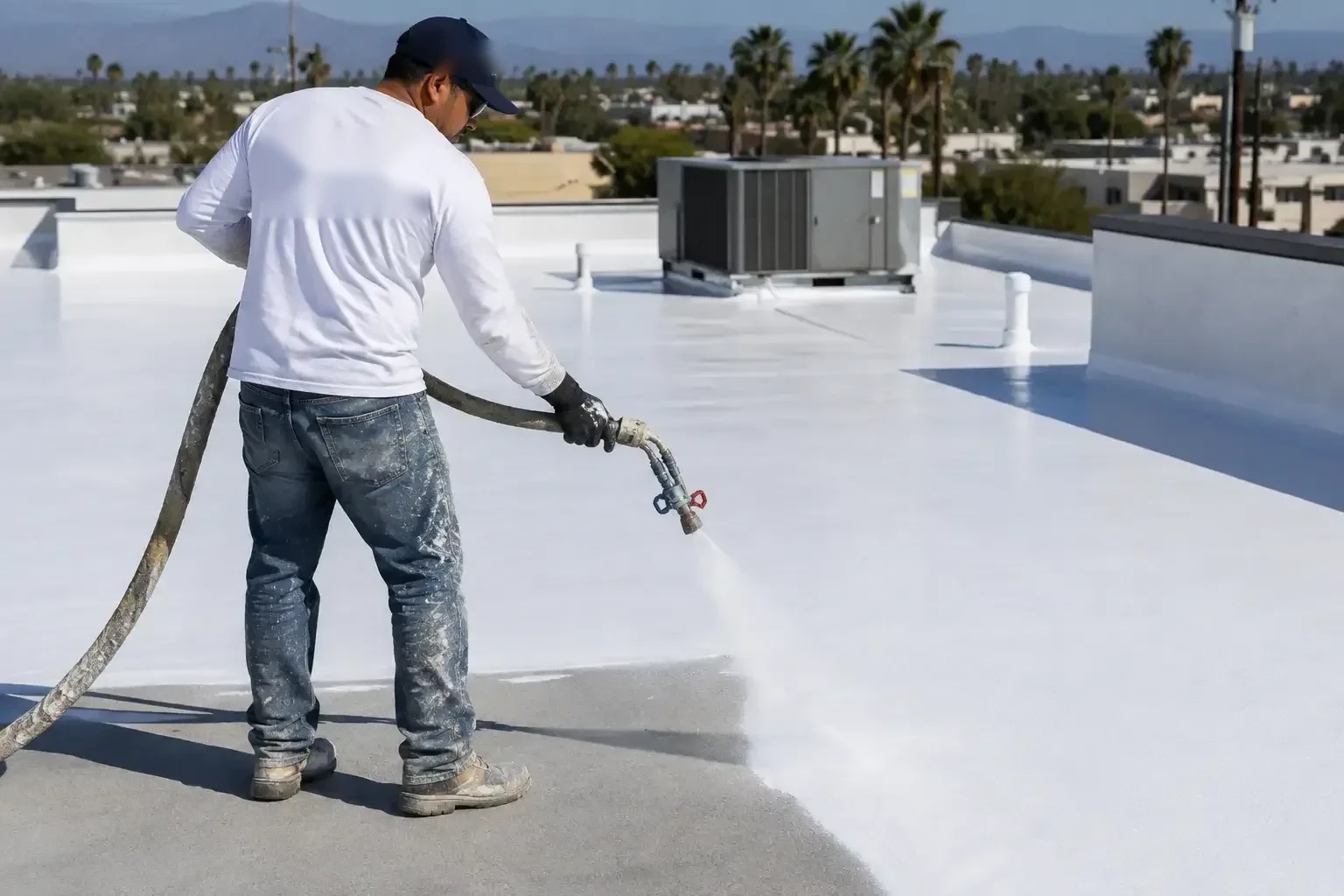
Surface chalking, brittle coating, cracked sealant, or a shrunken membrane can develop gradually and look different from a fresh impact. Heat and sunlight may contribute to material aging, but a roof inspection should document what is present before assigning a cause. We check the exposed surface, laps, edges, fasteners, and equipment transitions, then distinguish weathering from a puncture, movement, poor attachment, or an older repair that has failed.
The repair plan depends on the roof system and its substrate. A coating that has lost adhesion may sit over a stable membrane or conceal moisture below it. Metal finish loss does not establish that a panel joint leaks. Aged sealant may need replacement at a defined detail, while brittle field material can call for a broader evaluation. Identify the visible condition and any uncertainty separately so the owner can choose the next step from evidence rather than appearance alone.
Nearby Santa Ana Fire Station NOAA normals record summer air temperatures at a regional weather station; those averages are not roof-surface readings. Garden Grove’s commercial corridors, including the Harbor Boulevard Corridor, provide local service context while the building’s exposure and assembly determine what work fits.
Separate Surface Aging From an Active Failure
Record the roof material, age if known, prior coatings or repairs, and the locations where wear appears. Photograph the field surface, seam edges, metal transitions, parapets, curbs, skylights, and any area with cracks, blisters, exposed reinforcement, or open joints. Check whether the condition follows a sun-exposed section, a ponding area, a traffic path, or a repair boundary. Note where the membrane is brittle, soft, or concealed by another layer, and avoid describing areas that could not be inspected.
Look for evidence of water entry separately from general surface aging. Open laps, failed sealant, loose terminations, wet insulation, or a damaged drain may explain a leak better than the surface color. Where the inspection cannot identify the condition beneath an existing coating, recommend an authorized test opening before the owner chooses a restoration or replacement. A measured scope should state how much material is affected and what evidence could change the repair limit.
A commercial roof inspection can record the assembly and visible details. If inspection confirms water remains at a low area, review ponding-water repair as a separate condition.
Repair the Detail That Has Lost Its Function
At a failed lap, prepare the surface and use a compatible repair detail that reaches sound material. At a corroded or loose edge, identify whether the metal, fastener, or substrate needs correction before flashing is reset. At a crack, determine whether it is limited to an aged coating or continues through the membrane. A new topcoat should not be used to hide an open transition or uncertain moisture. Mark the work boundary and take a photo before removing aged material.
If the repair exposes wet insulation, a damaged deck, or material that has lost adhesion beyond the expected area, stop at the approved limit. Photograph the condition and request owner direction before expanding removal. Where the membrane has shrunk or pulled from a curb, confirm whether movement or an attachment issue is contributing to the opening. A lasting repair should address that detail rather than cover its symptom with surface treatment.
If weathering has opened a seam, seam failure repair can address the lap. A confirmed penetration or cut may require membrane puncture repair instead.
Choose Coating or Replacement From confirmed Conditions
Coating is an option only when the existing assembly is suitable, dry enough for the system, and prepared to the manufacturer’s requirements. Verify adhesion, compatibility, drainage, and transition details before counting on another protective layer. Coating does not replace wet insulation, restore loose metal, or correct a structural low area. If only selected roof zones are worn, compare localized repair with a defined restoration area and show what condition remains outside the work.
Replacement may be warranted when the field material has widespread deterioration, repeated failures, or concealed moisture that cannot be resolved by surface work. A recover adds material and height, which can affect edge metal, drains, and equipment transitions. The estimate should state substrate assumptions, preparation, material, repairs at penetrations, and how unexpected conditions will be handled. If the roof contains more than one system, do not assume that a single coating or patch will bond to all sections.
The roof coating restoration option needs a system-specific review. For metal panels, a metal roof retrofit assessment can look at panel joints, clips, and attachment. Record remaining service concerns in the roof file.
Plan Surface Preparation and Weather Windows
Before surface work, confirm roof access, staging, equipment, occupant protection, and any vendor activity that may leave fresh penetrations. Coating and adhesive details depend on a suitable application window and prepared substrate. The contractor should identify the surface preparation, test areas, cure or re-entry requirements supplied for the system, and the amount of roof that can be completed and protected during the shift. The owner approves access and any staging changes.
If preparation uncovers blisters, trapped moisture, or weak material, stop and revise the work limit before coating over the condition. Keep the repair record separated into inspected, prepared, completed, and deferred areas. If the roof remains occupied below the work, coordinate odors, noise, access, and interior protection with site staff. Vendors moving HVAC or solar equipment should finish their work and allow the roofer to inspect the interface before it is coated or concealed.
For an active leak rather than surface aging alone, emergency roof repair can address immediate exposure. A separate wind-damage inspection may be needed if the edge or membrane shows displacement.
Track the Surface Condition After Repair
Closeout should name the roof zone, system, preparation, materials, repair extent, photographs, test observations, and areas left outside scope. Record where coating was applied and how it terminates at drains, seams, curbs, edges, and prior repairs. Note any section that needs further review because moisture or adhesion could not be confirmed. Keep the record with the roof plan so later staff can tell new weathering from an area that was treated.
Future reviews can look for surface cracking, loose coating, exposed reinforcement, opened sealant, new penetrations, and standing water. The interval should reflect the roof’s condition and owner’s program. A maintenance check can record visible changes but cannot prove the assembly beneath the surface remains dry. If a leak appears, inspect the related roof zone and its transitions instead of repeating coating across an unconfirmed path.
Garden Grove’s service area includes office, retail, and industrial properties, each with different roof materials and exposure. Keep the repair record specific to the inspected building.
Commercial Roofing Questions
Does a faded roof mean it needs replacement?
Not by itself. Inspect the membrane, seams, substrate, drainage, repair history, and any moisture evidence before choosing restoration or replacement.
Can a new coating fix brittle roofing?
Only after a field check confirms the membrane, bond, and substrate can accept the specified application. Correct open details and moisture concerns first.
How do you know heat caused roof damage?
The inspection can describe the material condition and exposure, but appearance alone may not establish cause. Compare surface changes with the assembly, age, repairs, drainage, and other evidence.
Will coating stop a roof leak?
It may be considered after the leak path and substrate are evaluated. Coating should not cover an open seam, wet insulation, loose termination, or a drainage problem.
What should a roof restoration closeout include?
Document the treated areas, materials, surface preparation, transition details, photographs, limitations, and any roof zone that remains under review.
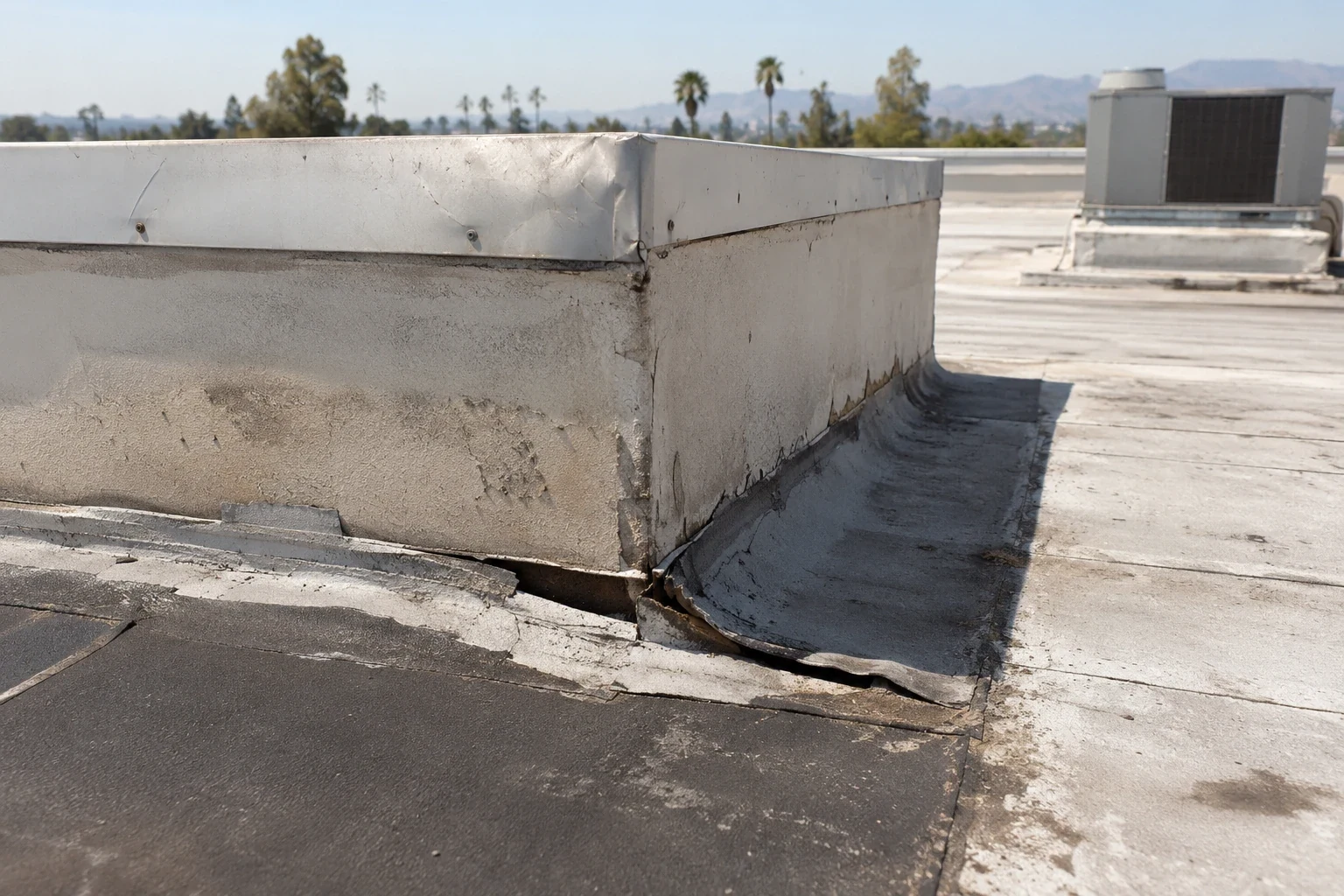
Review roof surface deterioration
Share roof plans, prior coating or repair records, leak reports, access rules, and the areas where material has changed. We can inspect the assembly and outline a scope tied to its confirmed condition.
Or call 555-555-5555 · [email protected]