Roof Systems · Garden Grove, CA
Commercial Acrylic Roof Coatings in Garden Grove, CA
Commercial Acrylic Roof Coatings
Acrylic roof coating in Garden Grove, CA reviews adhesion, drainage, surface preparation, repairs, application windows, and maintenance needs.
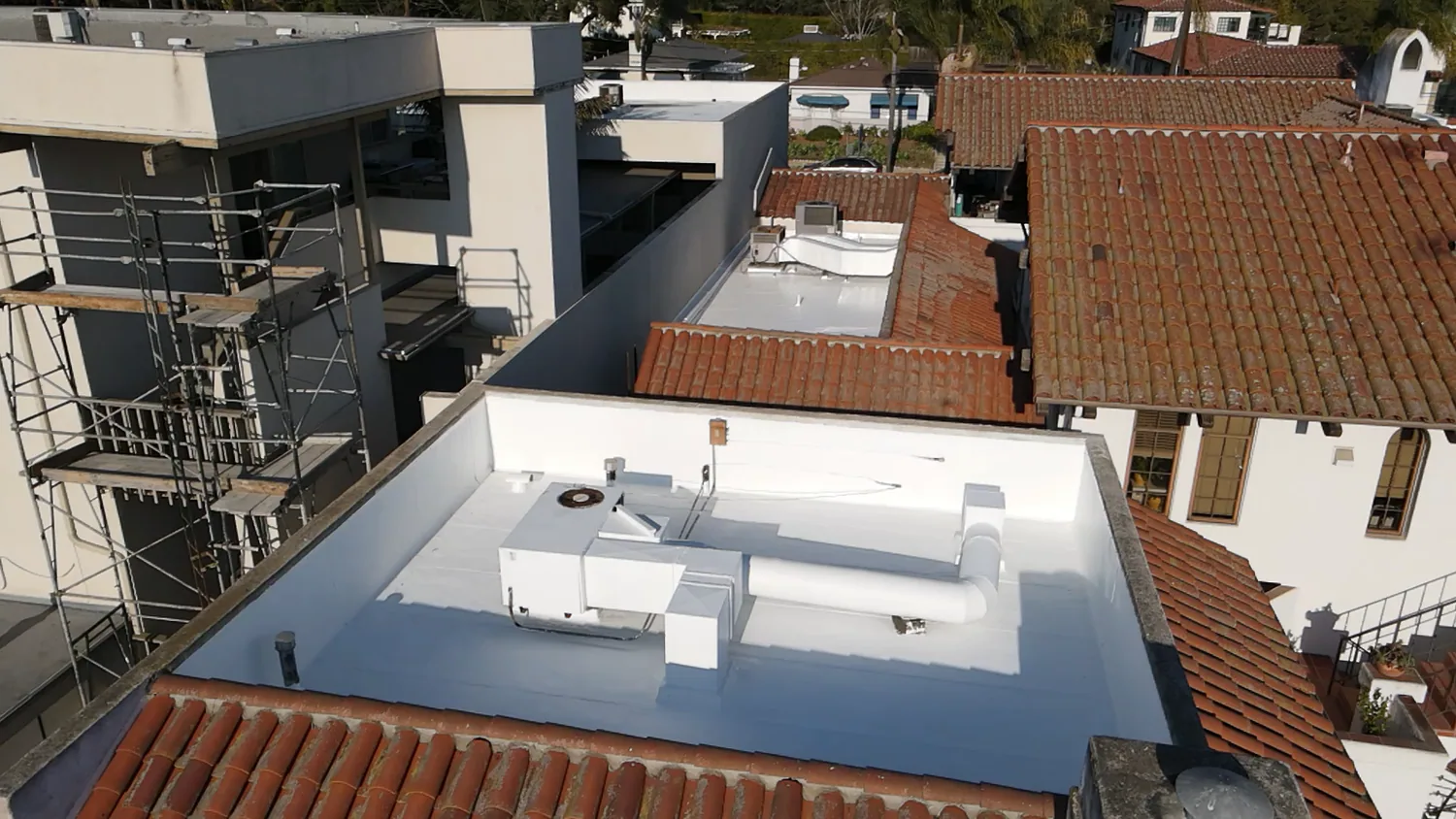
Acrylic roof coating can restore a suitable existing surface when the membrane, seams, and substrate remain stable. Before recommending it for a building in the Garden Grove Boulevard-West Street Area, we inspect the roof for moisture, open laps, loose coating, and drainage problems. The proposal identifies repairs, preparation, primer, reinforcement, application coats, and the boundaries of work. Coating adds a surface layer; it does not replace saturated insulation, correct structural movement, or create slope where the roof holds water.
We start with the existing roof's repair history and the owner's purpose for restoration. The selected acrylic system has product-specific requirements for substrate, temperature, moisture, and recoat timing. We document those requirements in the scope and plan how the crew will reach drains, curbs, and wall terminations without trapping debris under the new layer. If conditions do not support coating, we explain which repairs or alternate roof assembly should be considered before material is ordered.
Review Surface Condition and Water Movement
We inspect the coating or membrane for cracks, chalking, peeling, blisters, open seams, unbonded patches, and exposed reinforcement. Ponding areas receive separate attention because standing water can affect a coating's suitability and may point to a low spot or blocked drain. We check the roof at penetrations and perimeter transitions, where movement or old sealant can interrupt the surface. Test cuts may be needed to verify concealed moisture; each opening is recorded and repaired with compatible material before coating proceeds.
The Garden Grove Boulevard-West Street Area covers commercial shopping-center and residential uses, while the Harbor Boulevard Corridor includes commercial, office-professional, and transition districts. Those mixed settings can affect roof access and operating schedules, but each building needs its own review. A roof inspection documents the repair boundary. The City also identifies manufacturing activity in its Garden Grove Industrial District; where equipment service is active, the property contact confirms access and protection needs before cleaning begins.
Correct Defects Before Applying the Coating
Loose material is removed and the substrate is cleaned according to the selected product's preparation requirements. Open seams, failed flashing, and incompatible patches need correction before the field coating is applied. Where wet insulation or deck damage is found, those layers require a separate repair or replacement. We mark transitions between prepared and unprepared roof so the crew does not coat across an unstable edge. A sample area can help confirm adhesion and appearance before larger sections are treated.
A roof coating restoration scope defines the repairs and application area. If the membrane has widespread loss of attachment, a replacement alternative may provide better access to correct the assembly. The owner receives the evidence used to set the boundary, including test openings, moisture observations, and any area excluded from coating. Coating is scheduled only after the repair substrate is ready for the specified primer and finish.
Set Primer, Reinforcement, and Coat Application
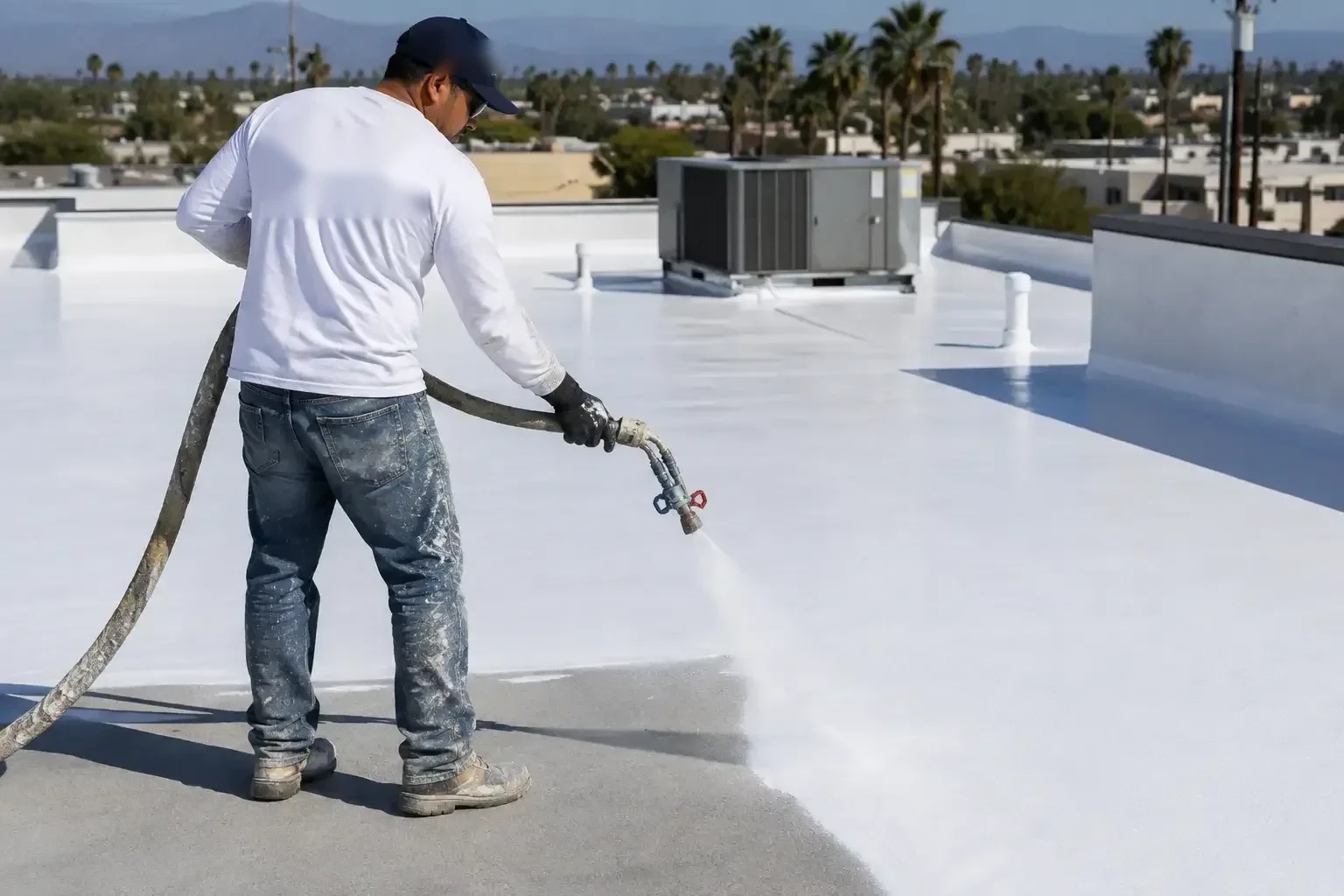
The coating submittal identifies the acrylic product, primer, reinforcement, application rate, and required dry film thickness. It also lists compatible sealants and the substrate conditions that must be met. The crew follows the specified number of passes and recoat window, checking that the first layer has reached the required state before the next is applied. At drains and walls, a reinforced detail may be needed to provide continuity. We keep coating away from drain openings and equipment labels, then record the zones where material was applied.
A silicone system has different product limitations and maintenance conditions, while spray foam roofing creates a new foam profile beneath a protective coating. Acrylic should be compared with those systems based on substrate, roof geometry, water exposure, and the product documentation. We do not use a broad reflectivity claim as a substitute for specifying the actual assembly and application requirements.
Before production work, we confirm that sample preparation, primer, and the first coat produce the intended bond and finished appearance on the actual roof surface. The inspection record identifies the test zone and any correction made before the next area starts. A coating crew should not bridge a moving joint or cover loose granules and expect the film to stabilize that detail; the joint needs a compatible repair first. We also check that added material will not reduce clearance at drain strainers, equipment bases, or door thresholds. If a detail changes the roof's finished height or water path, the drawing and proposal should show how it will be resolved before application.
On multi-phase properties, we label the coating boundary and record where the new work stops beside retained membrane or metal. That map reduces guesswork if a later repair needs a different primer or flashing material. Any excluded roof area remains a separate maintenance item for the owner.
Schedule Cleaning and Coating Around Building Use
Surface cleaning and coating application can affect vehicles, rooftop units, air intakes, and occupied areas below. We set protection zones with the property manager, plan how wash water or debris will be handled, and confirm where materials can be staged. Weather conditions matter during preparation, application, and cure; a forecast or wet surface can change the planned zone. The crew keeps a secure daily stop and leaves drains visible. Any area that cannot be protected or reached is added to the owner update before the sequence changes.
The Harbor Boulevard Corridor includes defined office and commercial districts, and the Garden Grove Boulevard-West Street Area includes shopping-center uses. We plan deliveries and tenant notices with each building rather than assume access from the area name. An occupied-roof work plan sets access and communication points. A drainage check confirms that cleaning and reinforcement preserve the intended outlet path and do not leave debris in sumps.
Track Coating Condition After the Work
Handoff includes a visual check of field coverage, seam treatment, reinforced details, perimeter terminations, and drain openings. We provide product records, application details, photographs, and any test-area results included in the project. If the roof has retained sections or repairs outside the coating scope, the closeout identifies them separately. The record gives later service teams a reference for product compatibility and for distinguishing old patches from new work.
A maintenance visit can document coating wear, dirt, separated edges, ponding, and damage after equipment service. A maintenance schedule also tracks drains and known repair locations. If water enters the building, the follow-up should inspect the area beneath the stain and nearby transitions before another coat is added. Retain the original test and closeout photographs with the roof plan so future decisions follow observed conditions rather than a surface description alone.
Commercial Roofing Questions
Can acrylic coating go over an existing commercial roof?
It may be suitable when the roof is dry, attached, clean, and compatible with the selected system. We inspect seams, transitions, coating history, and drainage and identify repairs or openings needed before application.
Will acrylic coating correct ponding water?
Coating does not change the roof slope. The proposal should identify why water remains, whether outlets are clear, and whether the selected product permits the expected exposure. Drainage corrections need a separate detail.
How many coats are required?
The product specification sets the number of coats, application rate, and dry film thickness. We state those requirements in the submittal and record the work area and application conditions instead of using a generic coat count.
When should coating work be postponed?
Work should wait when the surface is wet or dirty, the substrate is not ready, or temperature and weather fall outside product instructions. We protect the building and reschedule the affected zone rather than applying a film that cannot cure as specified.
Confirm the roof can support a coating
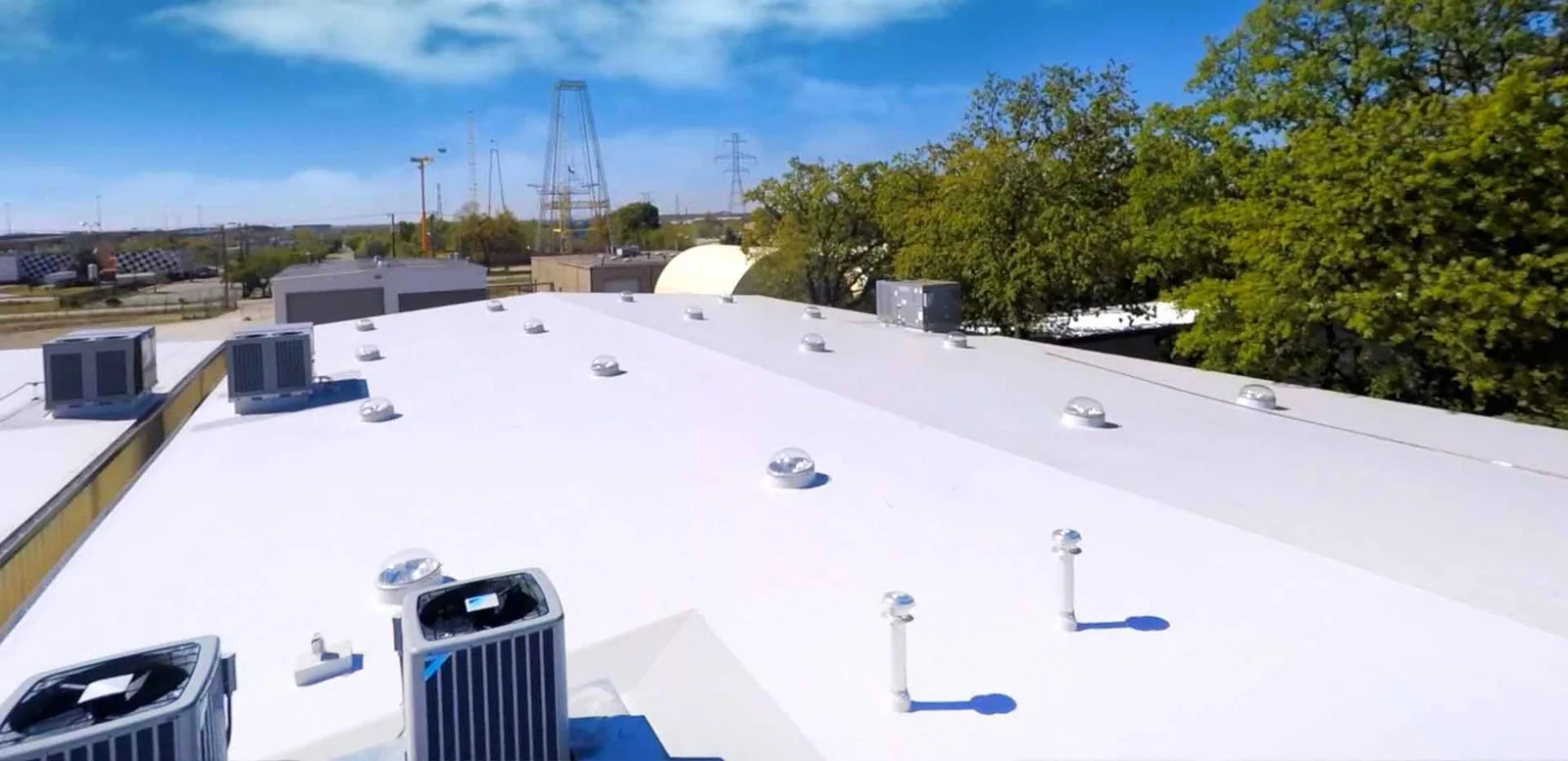
Share prior repair records and roof access details. We can inspect the surface, document preparation needs, and define which areas belong in a restoration scope.
Or call 555-555-5555 · [email protected]