Roof Systems · Garden Grove, CA
Commercial Silicone Roof Coatings in Garden Grove, CA
Commercial Silicone Roof Coatings
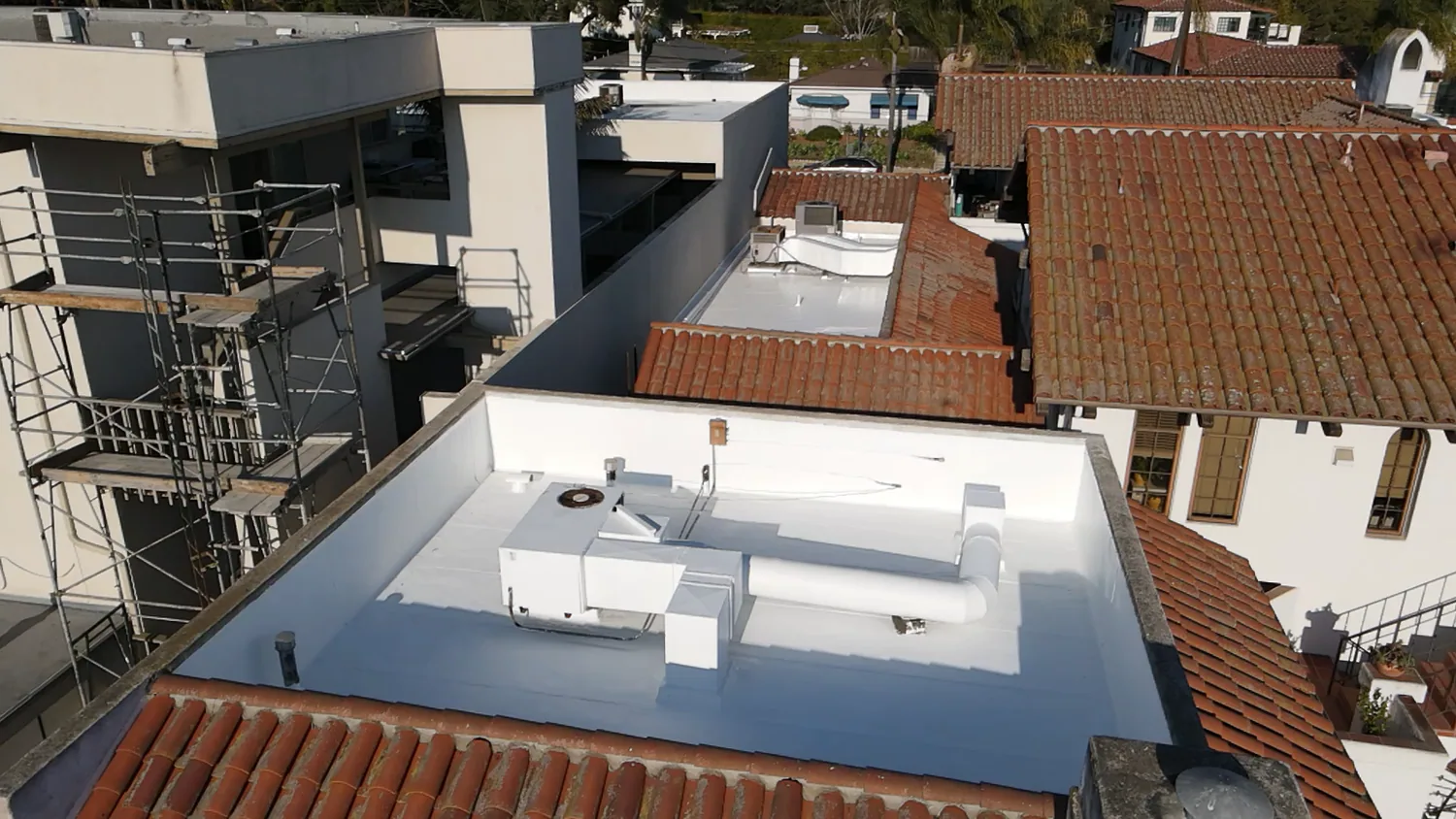
Silicone roof coating in Garden Grove, CA checks adhesion, moisture, drainage, substrate repairs, application conditions, and ongoing roof maintenance.
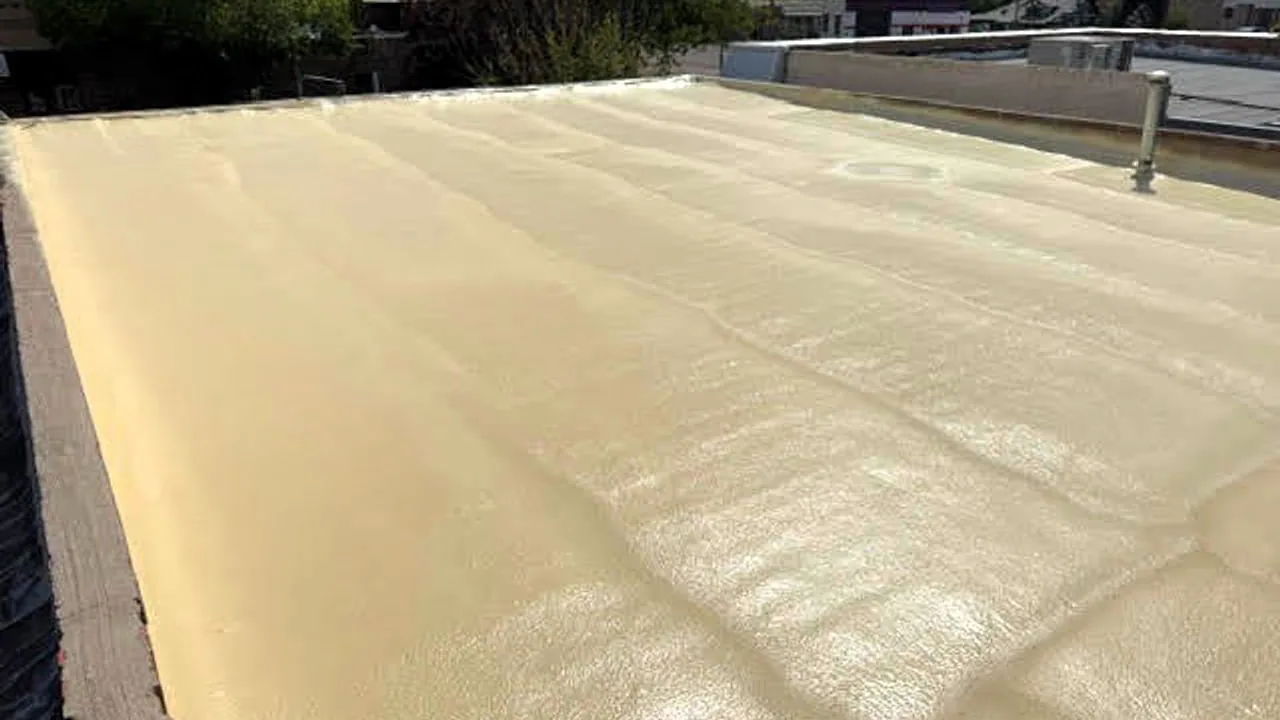
A silicone roof coating is a restoration layer applied to a roof that remains suitable for coating. The work begins with an inspection of the existing surface, seams, flashing, and drainage; coating cannot correct a wet assembly or a failed detail below it. Before a proposal for a building in Garden Grove’s Harbor Boulevard Corridor, we determine what needs cleaning, repair, adhesion testing, or removal. The written scope identifies the coating product, preparation, reinforcement at details, and the areas that are outside the work.
Silicone may be considered where the existing roof can support the selected system and the owner wants to restore a serviceable surface. The material, primer, and application requirements vary by product. We use the manufacturer's instructions to set coverage, cure conditions, and compatible substrates, then document the repaired roof zones. If inspection finds saturated insulation, loose membrane, or widespread substrate failure, we explain why coating alone would not address that condition and compare a different assembly.
Check Adhesion, Drainage, and Existing Repairs
We walk the roof for loose coating, exposed reinforcement, open seams, blisters, ponded areas, brittle flashing, and sealants that may not bond to the proposed product. At each drain, we check whether water can reach the bowl and whether debris, a raised patch, or a blocked strainer changes flow. Test cuts may be needed where a soft area or leak history raises a question about the insulation. We record the location and repair the opening with compatible materials. The condition report distinguishes a coating defect from damage in the layers below.
The Harbor Boulevard Corridor is a major commercial axis divided among commercial, office-professional, and transition districts. The city also describes manufacturing activity in the Garden Grove Industrial District along Knott Street and Western Avenue. These settings can bring different rooftop equipment and access requirements, so the manager confirms site conditions. A roof inspection documents the substrate; infrared scanning can also help prioritize openings when the surface conceals the assembly.
Prepare a Stable Surface Before Coating
Preparation includes removing dirt, loose coating, incompatible sealant, and material that has lost adhesion. We repair blisters or open seams to sound material and replace wet or deteriorated layers when the approved scope includes that work. Reinforcement may be required at laps, penetrations, transitions, or other vulnerable details. The surface has to meet the chosen product's condition requirements before primer or coating is applied. A representative adhesion test can help confirm compatibility; a test result is recorded with its location and preparation method.
If isolated details fail while the field remains sound, a coating restoration scope can include repairs and surface treatment in defined zones. Where the membrane is loose or insulation is wet across larger areas, roof replacement may be a better comparison. We mark what remains in place, what is removed, and how the transition between repaired and retained material will be finished. The owner approves concealed work before the boundary expands.
Compatibility review includes more than the field membrane. We check existing repair patches, asphalt residue, silicone or acrylic layers, and sealants around rooftop equipment because these materials may respond differently to cleaning or primer. Where the roof has several generations of work, a test area can show whether the proposed preparation creates a stable bond at both field and detail surfaces. We document the cleaning method, primer, reinforcement, and cure conditions used for that test. If a product requires a dry substrate and the opening shows moisture, the affected layer is addressed before coating proceeds. This prevents an attractive new surface from concealing a repair boundary that was never made sound.
Specify Product, Primer, and Application Thickness
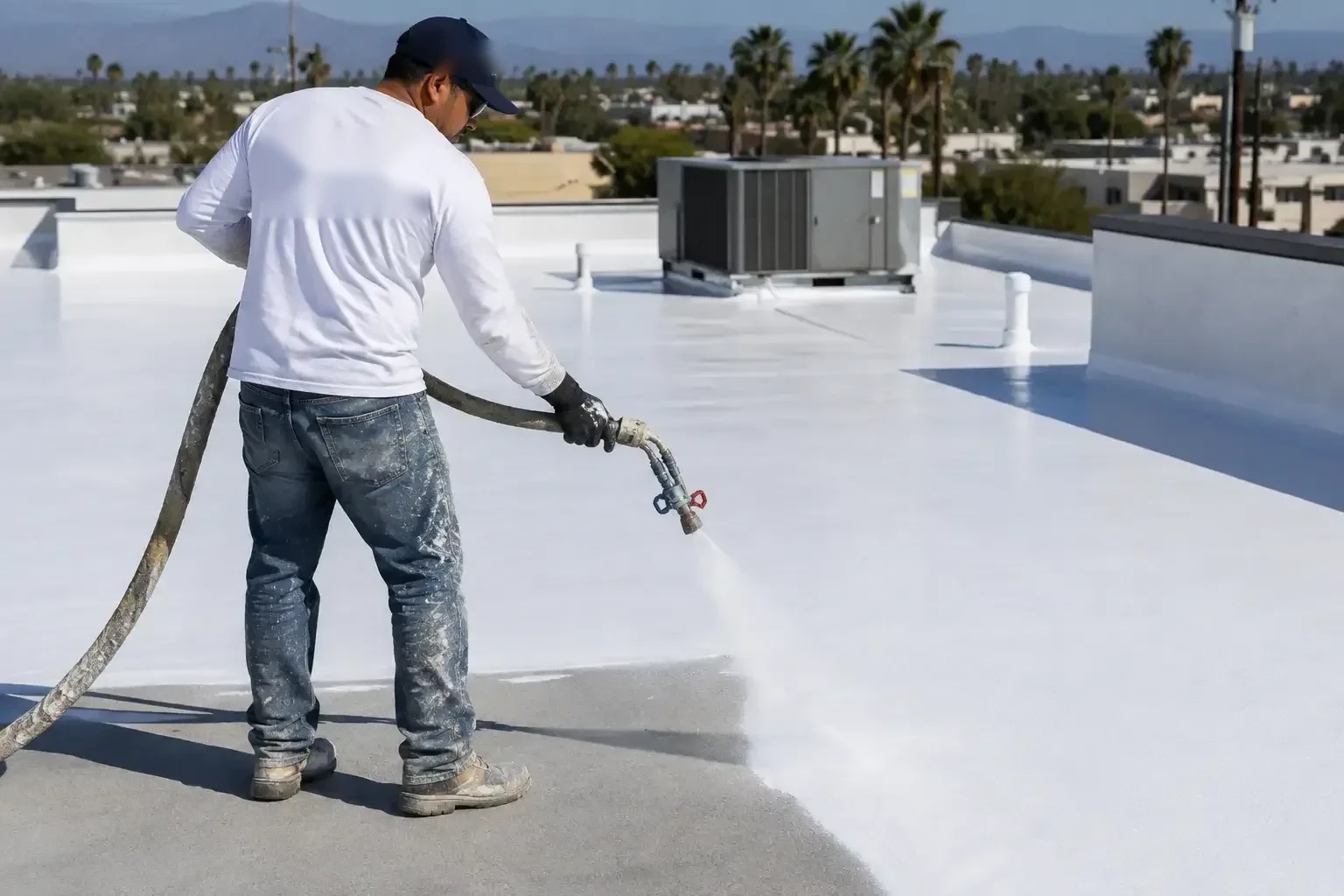
The coating submittal identifies the product, primer if required, reinforcement, compatible sealants, coverage rate, and finished thickness. It also states the acceptable substrate and the conditions that require work to stop. We protect drains, equipment, skylights, and adjacent surfaces from overspray. At vertical transitions, the coating needs a specified termination rather than a thin edge that can peel. Product instructions determine whether the system can be applied over the existing membrane or needs a separator or different preparation. The crew records material use and checks coverage as each zone is completed.
A silicone and acrylic coating should not be treated as interchangeable: weather window, substrate, water exposure, and maintenance requirements depend on the product selected. A spray-foam assembly adds a shaped foam layer and protective coating, while a roof coating restores only a suitable existing surface. We compare these scopes against actual roof condition and the owner's planned maintenance rather than describing any one coating as a cure for structural or drainage issues.
Protect Building Operations During Application
Before coating, we set a route for workers and materials and identify ventilation intakes, rooftop units, vehicles, and neighboring surfaces that need protection. The property contact confirms roof access and any temporary equipment shutdown. Cleaning and surface preparation can create noise or runoff that requires scheduling. Coating application follows the product's cure and weather limits; if wind, moisture, or temperature prevents a sound film, the crew secures the work area and waits for an appropriate window. Drains remain accessible throughout the sequence.
Commercial and office-professional properties along Harbor Boulevard may have separate tenant entrances and service paths. We coordinate notice and access with each building manager. An occupied-building work plan can define these controls. A drain inspection confirms that coating and reinforcement do not cover outlets or change the water path. At completion, we clear protective coverings and record any area where service access must remain restricted until cure is complete.
Set a Reinspection Interval for the Coated Roof
Closeout checks the film for missed areas, pinholes, inconsistent coverage, unbonded edges, and unreinforced transitions. We photograph drains, penetrations, repairs, and boundaries where another roof system remains. The owner receives product data and application records identified in the scope, plus any remaining items that need separate work. The report does not describe the whole roof as restored if inspection found areas outside the coating boundary.
Future checks should look for coating wear, debris, open seams, separation at details, and damage from other trades. A maintenance inspection can document changes by roof zone and keep drains clear. If a coating edge lifts or water appears inside, the follow-up review should check the bond, transition, and substrate before more material is applied. Retaining the initial adhesion-test location and repair photos makes that comparison more useful.
Commercial Roofing Questions
Can silicone coating be applied to any commercial roof?
No. The existing membrane, coating, surface preparation, moisture condition, and product compatibility need review. We test or open representative areas when needed and identify repairs that must happen before coating begins.
Does silicone coating fix ponding water?
A coating does not change roof slope or correct a blocked drain. Whether the selected product tolerates standing water depends on its published requirements. We document drainage and recommend corrective work if ponding signals a separate roof condition.
How is coating thickness confirmed?
The project specification sets the required application and inspection method. The crew monitors material use and checks representative locations as the film is applied, recording any repair or additional pass needed to meet the approved system.
What happens if adhesion testing fails?
We stop before broad application, check the substrate and preparation, and review compatible primer or an alternate assembly with the owner. The test location and result are documented so the proposal reflects a usable repair path.
Test the roof surface before choosing a coating
Share coating history, repair records, and roof access requirements. We can inspect the substrate, identify preparation needs, and define the area a restoration would cover.
Or call 555-555-5555 · [email protected]